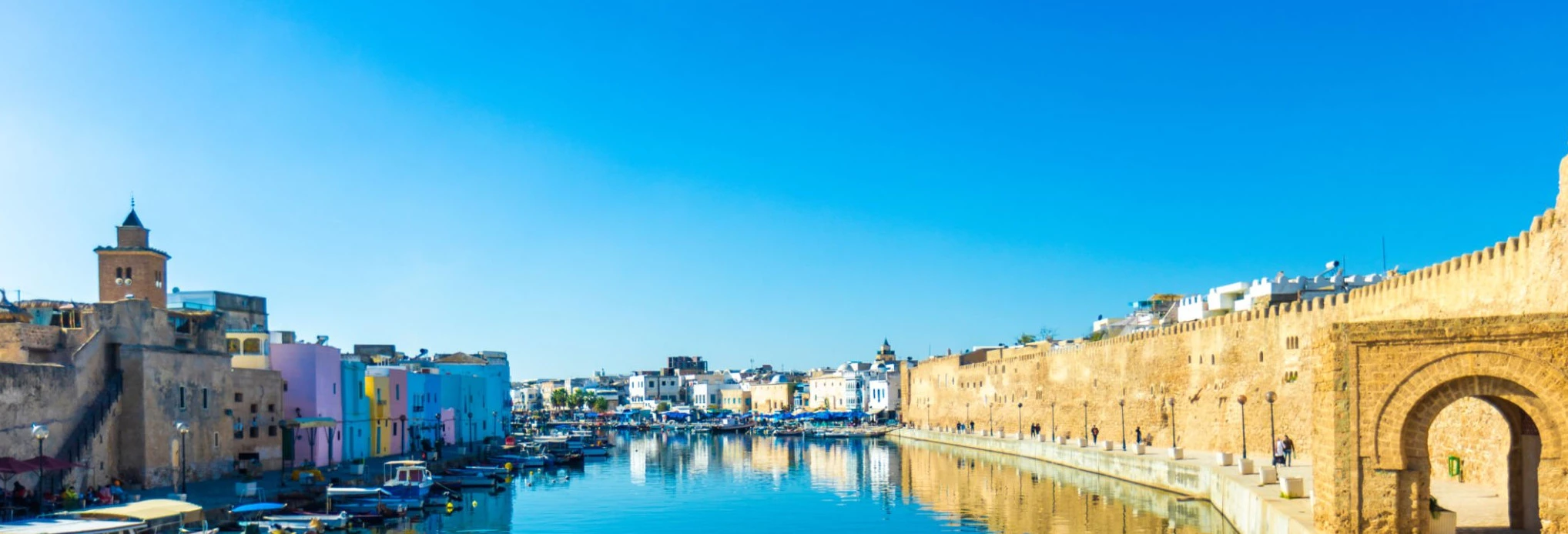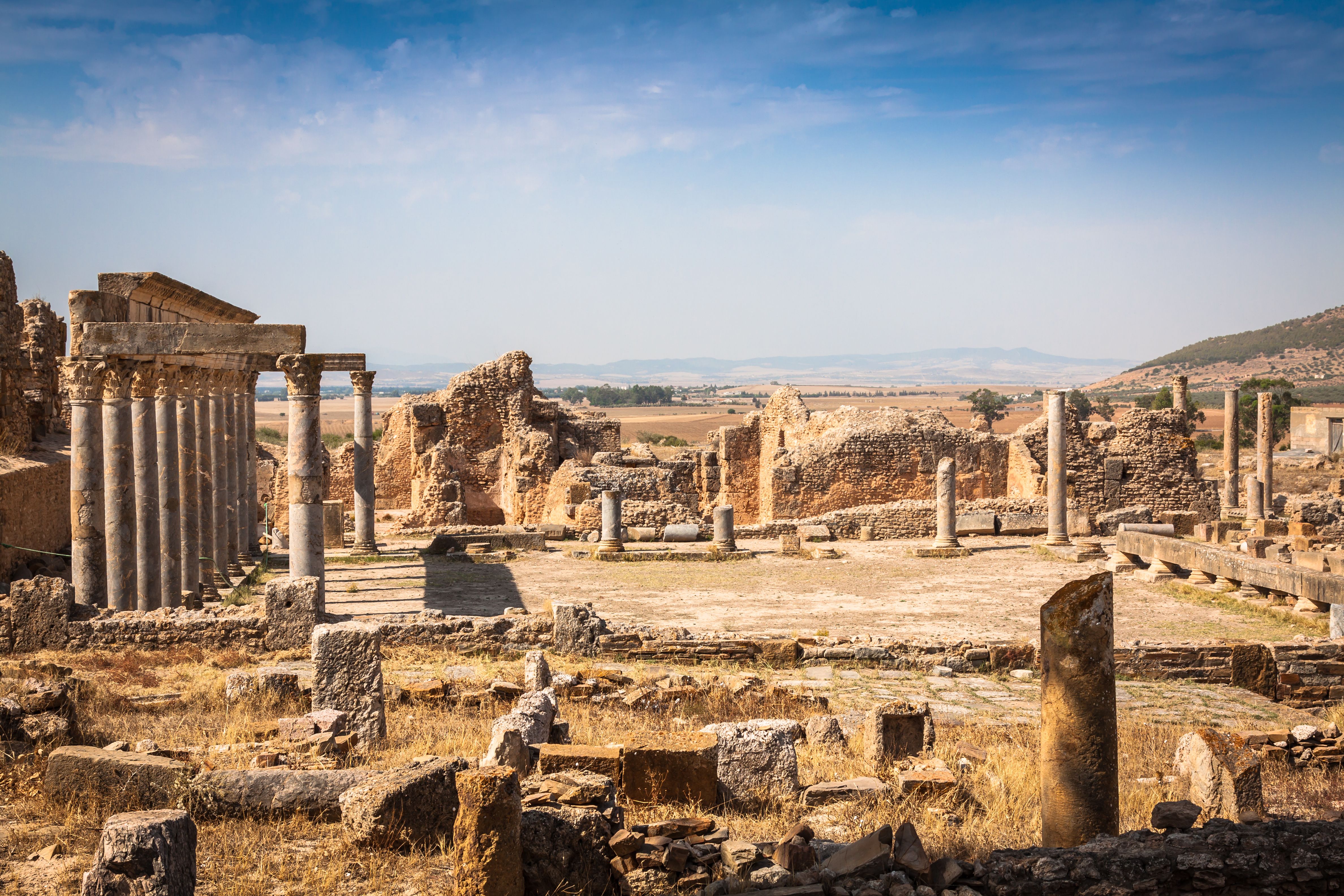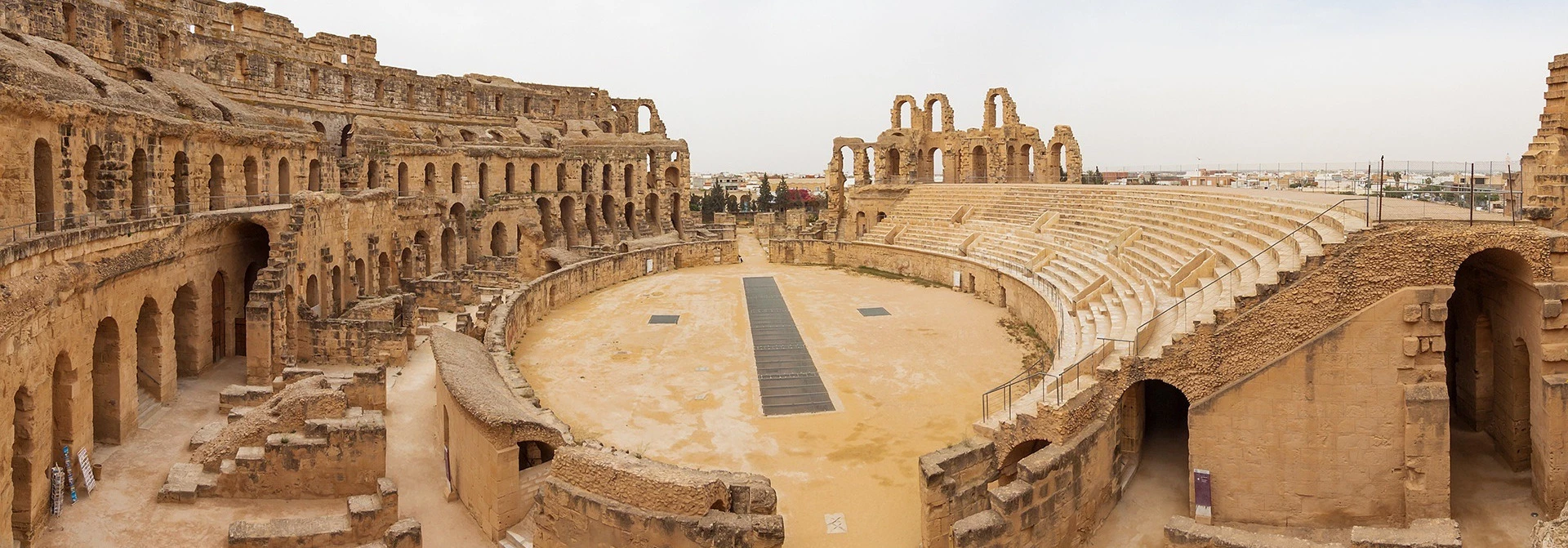

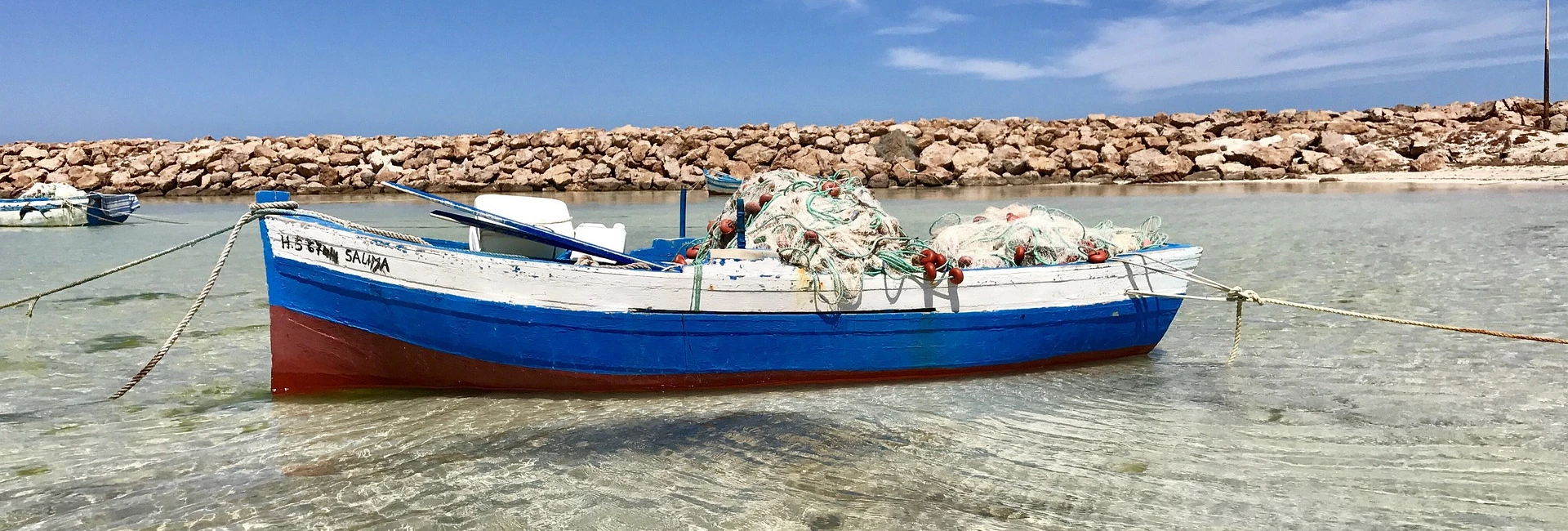
Djerba, the largest island in North Africa (514 km2), is linked to the mainland by the Roman causeway of El Kantara. In September 2023 UNESCO added it to the World Heritage List as "Djerba: Testimony to a settlement pattern in an island territory", recognising a dispersed settlement of self-contained rural neighbourhoods (the houma), mosques, markets and Muslim, Jewish and Ibadi places of worship.
Visitors come for the Houmt Souk trading medina, the Borj El Kebir fortress, the El Ghriba synagogue, the pottery village of Guellala, the Djerbahood murals in Erriadh and a long ribbon of north-east beaches. This guide details these seven must-sees, then the practical information (entry rules, safety, best time, transport) updated for 2026.
Overview
Djerba is a flat 514 km2 island off south-east Tunisia, linked to the mainland by a Roman causeway and UNESCO-listed in 2023 for its dispersed houma settlement pattern.
Off Tunisia's south-east coast, Djerba (514 km2) is a flat, sun-filled island linked to the mainland by the Roman causeway of El Kantara. Its identity rests on a dispersed pattern of self-contained rural neighbourhoods, the houma, dotted with low mosques, markets and fortified farmhouses (menzels) among olive and palm groves.
This layout, together with the coexistence of Muslim, Jewish and Ibadi communities, earned the island its 2023 UNESCO World Heritage listing. For travellers, Djerba combines heritage sites, crafts (Guellala pottery, weaving) and beach resorts along the north-east coast.
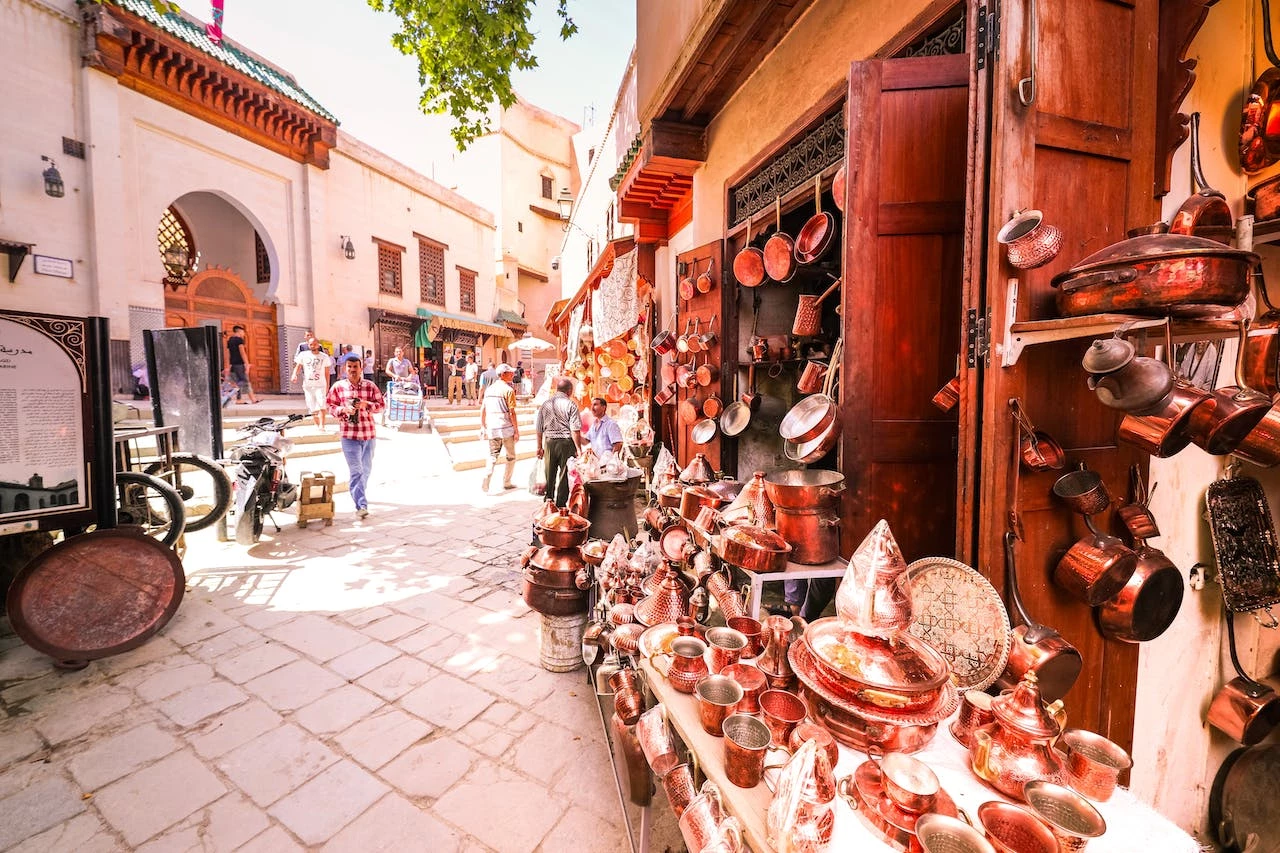
Houmt-Souk
Houmt Souk is Djerba's main town and trading heart. Its medina, a maze of whitewashed lanes, lines up covered souks, former fondouks (caravanserais) turned into hotels or cafes, and the Great Mosque. It is one of the ensembles tied to Djerba's UNESCO World Heritage listing.
You come for the market: pottery, silver jewellery, weavings, spices and fish landed at the nearby port. Between purchases, settle on a fondouk terrace for a mint tea and watch the town go by.
- The fish auction near the port runs in the morning - the liveliest moment.
- Haggling is the norm in the souks; counter at roughly half the first price, stay friendly, and be ready to walk away to bring it down.
- Keep cash: many stalls don't take cards.
- Non-Muslims can't enter the Great Mosque, but its courtyard and surroundings are worth a look.
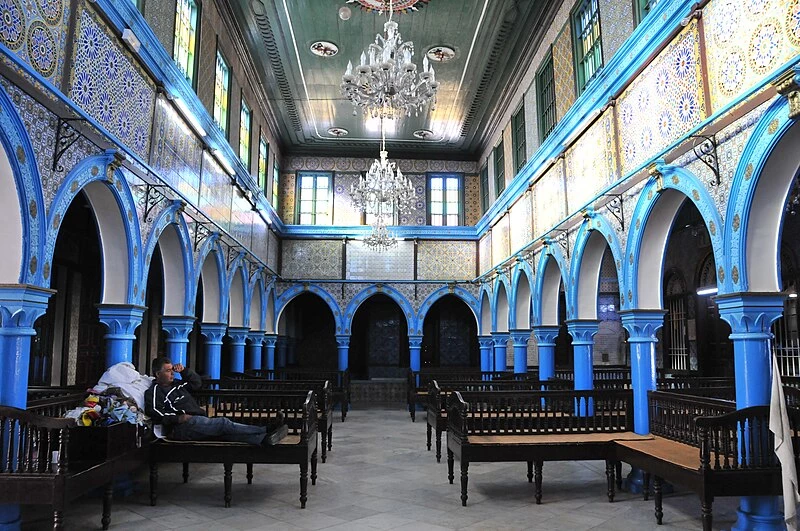
The Ghriba Synagogue
The El Ghriba synagogue, in Er Riadh (Hara Seghira), is one of the oldest in Africa: tradition traces its founding to antiquity while the present building dates from the 19th century. With its blue columns, tiles and stained glass, it remains a living place of worship and is among the sites associated with Djerba's 2023 UNESCO World Heritage listing. Each year the Lag BaOmer pilgrimage used to draw thousands of Jewish pilgrims.
- The synagogue can be visited year-round outside services; expect a security check and bring ID.
- Modest dress is required (shoulders and legs covered); men are given a kippah at the entrance.
- Photography is often restricted inside: ask first.
- Check the security situation before the pilgrimage (May) via your government's travel advice.
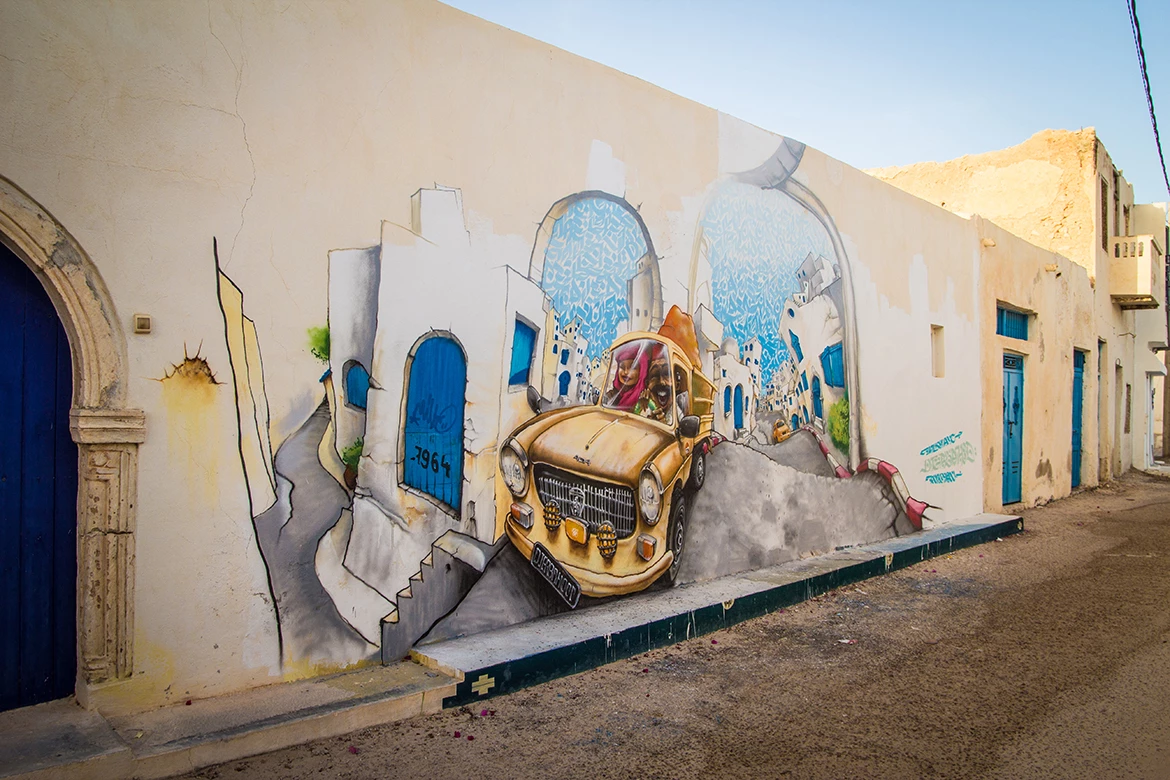
Djerbahood
Djerbahood is the village of Erriadh turned into an open-air gallery. In 2014 the Paris gallery Itinerrance invited some 150 artists from around 30 countries to paint walls, doors and lanes: about 250 murals remain, from stencil to calligraffiti, set on the white and blue facades of a real Djerban village.
You wander freely, works appearing around each corner, between a shop and a lived-in house. Some murals have faded over time, which only adds to the trail's slightly timeless charm. Erriadh sits right next to the El Ghriba synagogue: the two visits combine easily.
- The trail is open-air and free; allow 1-2 h on foot.
- Some murals have faded over time; morning or late-afternoon light shows them best.
- Erriadh is a few minutes' drive from El Ghriba: pair the two visits.
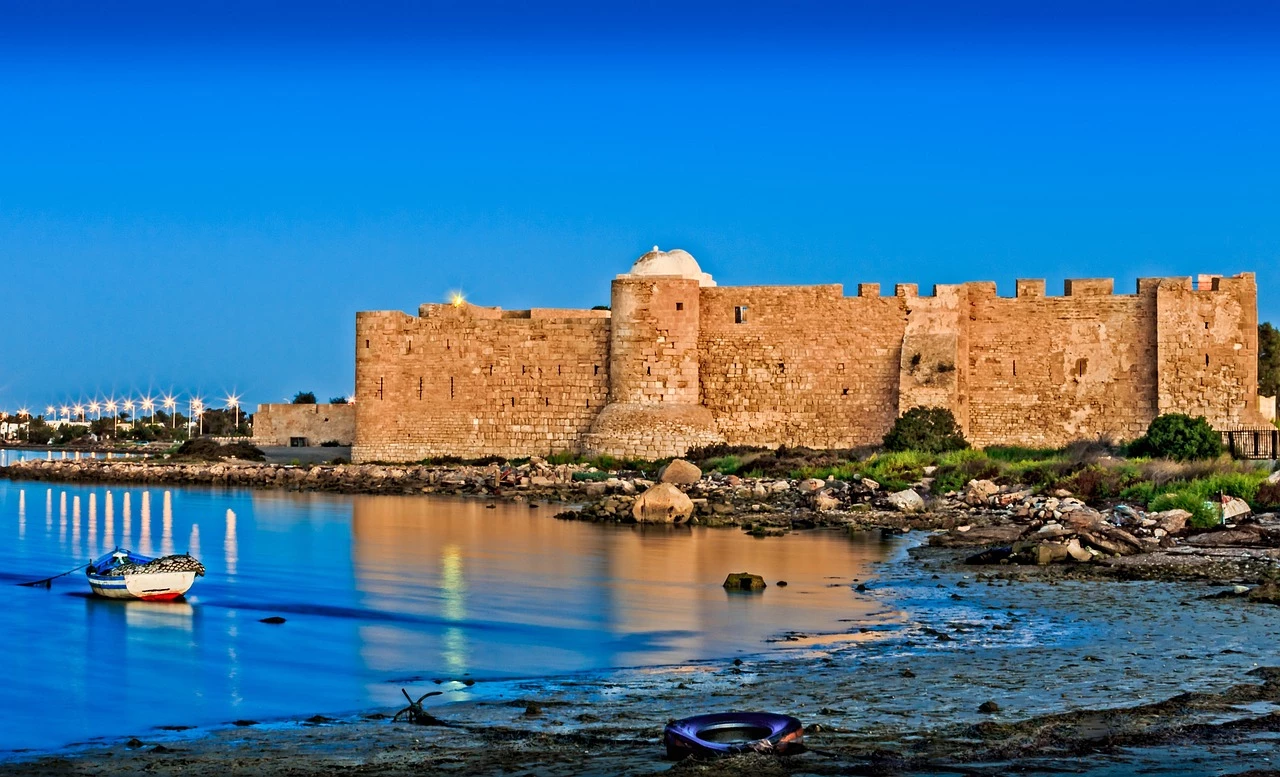
Borj El Kebir
Standing north of Houmt Souk, near the fishing port, Borj El Kebir (Borj Ghazi Mustapha) overlooks Djerba's waterfront. The fortress was built at the end of the 14th century by the Hafsids over Roman ruins, then enlarged in the 15th century and reworked in Ottoman times; it owes its name to the qaid Ghazi Mustapha, settled here in 1559. A museum since 1904, it preserves thick walls, vaulted passages, inner courtyards and old cannon.
From the ramparts the view opens onto the sea, the port and the town's whitewashed roofs. The site recalls Djerba's strategic importance over the centuries, notably during the clashes between Christian and Ottoman powers in the Mediterranean.
- The fort is fully exposed and the ramparts lack a continuous railing: hat, water and closed shoes advised, and watch children.
- Late afternoon: the low light on the stone and the view over the port are at their best.
- It's a short walk from central Houmt Souk: do both on foot.
- Check opening hours locally; they vary by season.
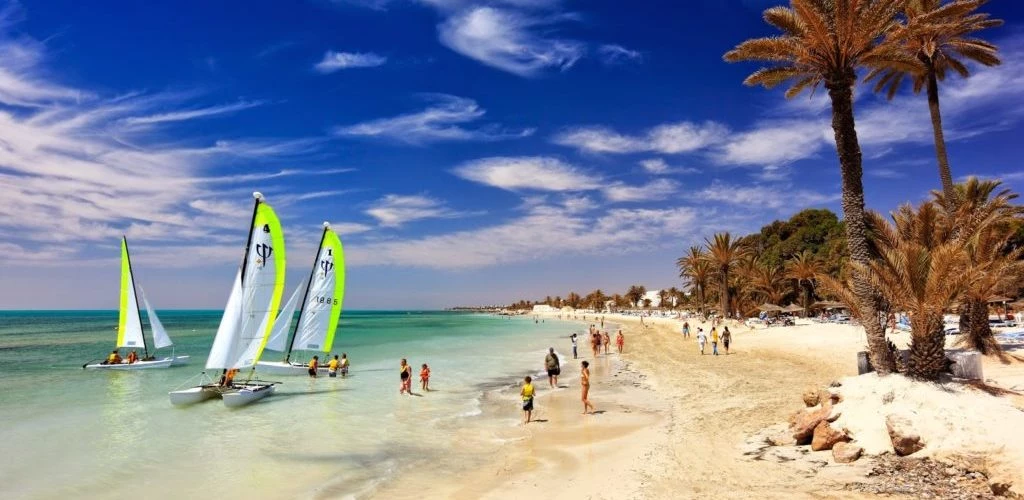
The beaches of Djerba
Djerba owes much of its fame to its beaches: a long ribbon of pale sand along the north-east coast, with shallow, warm water for much of the year. The tourist zone centres on Sidi Mahres, the best known, lined with hotels and water sports.
For more quiet, head to the east and south-east beaches - Seguia, Aghir or Sidi Jmour, less developed. At the northern tip, the Ras Rmel peninsula (the 'flamingo island') charms with its dunes and, in winter, its flamingos.
- Sidi Mahres for amenities (loungers, restaurants, water sports); Seguia, Aghir or Sidi Jmour if you want calm.
- With kids: the shallow northern waters are ideal for young children.
- On hotel beaches, lounger access is often paid if you're not a guest; public beaches stay free.
- Strong summer heat: sunscreen, water, and swim early or late in the day.
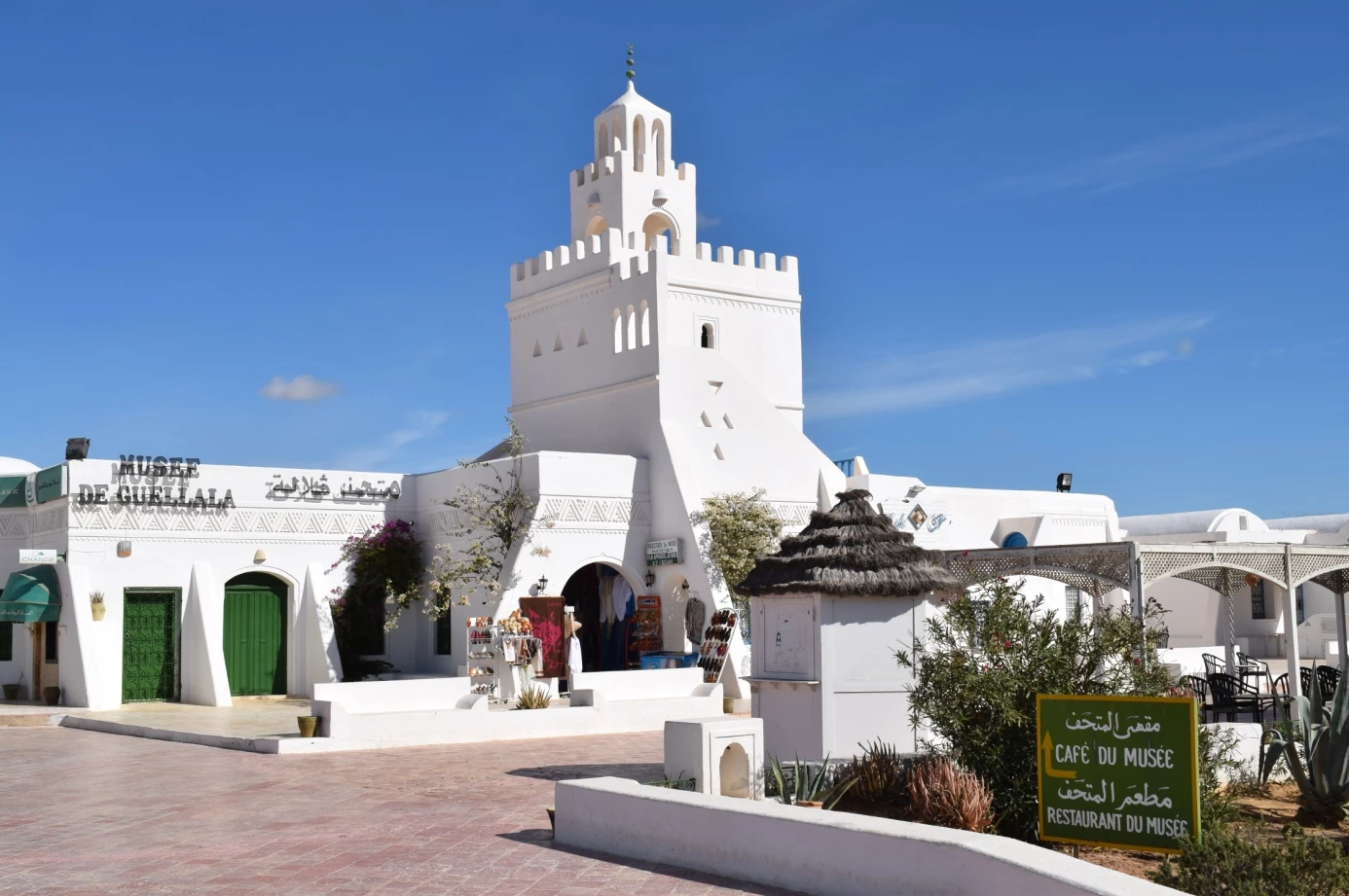
Guellala Museum
In the south of the island, Guellala is Djerba's potters' village: the local clay has been worked since antiquity, and you still pass workshops and kilns along the main street. It's the best place to buy ceramics at source.
On the heights, the Guellala Museum (Heritage Museum) stages Djerban traditions - weddings, crafts, costumes, scenes of daily life - through life-size reconstructions. A good introduction to the island's culture.
- The museum is a bit out of the way: plan for a car or taxi, there's no frequent transport.
- Allow about 1h for the museum; entry is ticketed (cash).
- For pottery, compare two or three workshops before buying and haggle calmly.
- When you buy, ask for sturdy packing: pieces travel badly in the hold without protection.
Midoun
Djerba's second town, Midoun is quieter and more authentic than the neighbouring tourist zone. Its centre tightens around a square and a small covered market, with artisans' workshops, cafes and stalls where local life carries on.
The high point is the big weekly Friday market, one of the island's liveliest: fresh produce, spices, textiles and pottery. Midoun also makes a good base between the north-east beaches and the island's interior.
- Keep small-denomination cash for the market and artisans.
- Usual care against pickpocketing in the market crowd.
- Midoun is a few minutes' drive from Sidi Mahres beaches: handy as a more local base than the hotel zone.
- Outside Friday the town is calm: ideal for a crowd-free wander.
Getting there
By air via Djerba-Zarzis airport (DJE), with direct flights from Europe; or by road via the El Kantara Roman causeway, or the Ajim-Jorf ferry.
The easiest way in is by air: Djerba-Zarzis International Airport (DJE) receives direct, often seasonal flights from several European cities (Paris, Lyon, Brussels, Geneva, among others).
By road, two options link the island to the mainland: the Roman causeway of El Kantara (about 7 km, no toll) in the south-east, and the Ajim-Jorf car ferry in the south-west (a short, frequent crossing).
Getting around
Rental car (handiest on a flat island), metered yellow taxis in town and shared louages between towns; bike or scooter for short hops.
The island is flat and compact, which makes a rental car (available at the airport) the handiest way to reach Guellala, Erriadh or Midoun at your own pace. In town, yellow taxis run on the meter; between towns, shared louages are cheap.
Bikes or scooters suit short distances; public transport exists but is infrequent. Agree a fare or insist on the meter before boarding a non-urban taxi.
What to do
Beaches and water sports, bike rides, crafts (Guellala pottery), weekly markets and a wander through the Houmt Souk medina round out the seven must-sees.
Beyond this guide's seven must-sees, Djerba lends itself to water sports (swimming, windsurfing, diving), bike rides among olive groves and menzels, and crafts: pottery in Guellala, weaving and basketry at the markets.
The weekly markets (notably Midoun's) are a good way to catch local life, as is an early-morning stroll through the Houmt Souk medina.
Food
Fresh fish and seafood, fish couscous, bricks, ojja and mechouia salad, all spiced with harissa; honey pastries and mint tea to finish.
Djerban cooking blends Berber, Arab and Mediterranean influences. Expect fresh fish and seafood, fish couscous, bricks, ojja (eggs, tomato, harissa) and mechouia salad. Harissa chilli paste accompanies almost everything.
For something sweet, try honey-and-date pastries. Pine-nut mint tea punctuates the breaks. The best tables are often the small restaurants of Houmt Souk and around the port.
Climate & seasons
When to go : Tunisia ?
Monthly averages over the past 5 years (Open-Meteo).
Best months
- janvier
- février
- mars
- avril
- mai
- juin
- septembre
- octobre
- novembre
- décembre
Avoid
- juillet
| jan | fév | mar | avr | mai | juin | juil | août | sept | oct | nov | déc | |
|---|---|---|---|---|---|---|---|---|---|---|---|---|
| Our take | ||||||||||||
| Weather | ||||||||||||
| High | 18° | 19° | 22° | 24° | 28° | 32° | 35° | 35° | 32° | 29° | 24° | 19° |
| Rain (mm) | 16 | 15 | 13 | 21 | 18 | 0 | 0 | 3 | 16 | 19 | 13 | 22 |
| Beach | Beach mai | Beach juin | Beach juillet | Beach août | Beach septembre | Beach octobre | ||||||
| City sightseeing | City sightseeing janvier | City sightseeing février | City sightseeing mars | City sightseeing avril | City sightseeing mai | City sightseeing octobre | City sightseeing novembre | City sightseeing décembre |
What to do by season (summer)
-
Beach
Warm air and water, little rain.
When to go
Spring (Mar-May) and autumn (Sep-Oct) are ideal: 25-33 C and a 24-26 C sea. Summer is very hot (36-38 C) but good for swimming; winter is mild and quiet.
Djerba has a desert climate tempered by the sea (about 200 mm of rain a year, mostly in winter). The best times are spring (March-May) and autumn (September-October): 25-33 C by day, sea still 24-26 C in autumn, and fewer crowds than high summer.
- Spring (Mar-May): mild, ideal for sightseeing and families.
- Summer (Jun-Sep): beach peak season, very hot (36-38 C in Jul-Aug), warm sea.
- Autumn (Sep-Oct): the best warm-sea / moderate-crowd compromise.
- Winter (Dec-Feb): mild (16-18 C), quiet, cool swimming.
The sea stays swimmable (>=25 C) from July to October.
Budget
Currency: Tunisian dinar (TND), non-convertible (import/export banned). Change on arrival, keep receipts; carry cash for souks and louages. An affordable destination.
The currency is the Tunisian dinar (TND), a non-convertible currency: importing and exporting it is prohibited. Change money on arrival (airport, bank, hotel) and keep receipts: re-exporting foreign currency worth 5,000 TND or more requires the import declaration made on entry.
Djerba remains affordable. Carry cash for the souks, louages and small shops; cards are accepted in hotels and larger outlets but not everywhere.
Where to stay
North-east tourist zone for beach hotels, Houmt Souk for medina atmosphere, Midoun as a compromise; house rentals suit families.
Most hotels cluster in the north-east tourist zone (around Sidi Mahres beach), convenient for a club or all-inclusive beach stay. For a more local feel, Houmt Souk has guesthouses and small hotels in the heart of the medina, near restaurants and the market.
Midoun is a good compromise between beaches and village life, while house rentals (including restored menzels) suit families and longer stays.
Safety
France Diplomatie rates Djerba at reinforced vigilance (baseline). Security checks around El Ghriba have been tightened since the 2023 attack, especially during the pilgrimage.
France Diplomatie rates Djerba and the beach areas at reinforced vigilance, the baseline level; the areas to avoid are limited to the desert border with Libya and Algeria and the west-central mountains, far from the island. Beach and cultural tourism operate normally.
Bear the context in mind, though: the 9 May 2023 attack near the El Ghriba synagogue led to tighter security checks, particularly around the May pilgrimage. Take the usual precautions against pickpocketing in markets and stay informed via travel advice before and during your stay.
Formalities
No visa for stays of 3 months or less (EU/France); a passport valid at least 3 months at entry has been required since January 2025. An ID card alone is not enough for independent travel.
For French and EU nationals, no visa is required for stays of 3 months or less. Since 1 January 2025 you must present a passport valid for at least 3 months at the date of entry; a national ID card alone is not enough for independent travel.
Beyond 3 months, a visa and residence permit are needed. Always check up-to-date information with your government's travel advice before departure.
Tips
Allow 3-4 days, change cash on arrival, dress modestly for places of worship, and visit the medina and murals early; haggling is customary in the souks.
- Allow 3-4 days to combine the seven must-sees without rushing.
- Change a little cash on arrival: essential in souks and louages.
- Cover up for places of worship (El Ghriba, mosques); expect entry checks.
- Early morning is best for the Houmt Souk medina and the Erriadh murals.
- Haggling is customary in the souks: stay polite and friendly.
- Sun protection is essential in summer (36-38 C possible).
FAQ
Visa, safety, best time, length of stay, El Ghriba, transport and money: the key answers for planning Djerba.
Do I need a visa to visit Djerba in 2026?
No. French and EU nationals need no visa for stays of 3 months or less. A passport valid at least 3 months at the date of entry has been required since 1 January 2025.
Is Djerba safe?
Yes for tourism. France Diplomatie rates Djerba and the beach areas at reinforced vigilance (baseline); the areas to avoid are limited to the border desert and west-central mountains, far from the island.
When is the best time to visit Djerba?
Spring (Mar-May) and especially autumn (Sep-Oct): 25-33 C, sea at 24-26 C, fewer crowds. Summer is very hot (36-38 C) but ideal for swimming.
How many days should I plan in Djerba?
Allow 3-4 days to combine Houmt Souk, Borj El Kebir, El Ghriba, Guellala, Djerbahood, Midoun and the beaches. The island is flat and compact (514 km2).
Can you visit the El Ghriba synagogue?
Yes, year-round, with a security check at the entrance. The Lag BaOmer pilgrimage, however, has been sharply scaled back since the 9 May 2023 attack.
How do you get to Djerba?
By air to Djerba-Zarzis airport (DJE), with direct flights from Europe; or by road via the El Kantara Roman causeway (~7 km), or the Ajim-Jorf ferry.
How do you get around the island?
By rental car (handiest), metered yellow taxi in town or shared louage between towns; bike and scooter for short distances.
Can you take Tunisian dinars out of the country?
No. The Tunisian dinar is non-convertible: importing and exporting it is banned. Change money on arrival and keep your receipts.
Leave a comment
Share your thoughts or travel experience. Your email will not be published.