
Overview
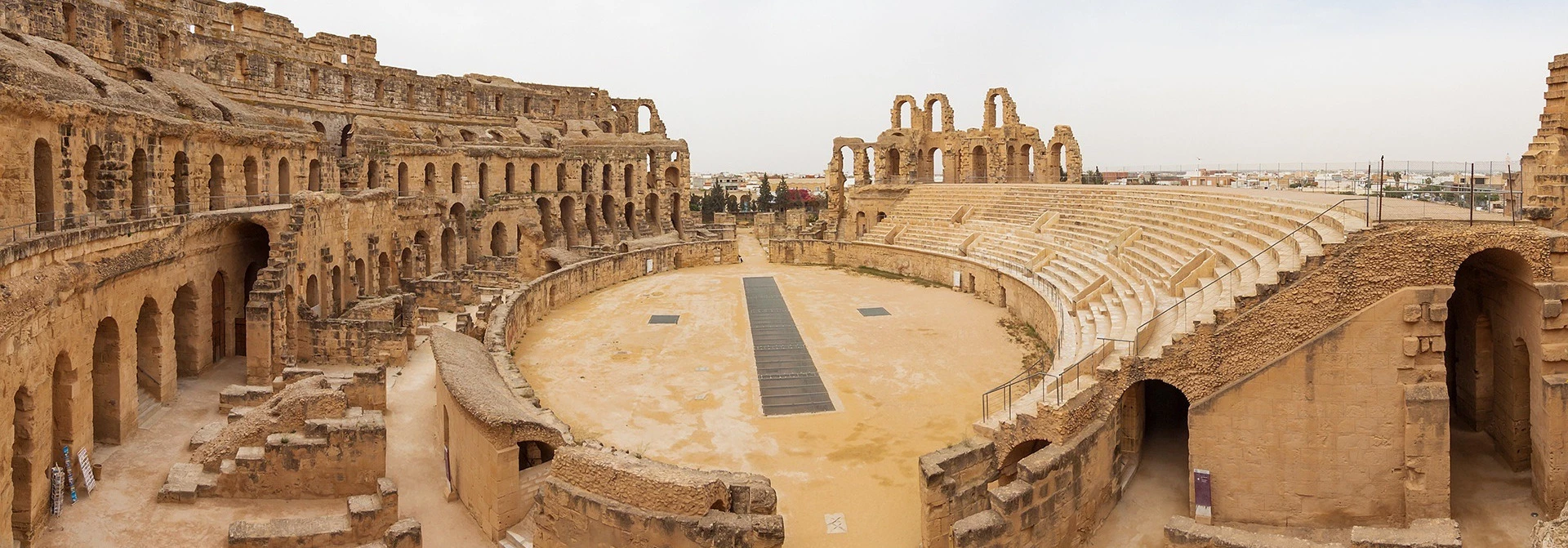
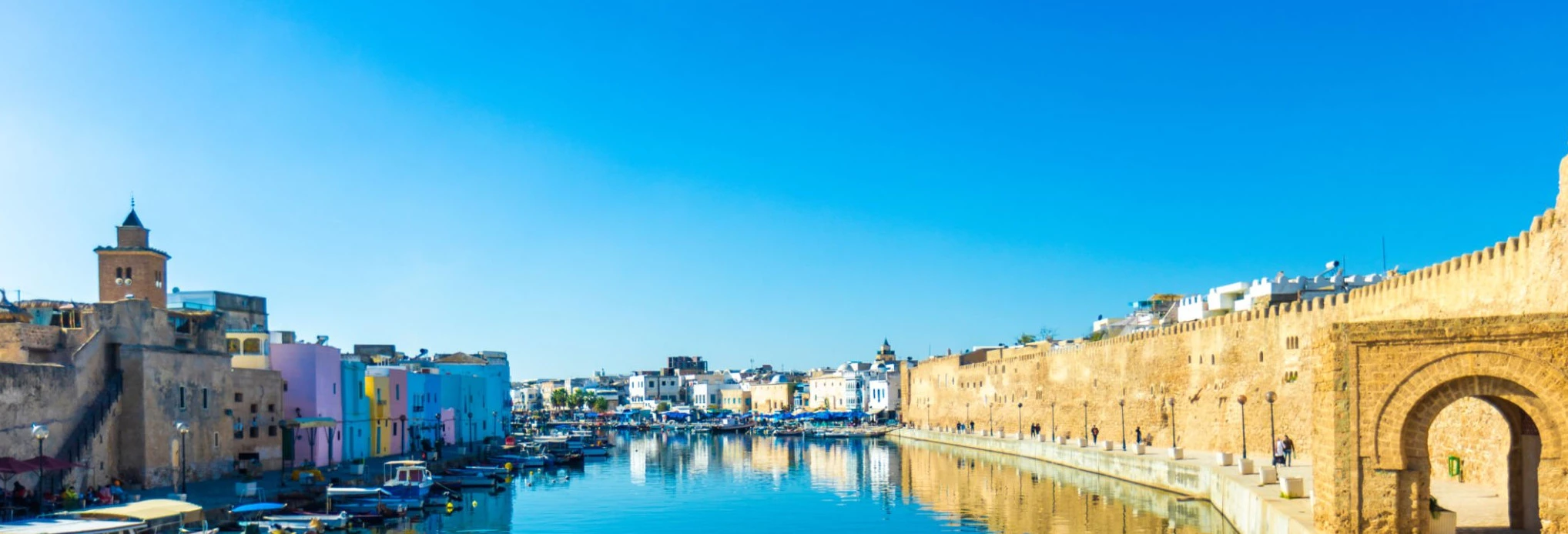
Off-the-beaten-path Tunisia means 80% of the country ignored by classic tourist circuits: Berber ksour of the Dahar, mountain oases of the Jerid, preserved Roman sites in the northwest, and forgotten islands like Kerkennah.
With 1,300 km of Mediterranean coastline to the north and east, Tunisia sits in a singular position in North Africa: less than three hours by flight from London or Paris, yet a complete change of scene the moment you leave the beach resorts. Its 12 million inhabitants concentrate along the east, leaving the great Saharan south and the Dahar ridge almost empty.
This guide deliberately focuses on under-visited regions: the Berber southeast around Tataouine, the Jerid and its mountain oases, the Punic Cap Bon, the Roman northwest, and the forested Kroumirie. It steers clear of Hammamet, Sousse and the resort zone of Djerba to follow the tracks taken by slow travellers.
- Capital: Tunis (this guide leaves it quickly)
- Currency: Tunisian dinar (TND), 1 EUR ≈ 3.4 TND (1 USD ≈ 3.1 TND, 1 GBP ≈ 4.0 TND)
- Languages: Arabic (official), Berber in the south, French widely spoken, English in tourist hubs
- Time zone: CET (UTC+1), no daylight saving — 1h behind Paris in summer, same time as London in summer, 1h ahead of London in winter
- Religion: Sunni Islam (constitution), tradition of religious openness in the north
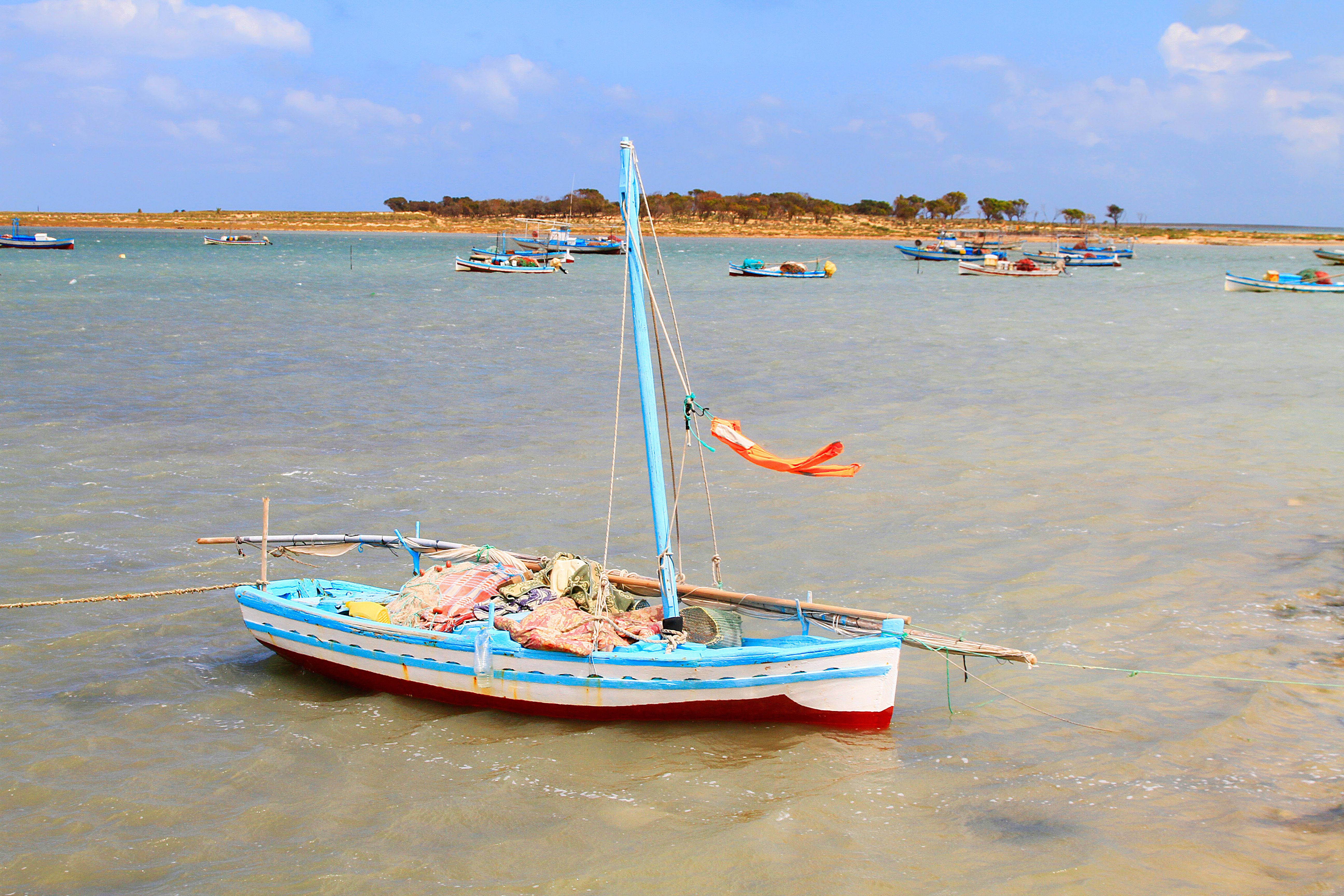
Kerkennah Islands
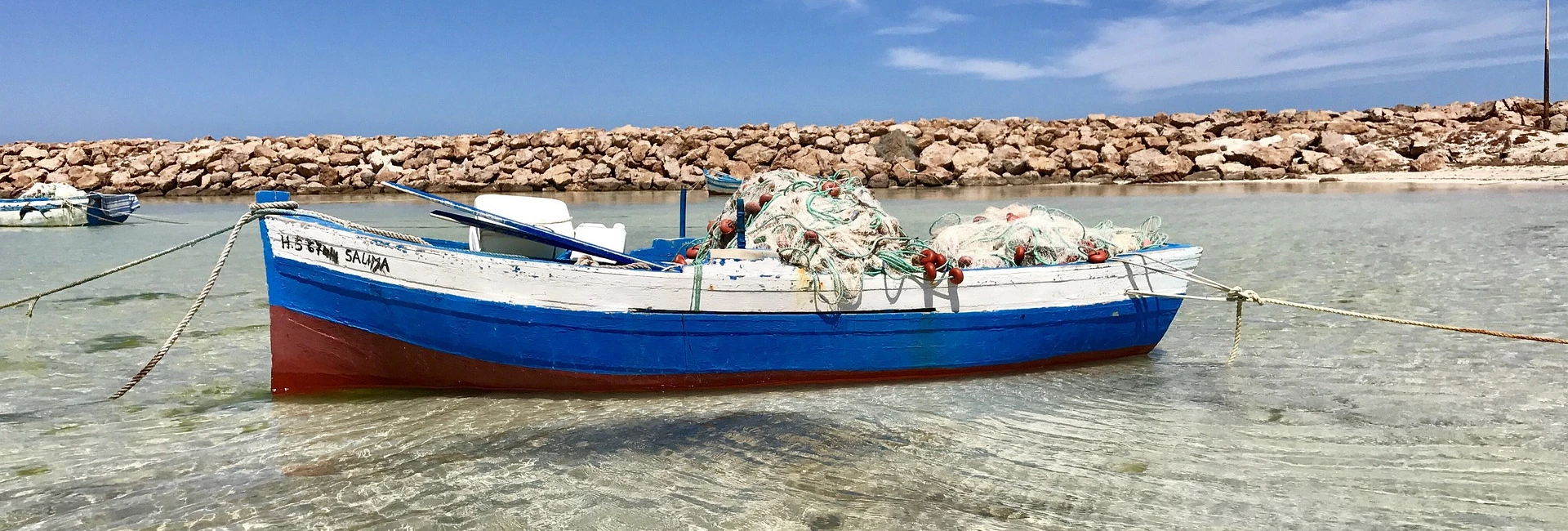
The salty wind that sticks to your neck the moment you step off the ferry announces a different rhythm: here you wait for the tide, not the timetable. This flat archipelago of 16 islands off Sfax, home to 15,000 people, has practised an artisanal trap fishing called charfia since Punic times — inscribed on UNESCO's Intangible Cultural Heritage list in 2020. You hire a bike to reach the empty beaches of Sidi Frej, follow fishermen at dawn in a felucca, and lunch on grilled octopus on the Mellita pier.
The archipelago has no resort, no organised club: precisely why it is the perfect antithesis of Djerba 250 km to the south.
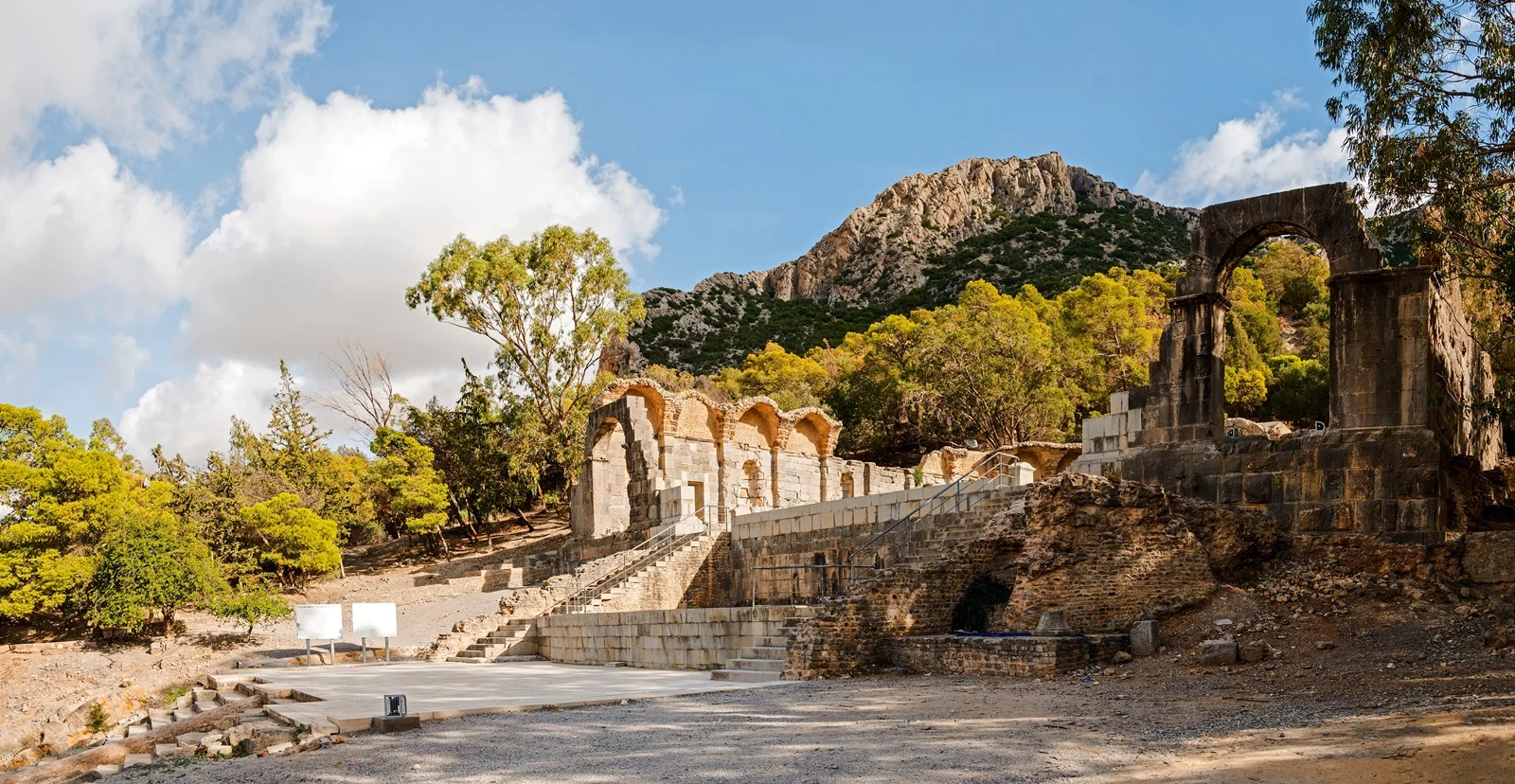
Temple of the Waters at Zaghouan
Water emerging from rock at the foot of Djebel Zaghouan, 1,295 m high, fed Carthage 1,900 years ago through an aqueduct of 132 km — the longest known Roman aqueduct. The sanctuary marking the source is a semicircular nymphaeum built under Hadrian between 117 and 138 AD, of which twelve niches and a monumental staircase remain.
Only 60 km from Tunis, the site stays strangely empty: tour buses head straight for Carthage and Sidi Bou Saïd, leaving the panorama over the Medjerda plain to walkers and Tunisian families on their Friday picnic.
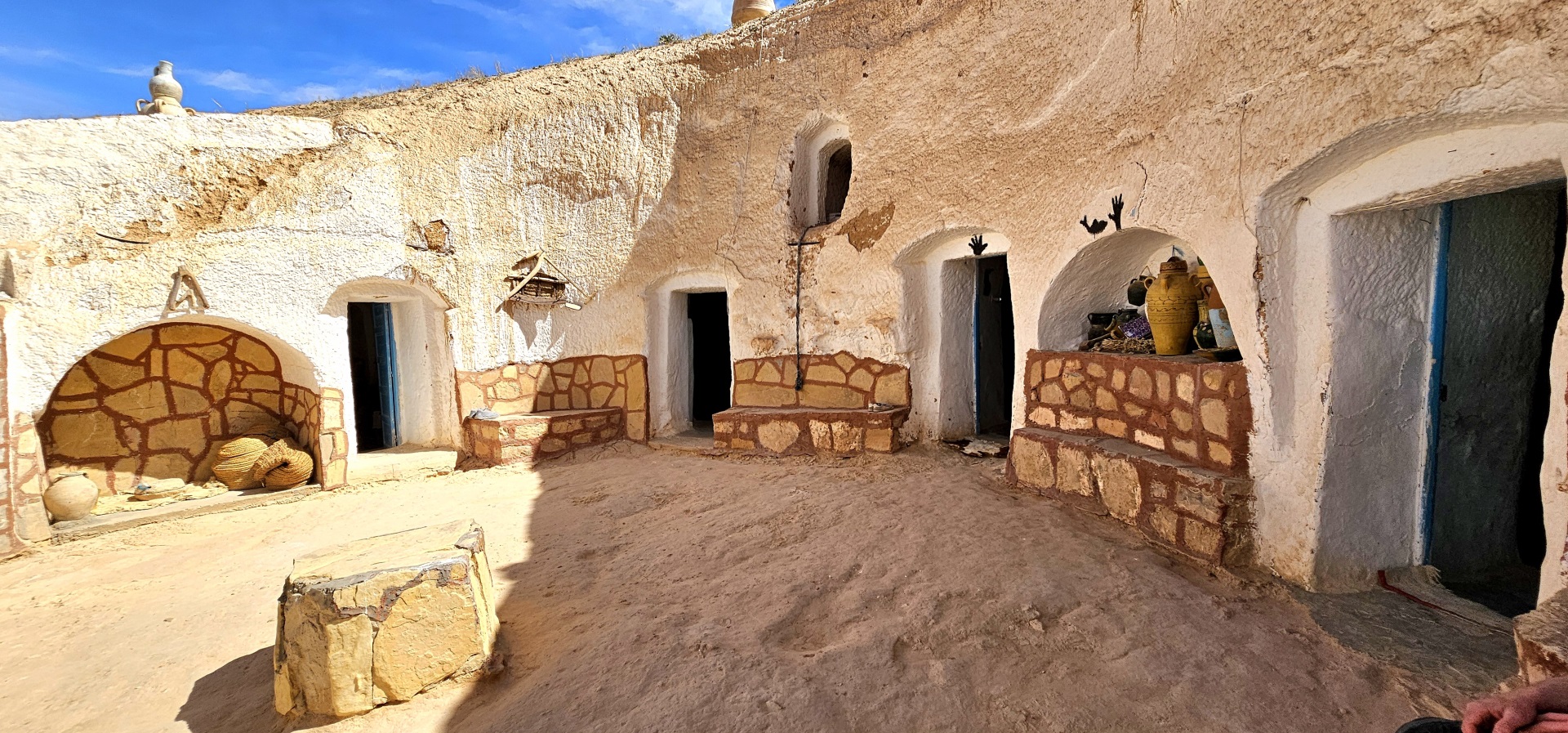
Matmata
The silence inside a Matmata troglodyte dwelling is total — not a breath of air, 18°C summer or winter, and light dropping in through the central well. The Berber village, perched at 600 m altitude 40 km southwest of Gabès, holds more than 700 homes dug as pit dwellings: an open-air courtyard sunk into the ground, with rooms cut into its flanks in a crown.
The Sidi Driss hotel, famous for serving as the Luke Skywalker home in Star Wars (A New Hope, 1977 and Attack of the Clones, 2002), lets you sleep on site — but it is now overrun. Prefer the Diar el Berber, more authentic.
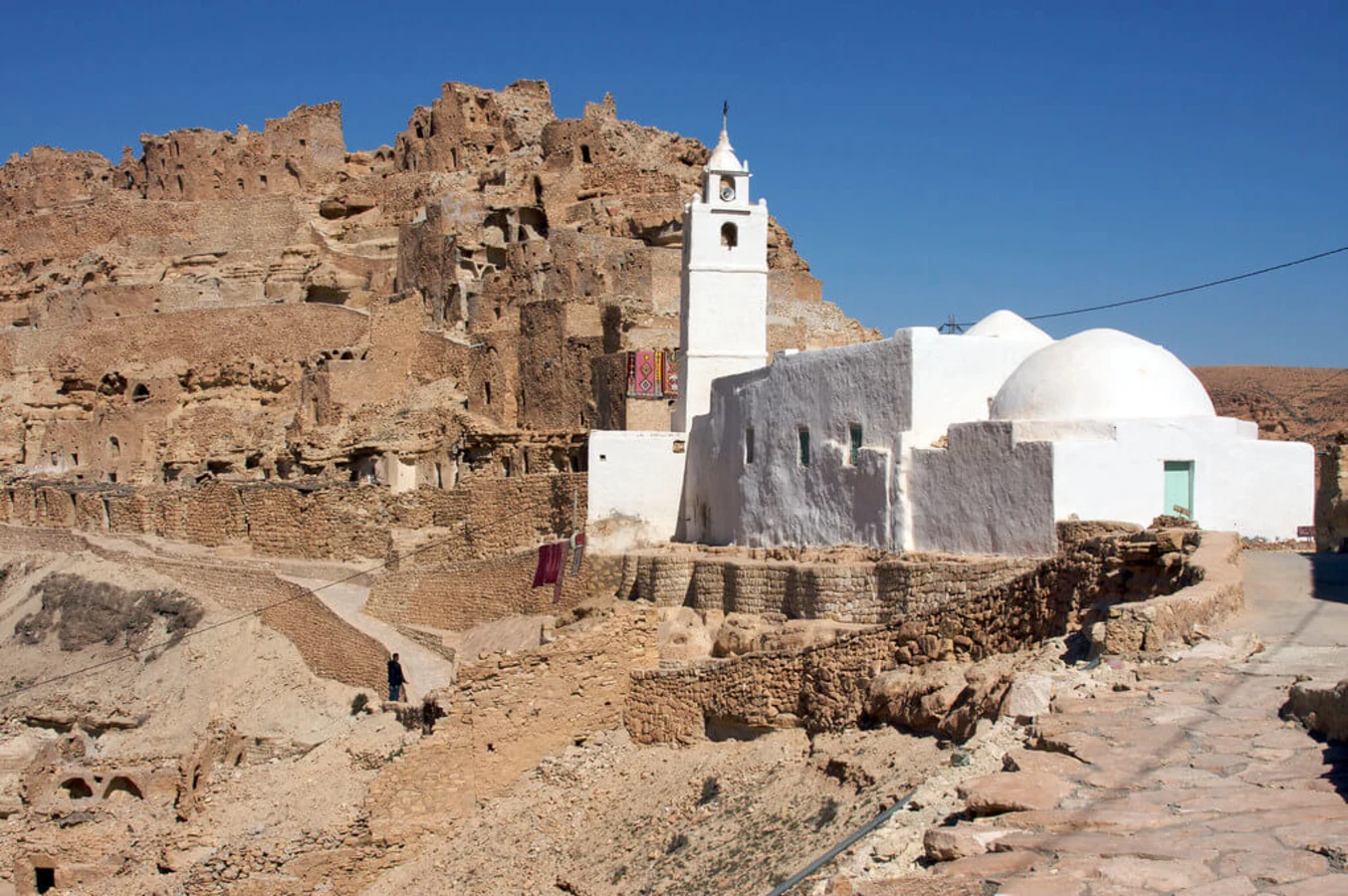
Chenini
The great white mosque of Chenini rises from the rocky ridge at 466 m altitude, above a cascade of fortified granaries (ghorfas) carved into the cliff. The village, 18 km southwest of Tataouine, is home to about a hundred Berbers of the Ouerghemma tribe who still speak the local Shilha and farm the terraces below as they did in Hilalian times (12th century).
Chenini belongs to that handful of living troglodyte villages where you can still meet the baker firing his loaves in the communal wood oven and watch children leading their goats home at dusk. More striking and photogenic than Matmata, far less visited.
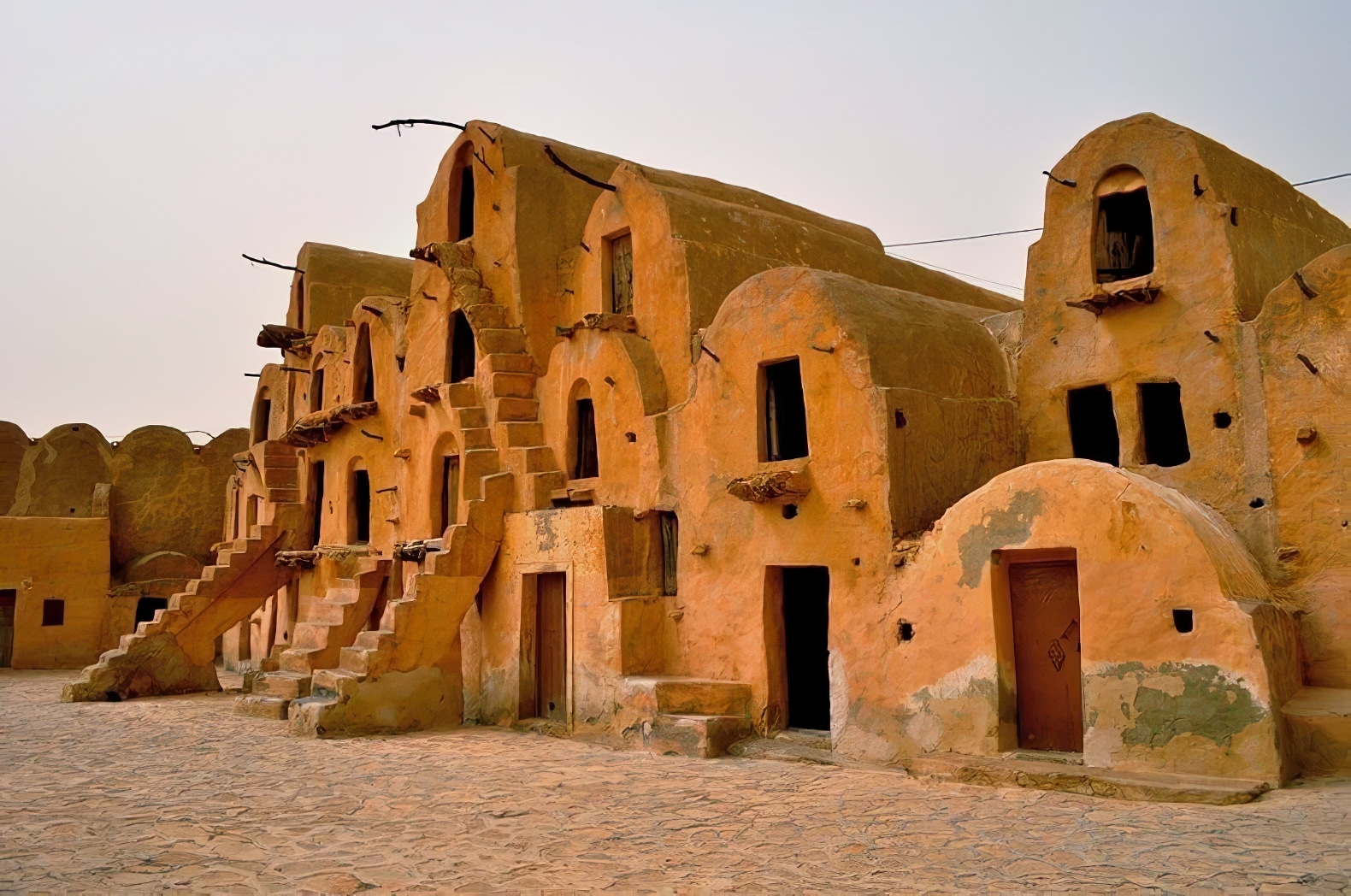
Ksar Ouled Soltane
Four storeys of golden storage cells rise around two courtyards, forming one of Tunisia's best-preserved ksour. Built in the 15th century 20 km south of Tataouine, this fortified granary of the Berber Ouled Debbab tribe counts up to 400 ghorfas stacked on top of one another, reached by exterior stone staircases and linked by palm-trunk beams.
The great inner courtyard served as the slave quarter for Anakin in Star Wars Episode I: The Phantom Menace (1999) — a detail the guards happily point out. The site is still active: barley and wheat are still stored here in June during the Mouled religious festival.
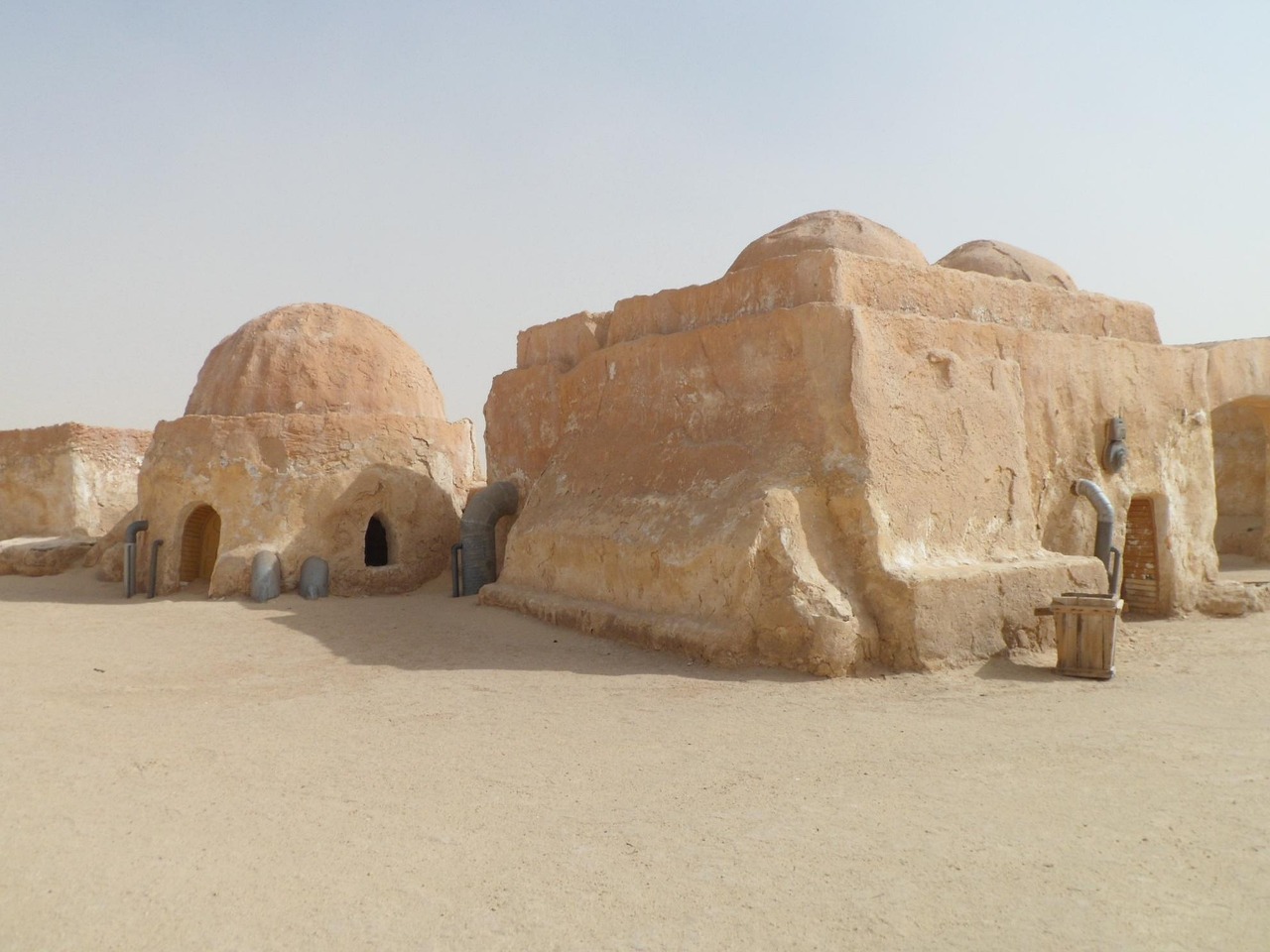
Ong Jemel and Mos Espa
The rock formation shaped like a camel's neck, which gives the site its name (ong = neck, jemel = camel in Arabic), rises from the white dunes 30 km northwest of Nefta, on the shores of Chott el-Gharsa. At its foot, the Mos Espa set — Anakin Skywalker's home town in Star Wars Episode I (1999) — was left in place after filming and restored in 2013 through an international crowdfunding campaign.
About twenty conical structures inspired by Djerba's Ibadite architecture still stand in the sand, almost unreal. The site is now slowly being swallowed by the advancing dunes, adding melancholy to the visit.
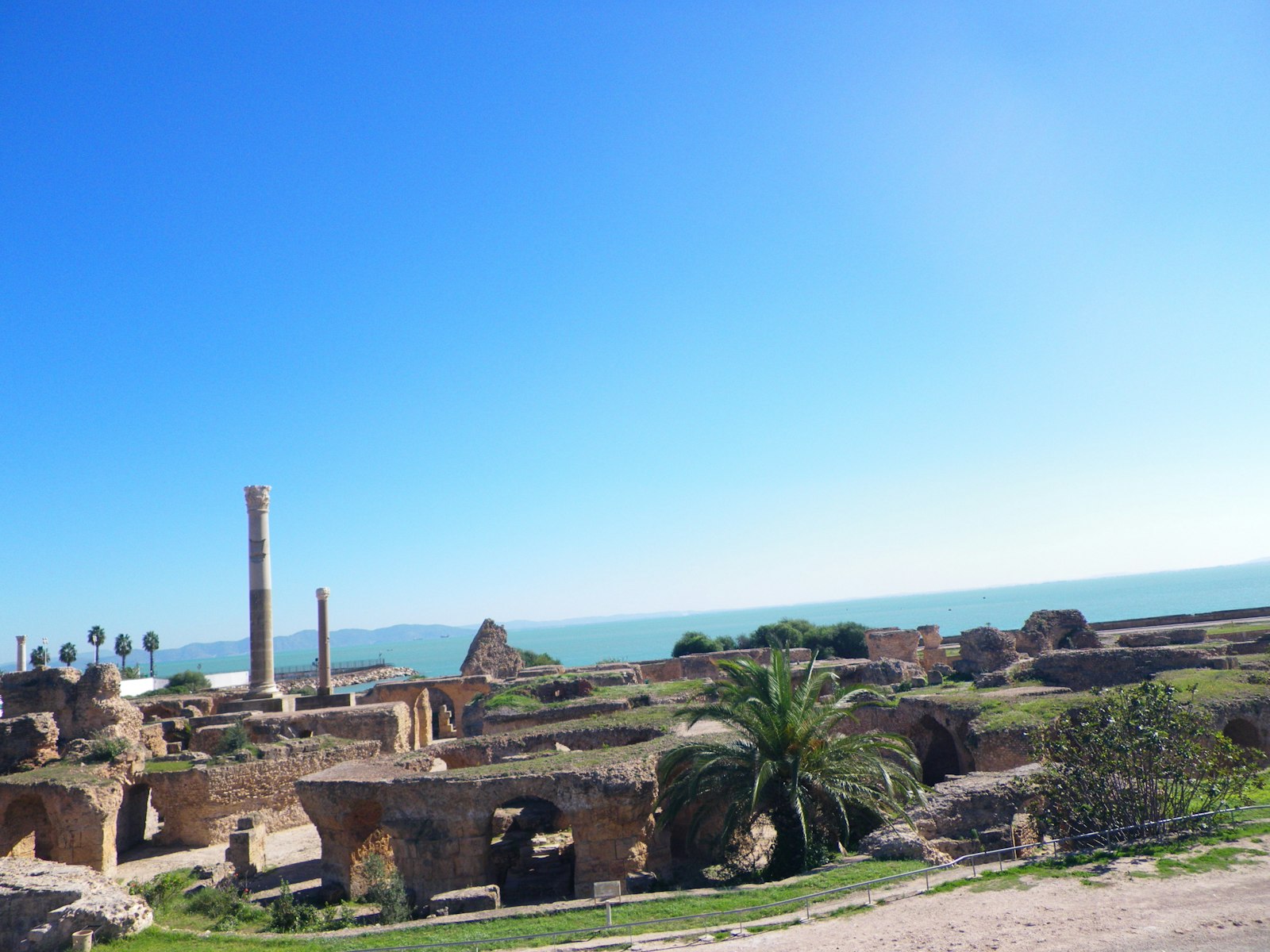
Kerkouane
Kerkouane is the only Punic city in the world never rebuilt by the Romans, making it a unique testimony of Phoenician urbanism preserved as it was after its destruction by Rome in the 3rd century BC. UNESCO-listed since 1985, it spreads across a sea-battered clifftop on the Cap Bon, 12 km northeast of Kelibia.
You walk among house plans, individual bathtubs in pink stone (proof of remarkable hygiene for the period), and mosaic floors where the Sign of Tanit — the patron Phoenician goddess — appears. The small adjoining museum displays funerary stelae, jewellery, and the wooden statuette of a priest, one of the few pieces of Phoenician cedar preserved anywhere.
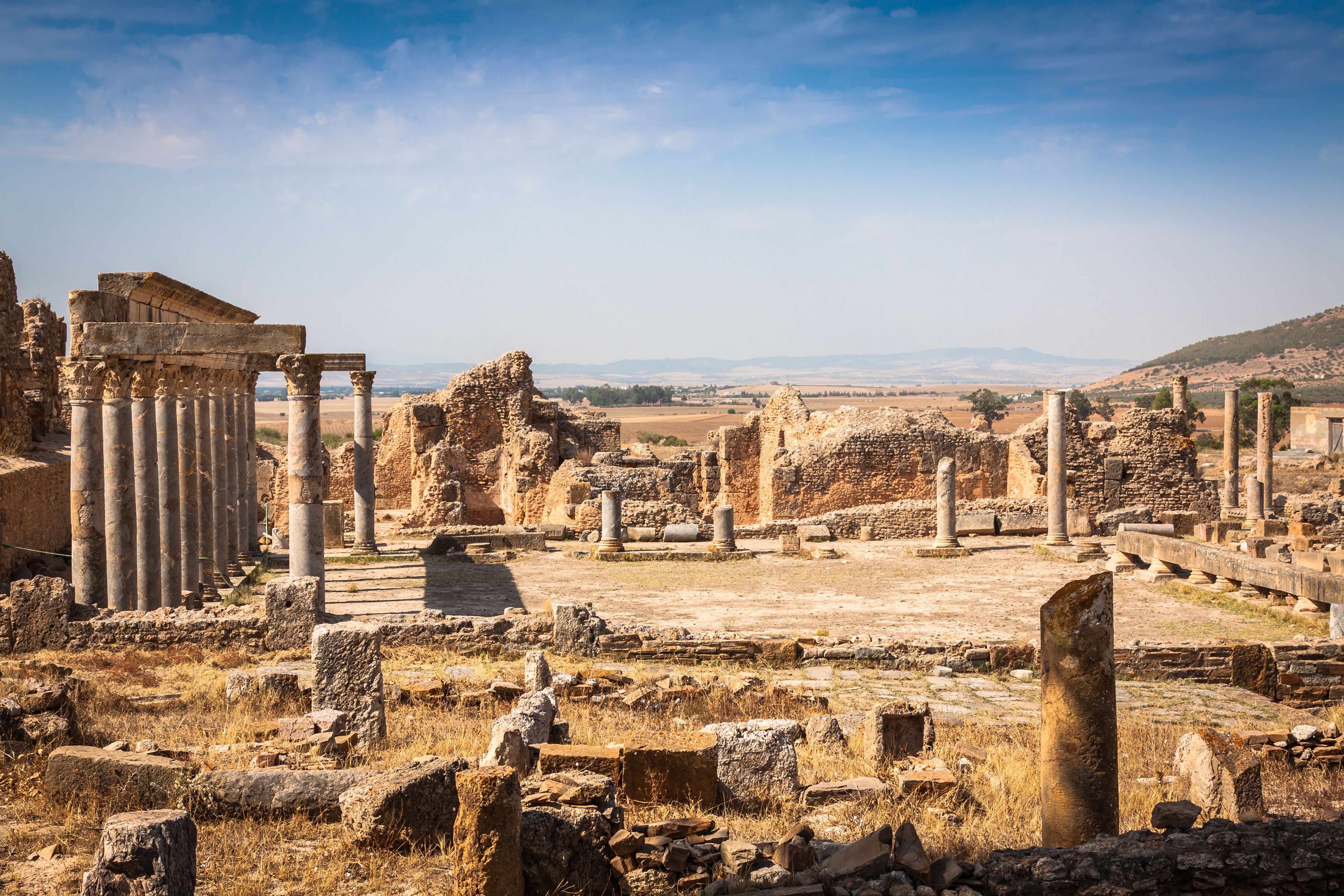
Bulla Regia
The thermal contrast hits the moment you go down the first staircase: 15°C colder between the scorching street and the basement of the Roman villas. Bulla Regia is the only ancient site in the world where Roman patricians built their homes partly underground to escape 45°C summers — a local 2nd–3rd century innovation that preserved some thirty subterranean villas in situ.
The House of the Fishing Scene, the House of Amphitrite, and the House of the Hunt still hold their original mosaics — Venus on her shell, hunting scenes, marine motifs. The site, 9 km from Jendouba in the Medjerda valley, gets ten times fewer visitors than El Jem or Carthage.
Dougga
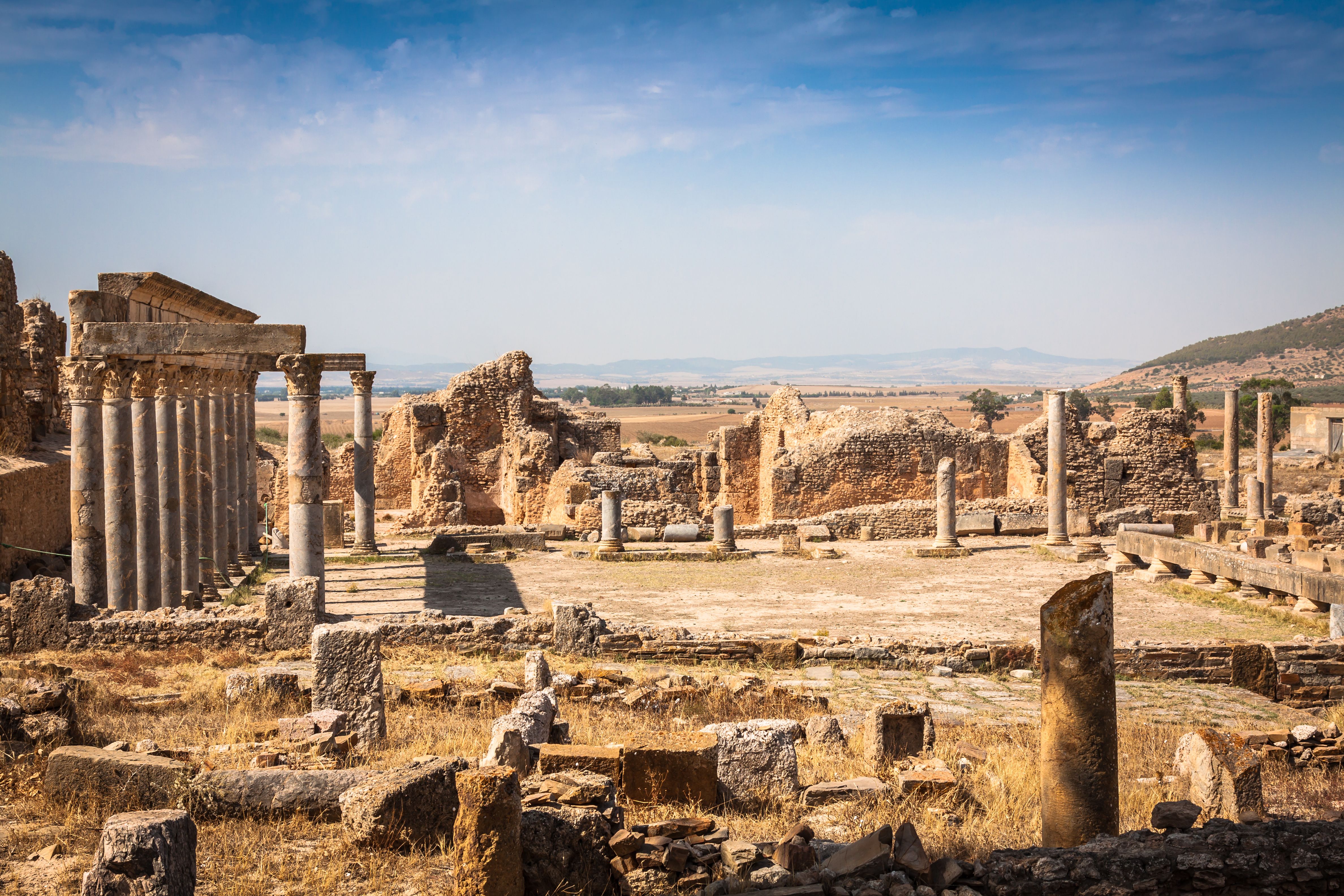
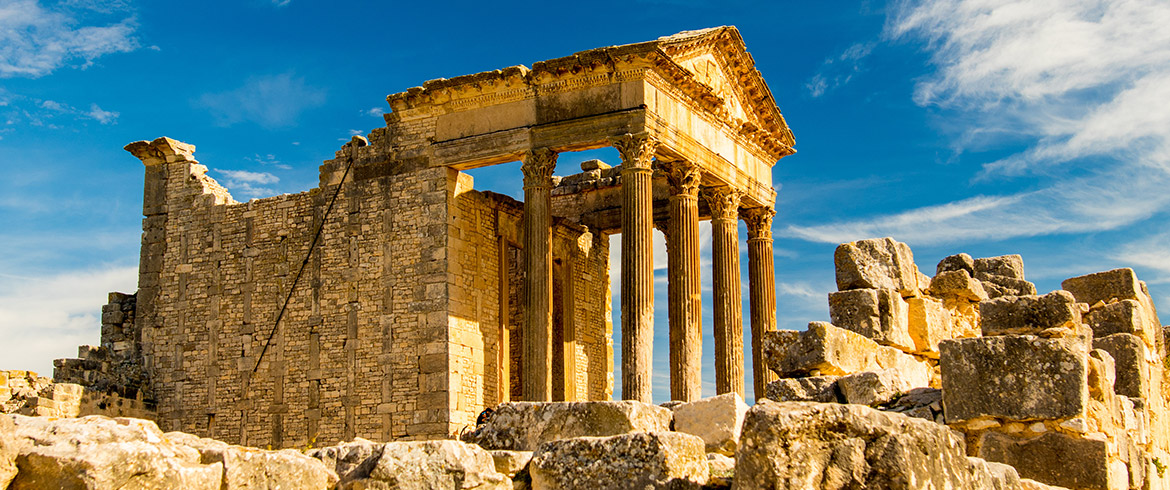
Dougga is the best-preserved small Roman town in North Africa (UNESCO 1997), spread over 75 hectares at 571 m altitude between the Kroumirie mountains. Under Antoninus Pius, Thugga (its ancient name) had 5,000 inhabitants: today you visit the 166 AD Capitol — its Corinthian façade almost intact —, the 3,500-seat theatre carved into the slope, the Licinian baths, the market, and the extraordinary Libyco-Punic mausoleum, the only preserved Numidian monument.
The site, 110 km southwest of Tunis, is strikingly peaceful: you can wander it for half a day without crossing more than thirty people, where Carthage piles 3,000 onto the same surface.
Chebika
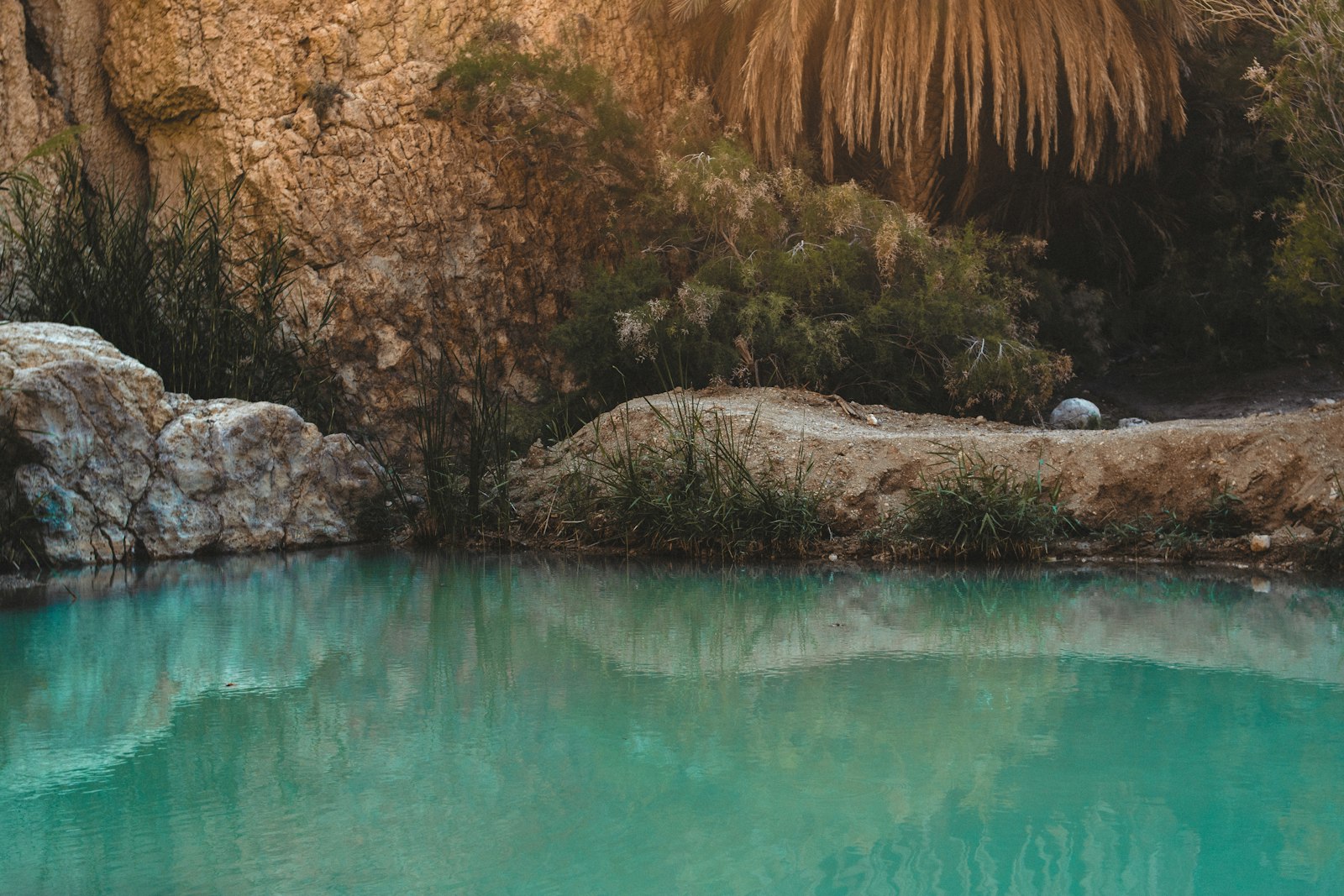
A spring bursts from the rock halfway up Djebel el-Negueb at 1,196 m altitude, crosses a small shaded canyon, and feeds a tiny suspended palmeraie — unreal in the middle of a hostile mineral landscape. Chebika, 60 km northwest of Tozeur, is one of three mountain oases of the Jerid (with Tamerza and Mides) forming the hinterland of Chott el-Gharsa.
The old Berber village, abandoned after the 1969 floods, still clings ruined to the side of the djebel. The 800 m trail leads up to the waterfall and natural pool where you can dip your feet in water that stays at 15°C even in July.
Ksar Ghilane
A geothermal spring at 32°C rising in the middle of the desert changes everything: Ksar Ghilane is not a mirage but a real oasis, gateway to the Grand Eastern Erg 130 km southeast of Douz. You bathe in a palm-fringed pool, then climb a dune at sunset to grasp the immensity — 9,000 km² of live dunes stretch east to the Algerian border.
On top of a nearby knoll stands the Ksar Tisavar, a 3rd-century Roman fort that once marked the limit of the Limes Tripolitanus. Today the oasis lives off bivouac tourism: about a dozen camps offer Bedouin tents, camel rides, and starlit nights. It's the deepest Saharan point you can reach in Tunisia without a military escort.
Chott el-Jerid
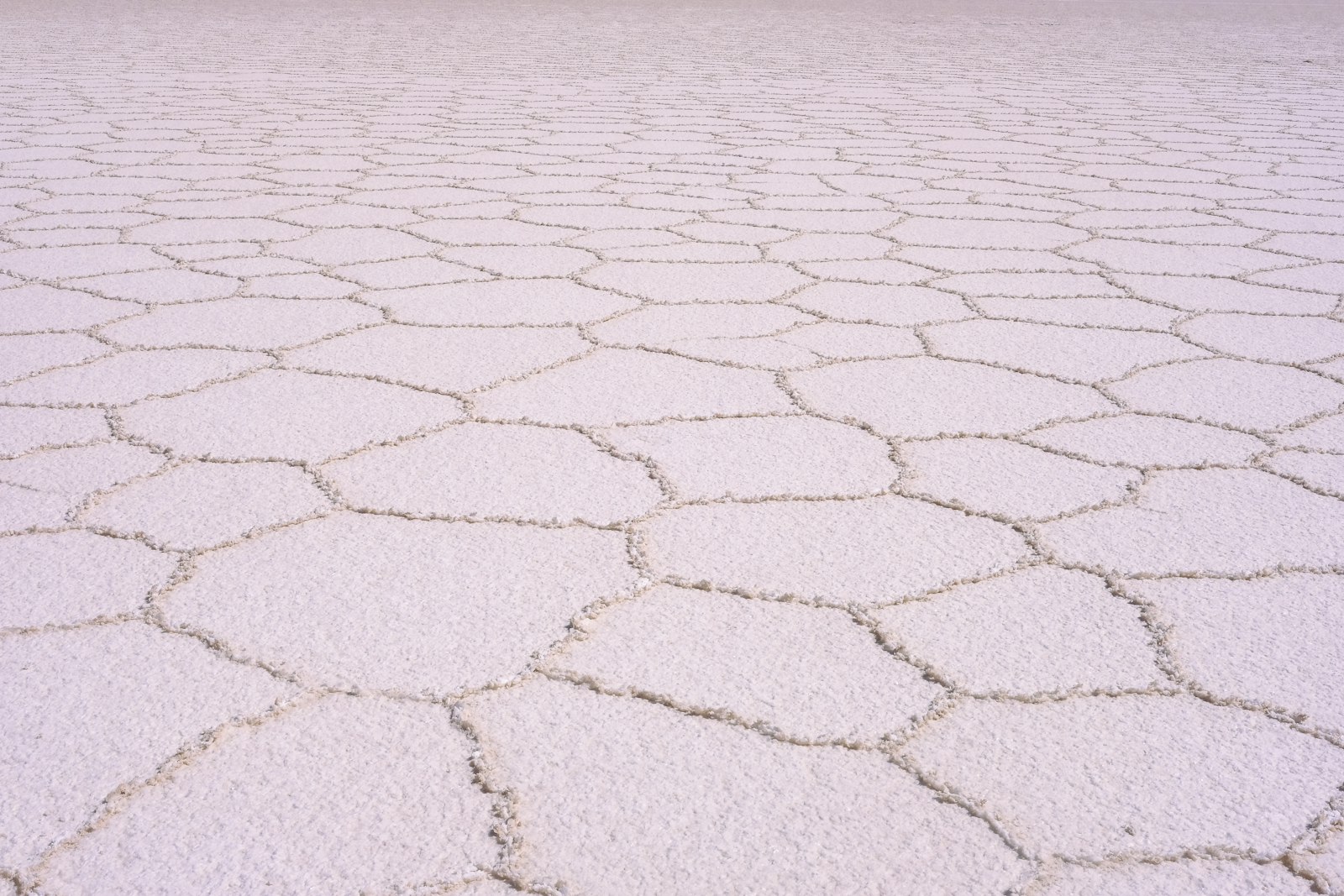
The silence you hear stepping onto the salt crust of Chott el-Jerid has no equivalent. 7,000 km² — ten times Singapore — of a former dried lake that sparkles in winter and cracks in summer. The P16 road crosses it in a straight 80 km line between Tozeur and Kebili, one of the most surreal drives in the Maghreb: you roll at sea level between two white horizons where pink, blue and turquoise mirages emerge depending on the hour.
A few photo pull-ins (Mestaoua car park, midway) let you step out and walk on the saline crust — careful in the rainy season when the salt softens. The site also served as the planet Tatooine for the boyhood Luke home in Star Wars.
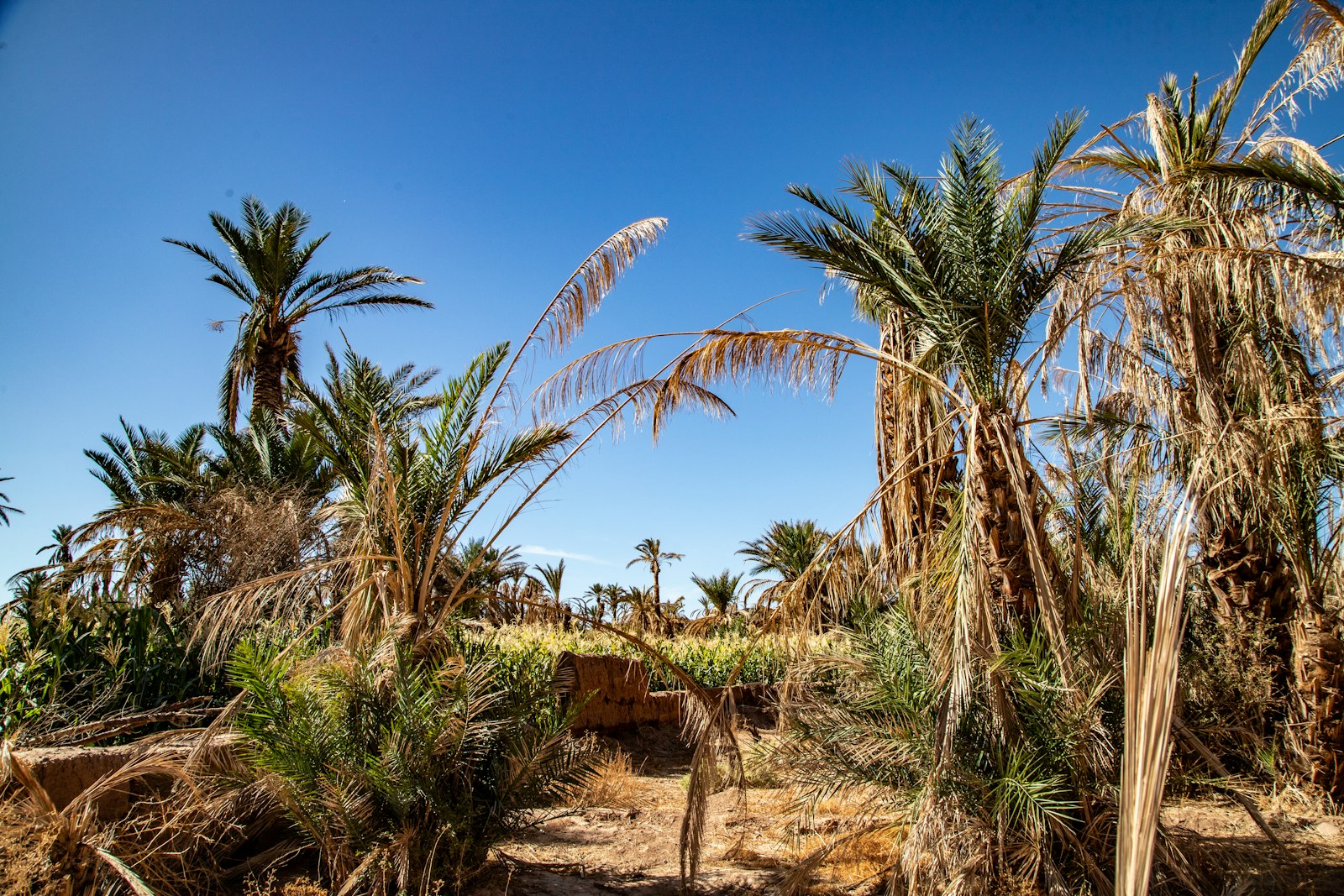
Tozeur (palmeraie and Ouled El Hadef)
Capital of the Jerid and western gateway to the desert, Tozeur stands out for two unique heritage gems. First, its 1,000-hectare palmeraie with over 200,000 date palms, irrigated since the 13th century by a hydraulic network designed by Imam Ibn Chabbat: a water clock (guesa) distributes the resource every six hours among 60 plot owners.
Second, the Ouled El Hadef medina, a 14th-century quarter where every façade is decorated with locally fired yellow clay bricks set in raised geometric patterns. A craft unique to Tunisia, handed down across generations, and one of the country's most photogenic architectural styles.
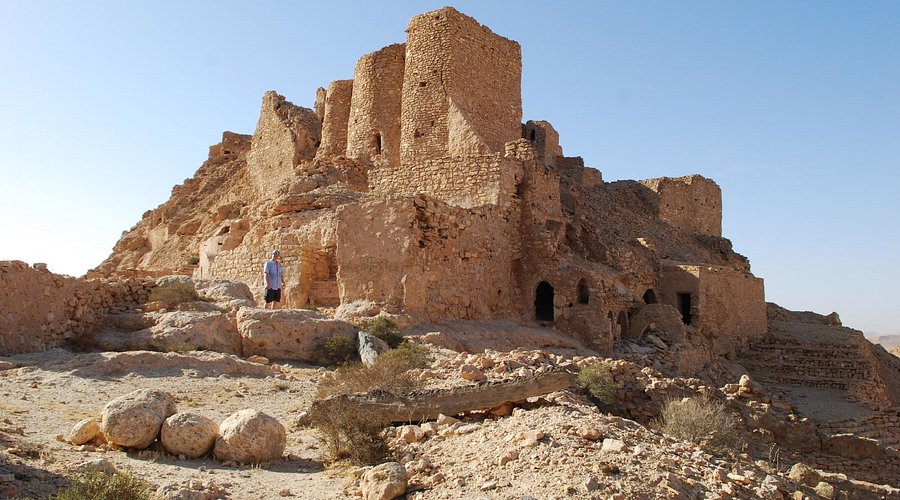
Douiret
Quieter and purer than its neighbour Chenini, Douiret stretches nearly 2 km along a cuesta at 498 m altitude, 22 km southwest of Tataouine. The upper village, abandoned in the 1980s, holds more than 700 troglodyte dwellings carved horizontally into the soft rock, a great white mosque, and an ingenious irrigation system of jessour (terraced farming with check-dams).
You walk among the empty homes, painted doors left ajar, ceramics abandoned in place — an atmosphere of a ghost village that seems to have emptied yesterday. A few families have rebuilt below in the new village, but the bulk of the ghorfas remain in their raw state.
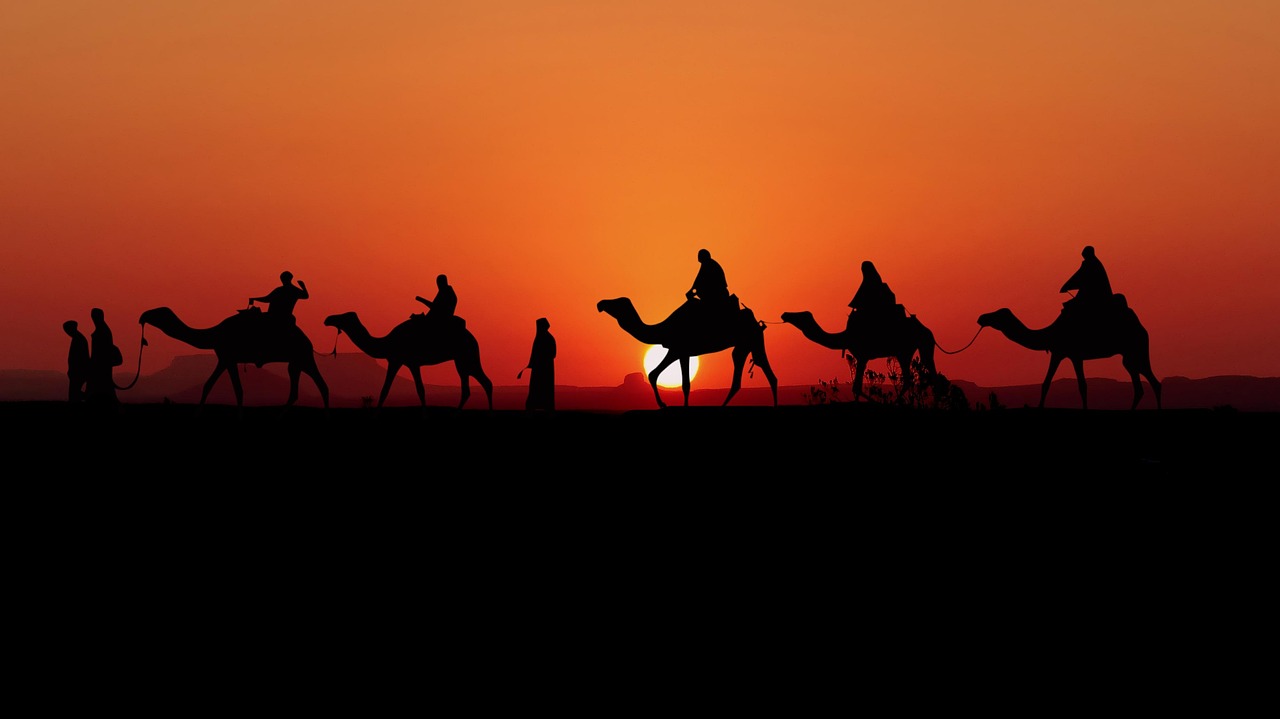
Camel ride and Saharan bivouac at Ksar Ghilane
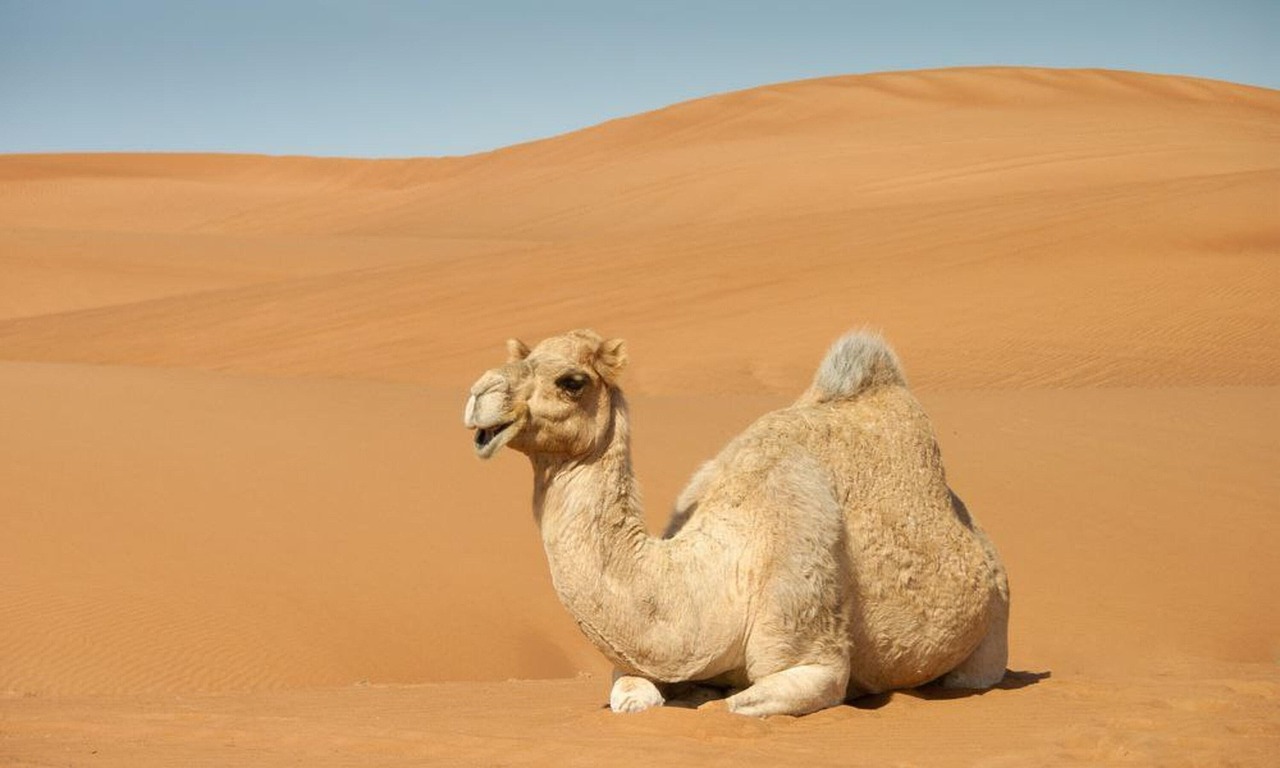
Departure at 3 pm from the Ksar Ghilane camp after a welcoming mint tea. A Berber cameleer leads a caravan of 5 to 10 camels across 6 km of live dunes to the bivouac point, chosen behind a crest for the night. Plan 2h30 of riding at 4 km/h on docile mounts — accessible from age 8.
Highlight: total silence at sunset on top of a 60 m dune, then the starry sky appearing before dinner ends under the Bedouin tent (tajine, brik, méchouia salad, dates). Berber breakfast at sunrise and ride back the following morning.
Booking advised 1 to 2 weeks ahead in April–May and October–November. Pansea, Yadis and Carthago camps offer this experience in shared groups (6–12) or as a private package (€220–280/person).
- 2 jours / 1 nuit
- 120-180 € / personne, dromadaire, dîner et nuit en bivouac inclus
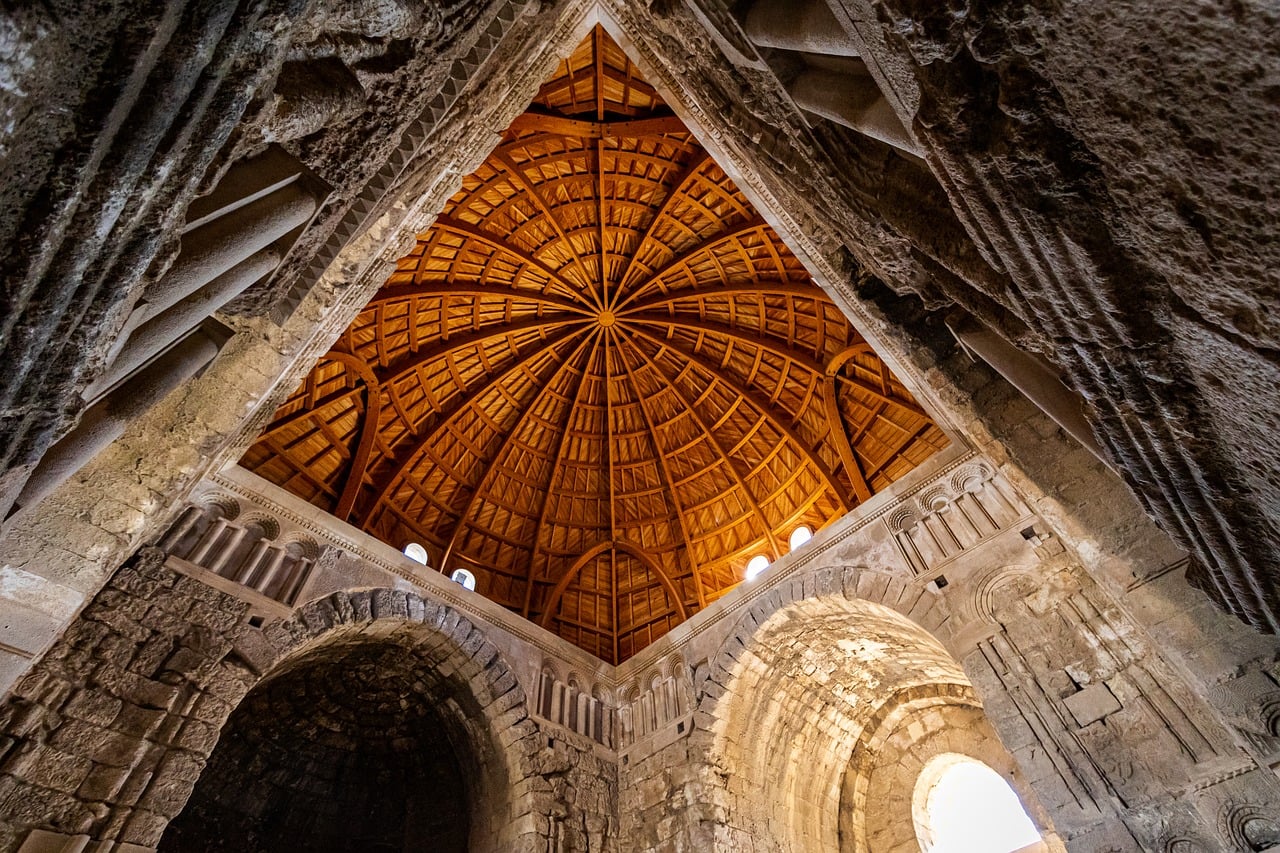
Berber villages of the Dahar — immersion
4x4 circuit from Tataouine linking the perched villages and fortified ksour of the Tunisian southeast. Classic day-loop: Chenini (visit and tea in the upper village), Douiret (troglodyte ghost village), Ksar Ouled Soltane (terraced ghorfas), Guermessa (dramatic abandoned village), with a traditional lunch at a Berber family's home halfway through.
Highlight: meeting a resident who still speaks Shilha Berber and shows how collective harvesting in the ghorfas worked before the 1960s sedentarisation. English- and French-speaking guides know which doors remain open — without them, many remarkable rooms stay closed.
Family-friendly from age 7–8. Pack walking shoes, water bottle, and a chèche. Two-day versions available with a night in a restored Berber gîte (Ksar Hadada or Tamezret).
- 1 à 2 jours
- 60-110 € / personne avec guide francophone, transport 4x4 et déjeuner inclus
Jerid cooking class in Tozeur
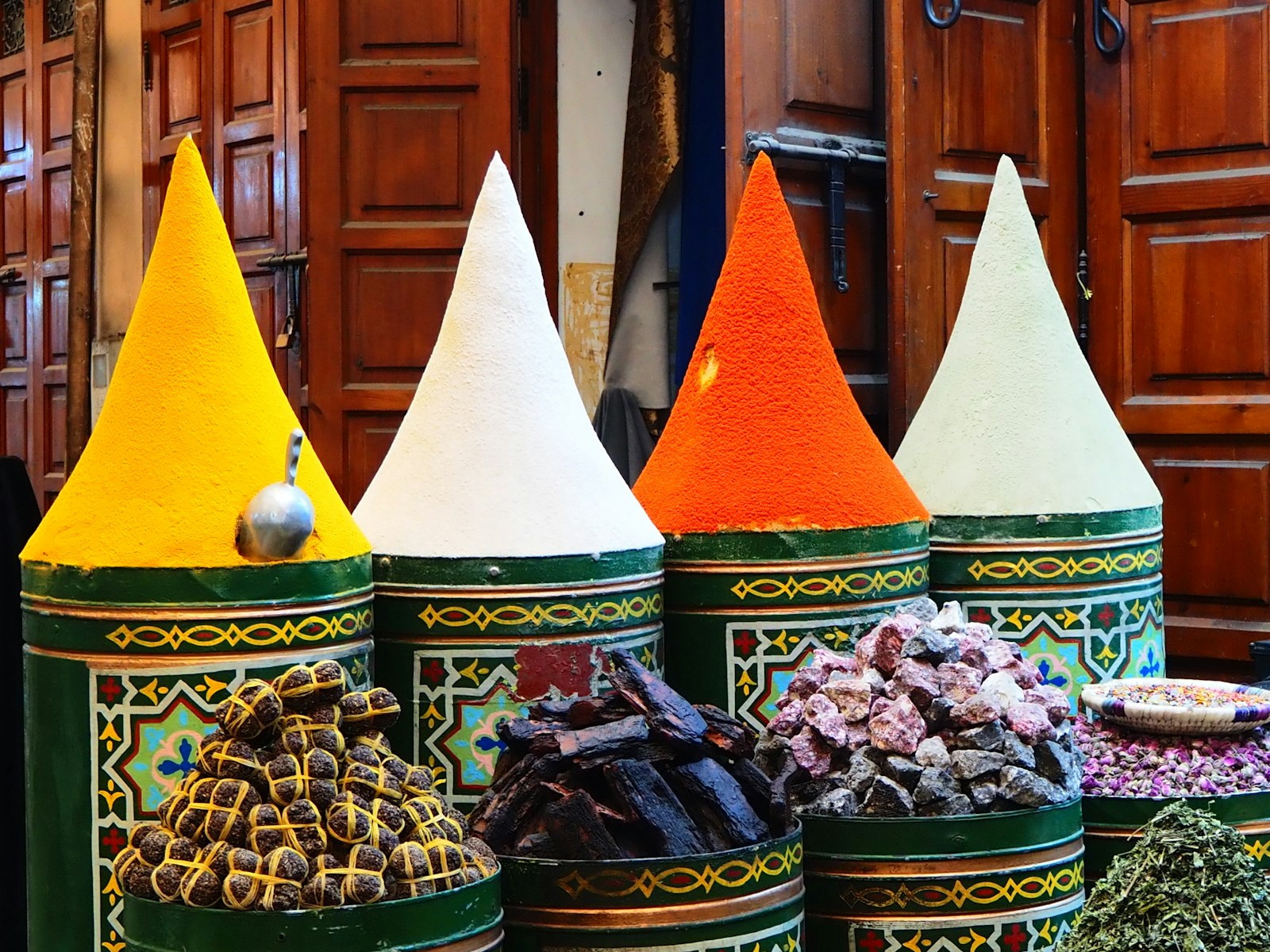
Meet at 9 am at the Tozeur central market for a guided walk through the stalls of spices, dates, semolina, fresh harissa and dried pulses (1h). You pick the day's ingredients together. Then transfer to your host (often a dar in the Ouled El Hadef quarter) for three signature Jerid dishes.
Highlight: making the brik with egg — the minute-quick cross-fold of the malsouka sheet before flash-frying. Trickier than it looks, and everyone botches the first one. Then date couscous (the Jerid signature), méchouia salad, and homemade harissa ground by hand with a stone pestle.
All skill levels welcome, children from age 6. Book 48h ahead via the tourist office or partner dars. Tasting meal shared family-style at the end.
- 1/2 journée (env. 4h)
- 35-55 € / personne, ingrédients et repas inclus
Mountain oases loop (Chebika–Mides–Tamerza)
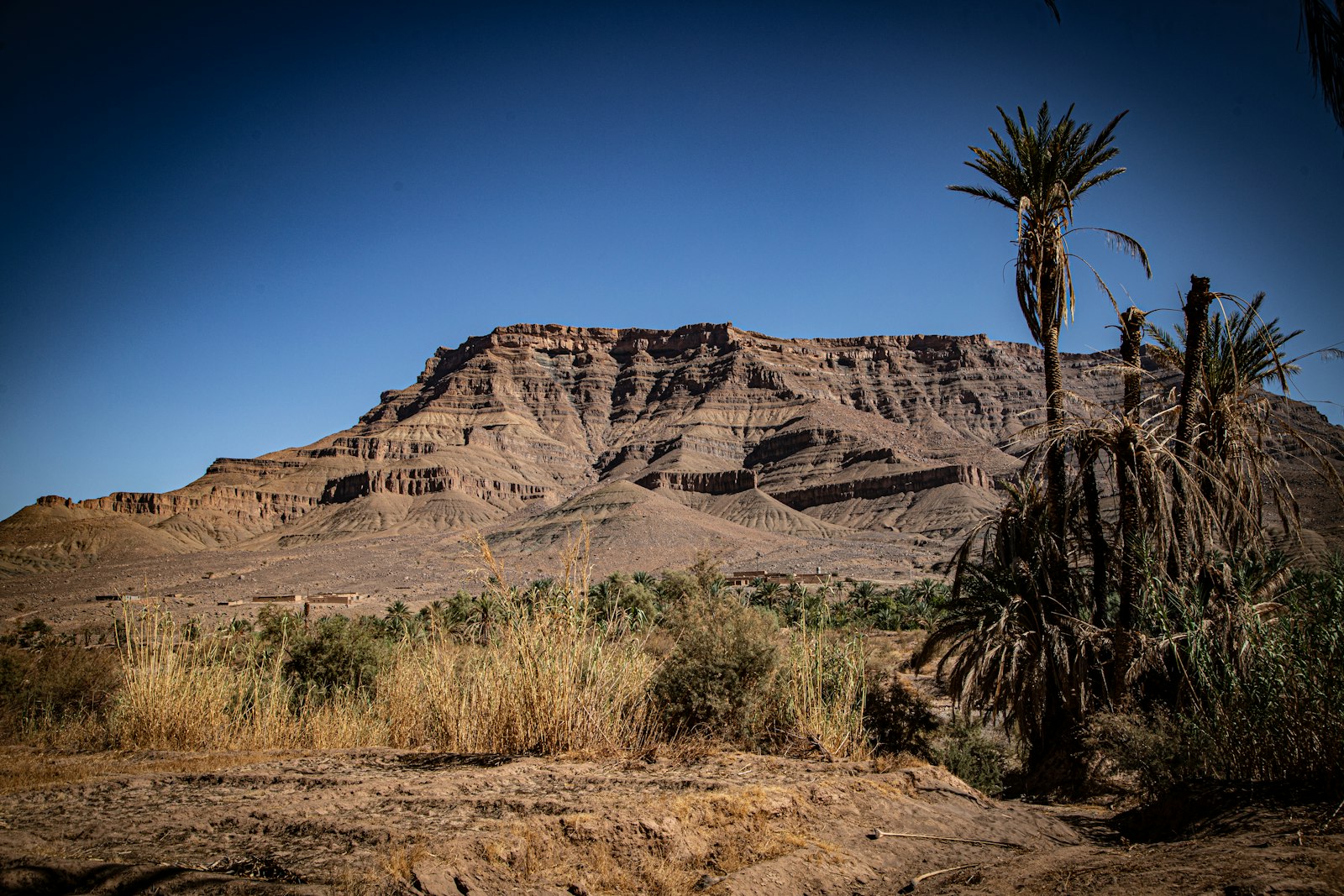
4x4 excursion from Tozeur leaving at 8 am for the full Jerid mountain oases loop. First stop Chebika (1h30 walk to the waterfall and suspended palmeraie). Then on to Mides (45 min) for the dramatic 3 km long canyon carved by the wadi — vertiginous viewpoint. Lunch at Tamerza, the third oasis, in a traditional restaurant facing the cascades.
Highlight: the 1h hike inside the Mides canyon in early afternoon, golden light and total silence. The site served as a location for The English Patient (1996) and several Pasolini films.
Walking level: easy to moderate, cumulative 3–4h of walking on the day. Family-friendly from age 8. Pack solid shoes, water (min 2 L), hat and a windbreaker (the canyon can be windy). Booking through any Tozeur hotel, daily departures in high season.
- 1 journée
- 55-90 € / personne en groupe, 4x4 avec chauffeur et déjeuner inclus
Getting there
Expect 2h30 direct flight from Paris and around 3h from London to Tunis (TUN), Djerba (DJE) or Tozeur-Nefta (TOE), from around €130 / £110 return in low season.
Tunisair, Nouvelair, Transavia and easyJet serve Tunis-Carthage (TUN) directly from major European hubs including Paris CDG, London Gatwick, Lyon, Marseille and Nice. For a south-focused trip, prefer a direct flight to Tozeur-Nefta (TOE) or Djerba (DJE): you skip 7 hours of road from Tunis and start the journey where the adventure happens.
Flights from Europe range €130–€320 return / £110–£280 depending on season and carrier. The Marseille–Tunis ferry (Corsica Linea, CTN) remains an option for travellers bringing a car: 24h crossing, from €220 for two passengers + vehicle.
Getting around
A rental car or a 4x4 with driver is the most effective way to reach off-the-circuit sites — the louage (shared taxi) covers the rest for tight budgets.
The louage is a yellow or white shared taxi that links every town to its neighbours: you wait at the louage station for it to fill (8–9 seats), pay €2–8 depending on distance, and leave. Dense network, no booking required, and unbeatable for backpacker budgets.
For tracks to Ksar Ghilane, Ong Jemel or the Dahar ksour, plan a 4x4 with driver (€80–130 per day, negotiable from Tozeur or Tataouine) — paved roads often stop 10 km short of the sites, and standard rental cars suffer there. The SNCFT rail network links Tunis to the main coastal cities (Sousse, Sfax, Gabès) in comfortable but slow trains.
- Car rental: €25–45/day for a city car, double for a 4x4
- SNTRI buses: nationwide coverage, lines to Tataouine, Tozeur, Le Kef
- SNCFT train: Tunis–Sfax €4–6, slow but reassuring
- Driving licence: EU, UK, US and Canadian licences accepted without formality for up to 1 year
What to do
Explore the Berber ksour of the Dahar, camp overnight in the Sahara at Ksar Ghilane, cross the mountain oases of the Jerid, and visit the preserved Roman sites of Dougga and Bulla Regia.
The detailed list of essential sites and activities sits below, with lat/long, visit tips, and budget. A few structuring principles to build your itinerary:
- Allow at least 10 days to combine south (5d) + Cap Bon or northwest (3–4d)
- Prefer a north → south direction, starting at Tunis-Carthage and ending in Djerba or Tozeur (direct return flight)
- Book Ksar Ghilane bivouacs in advance in April–May and October–November — they fill up
- Keep a buffer day: track transfers always take longer than planned
Food
Try the date couscous of the Jerid, the brik with egg, mloukhia, chakchouka, and homemade harissa — southern cuisine is spicier than northern.
Tunisian cuisine builds around a few pillars: couscous (with fish on the coast, lamb in the south, dates in the Jerid), the brik (deep-fried malsouka sheet stuffed with egg, tuna and capers), mloukhia (dark green sauce of dried jute leaves simmered 8 hours), and harissa. This paste of chillies, garlic, caraway and coriander goes with everything: bread, eggs, the midday sandwich.
In the south, order the mhammar (lamb confit with spices), the Tunisian tajines (egg and meat frittata, nothing like the Moroccan version), and especially the fresh Deglet Nour dates from Tozeur, sold on the branch between October and December. The markets of Tataouine, Douz and Tozeur are the best spots for local spices and Sahel olive oil.
Itineraries
For a first off-the-circuit trip: 10 days combining Cap Bon + Roman northwest + Berber south, or 7 days focused on the south (Tozeur → Matmata → Tataouine → Ksar Ghilane).
Two field-tested itineraries depending on your time and angle:
10-day north + south circuit (recommended for a first off-circuit trip)
- Days 1–2: arrival in Tunis, Cap Bon (Kerkouane, El Haouaria), overnight at Kelibia
- Days 3–4: northwest (Dougga, Bulla Regia, Tabarka), overnight at Aïn Draham
- Day 5: flight Tunis → Tozeur, settle in, palmeraie
- Day 6: Chebika, Mides, Tamerza (mountain oases)
- Day 7: Chott el-Jerid, Ong Jemel, Mos Espa
- Days 8–9: camel bivouac at Ksar Ghilane (2 days / 1 night)
- Day 10: troglodyte Matmata, return Tozeur or Djerba
7-day south-focused circuit (intense pace)
- Day 1: direct flight to Tozeur, palmeraie, Ouled El Hadef medina
- Day 2: Chebika–Mides–Tamerza oases by 4x4
- Day 3: Chott el-Jerid + Ong Jemel
- Days 4–5: Ksar Ghilane and Saharan bivouac
- Day 6: Matmata + road to Tataouine
- Day 7: Chenini, Douiret, Ksar Ouled Soltane, return to Djerba for flight
Climate & seasons
When to go : Tunisia ?
Monthly averages over the past 5 years (Open-Meteo).
Best months
- janvier
- février
- mars
- avril
- mai
- septembre
- octobre
- novembre
- décembre
Avoid
- juillet
- août
| jan | fév | mar | avr | mai | juin | juil | août | sept | oct | nov | déc | |
|---|---|---|---|---|---|---|---|---|---|---|---|---|
| Our take | ||||||||||||
| Weather | ||||||||||||
| High | 16° | 18° | 21° | 23° | 29° | 34° | 37° | 36° | 32° | 27° | 21° | 17° |
| Rain (mm) | 8 | 13 | 17 | 22 | 17 | 3 | 0 | 4 | 16 | 13 | 8 | 15 |
| Hiking & nature | Hiking & nature janvier | Hiking & nature février | Hiking & nature mars | Hiking & nature avril | Hiking & nature novembre | Hiking & nature décembre |
When to go
The best months to explore off-the-beaten-path Tunisia are April, May, October and November — mild climate and low crowds.
For the south (Matmata, Tataouine, Tozeur, Ksar Ghilane), target March to May and October to November: daytime temperatures of 20–28°C, cool but bearable desert nights. Summer is unsuitable, with peaks brushing 45°C in Tozeur and the desert, and tracks become dangerous at midday.
For the north (Dougga, Bulla Regia, Cap Bon, Kerkouane, Tabarka), spring is ideal: landscapes turn green, wildflowers carpet the Roman sites, and temperatures stay pleasant (18–25°C). Avoid July–August on those exposed antique sites, and December–February in the Kroumirie (frequent rain and fog at altitude).
- April–May: the sweet spot for a north + south combined trip
- October–November: second peak, sea still warm at Kerkennah
- December–February: very cold desert nights (5–10°C), but bright sunny days in the south
- June–September: avoid unless you stay strictly on the north coast
Budget
Plan €35–55 / £30–48 per day for budget, €70–110 / £60–95 for comfort, €150+ / £130+ for high-end — flight not included.
Tunisia is one of the cheapest Mediterranean destinations for travel outside beach resorts. A meal in a local restaurant runs €4–10, a large water bottle €0.50, an espresso €1. Archaeological sites (Dougga, Bulla Regia, Kerkouane) charge €3–5 entry.
The heaviest cost for off-the-circuit travellers is the 4x4 with driver in the south: €80–130 a day all-in, ideally split between 3 or 4 travellers. A camel bivouac at Ksar Ghilane is €120–180 per person all-in. Allow €50–80 for two nights in the desert and €200–300 for internal transfers depending on the route.
- Backpacker budget: €35–55/day (hostels, louages, street food)
- Comfort budget: €70–110/day (mid-range hotels, rental car, restaurants)
- High-end budget: €150–220/day (restored ksour, private 4x4, English-speaking guides)
- 10 days total in comfort: €800–1,200 excluding flight
Where to stay
Expect €20–40 a night in a traditional guesthouse, €50–90 in a mid-range hotel, €120 and up in a restored ksar or desert eco-lodge.
The great strength of an off-the-beaten-path trip in Tunisia is staying with locals or in traditional guesthouses. In Tataouine, Chenini, Tozeur and on the Cap Bon, restored ksour and dars (courtyard houses) offer rooms between €25 and €60 with breakfast included. Booking and Airbnb have plenty of listings, but the best places spread by word of mouth.
In the desert, Ksar Ghilane camps offer Bedouin tents (€45–90/night) often with half-board. In Matmata, sleeping in a troglodyte hotel (the Sidi Driss, a Star Wars set, or the Diar el Berber) is an experience in itself — count €35–55 a room. Modern air-conditioned hotels concentrate in Tunis, Sousse and along the Djerba coast, best avoided to stay in the spirit of the trip.
Safety
A state of emergency has been in force since November 2015 (regularly renewed), but most of the country — including every site in this guide outside the central-west massif — remains in the reinforced-vigilance zone according to French and UK foreign offices.
According to the latest advisory from French Foreign Ministry (cross-checked with UK FCDO), the no-go zones are the extreme south bordering Libya and Algeria (beyond Remada and Ksar Ghilane towards the border), and the central-west massifs (Orbata, Selloum, Semema, Chambi and Mghila). The Tamerza–Algerian border zone is rated "essential travel only" — which is why we include Chebika and Mides on the Tunisian side as accessible alternatives.
Petty crime remains moderate in tourist zones and cities. A few best practices for the south: never head into the desert alone without a guide or GPS, share your route with your hotel, keep water and a charged phone, and avoid solo walks at dusk. Comprehensive travel insurance covering medical evacuation remains strongly advised.
Formalities
No visa required for citizens of the EU, UK, US, Canada, Australia and New Zealand for stays of up to 90 days — passport valid at least 3 months after entry.
Since 1 January 2025, your passport must have a minimum validity of 3 months on the date of entry into Tunisia (rule confirmed on French Foreign Ministry; UK and US travellers should also check gov.uk/foreign-travel-advice/tunisia). For stays over 90 days, apply for a visa and residence permit through the Tunisian Ministry of the Interior.
No vaccines are mandatory. The Institut Pasteur recommends updating your routine vaccinations (DTP, MMR), hepatitis A, and depending on your profile, hepatitis B and typhoid. Rabies is suggested for extended stays in rural areas, particularly in the Dahar and the Jerid. EU, UK, US and Canadian driving licences are accepted without formality for up to one year.
Tips
Seven practical tips for an off-the-beaten-path trip to Tunisia: fly direct to Tozeur, negotiate everything, dinars are non-convertible, pack a chèche scarf, drink bottled water, download offline apps, and stay patient on desert tracks.
Off-the-beaten-path travel in Tunisia calls for a few adjustments compared to a classic beach stay. Recommendations that make a real difference:
- Fly direct to Tozeur: prioritise TOE over TUN if the trip starts in the south — you save 6 to 8 hours on the road
- Negotiation: taxis, calèches, improvised guides — announce your price and hold it. It is cultural and expected
- Money: the dinar is non-convertible outside Tunisia. Withdraw from ATMs on arrival, spend everything before departure
- Chèche and sunglasses: essentials in the south, sandstorms are unpredictable
- Water: drink only sealed bottled water, plan 3 L/day/person in hot season
- Apps: download Maps.me with offline tiles for the south where mobile coverage fades
- Dress code: covered shoulders and trousers / skirts below the knee for women in Berber villages and near mosques
FAQ
Frequently asked questions: 2026 safety, best season, visa rules, sites to avoid, food specialties, dress code, and transport to reach the south.
Is Tunisia safe for travel in 2026?
The state of emergency has been in force since November 2015 and has been renewed (latest French Foreign Ministry update, 13 March 2026). However, the classic tourist zones and most sites in this guide sit in the reinforced-vigilance zone. The formally restricted areas concern the extreme south bordering Libya and Algeria, and the central-west massifs (Orbata, Selloum, Semema, Chambi and Mghila).
When is the best time to visit southern Tunisia?
Prioritise spring (March to May) and autumn (late September to November), with the climatic peak in April–May and October. Avoid June–August when peaks reach 45°C inland and the desert becomes unsafe in daytime.
Do I need a visa to enter Tunisia?
No, citizens of the EU, UK, US, Canada, Australia and New Zealand do not need a visa for tourist stays of up to 90 days. The passport must, however, be valid for at least 3 months from the date of entry (rule in force since 1 January 2025).
What should I avoid to stay off the beaten path?
Skip the beach resorts of Hammamet, Sousse and Monastir, the mass-tourism zones of Djerba, and the Carthage–Sidi Bou Saïd–Tunis medina circuits crowded in high season. Prefer the Dahar ksour, the Jerid mountain oases, Kerkouane on the Cap Bon, Bulla Regia and Dougga in the northwest, and the Kerkennah islands.
Which southern specialties should I try?
Date couscous (the Jerid signature), brik with egg, mloukhia (the dark sauce of dried jute leaves), chakchouka, and homemade harissa. The markets of Tozeur, Tataouine and Douz also offer the country's best fresh Deglet Nour dates.
What should I wear in southern Tunisia?
Modest, covering attire in Berber villages and near mosques: covered shoulders, skirts or trousers below the knee for women. Pack loose cotton clothes, a scarf or chèche against sand and sun, and warm layers for desert nights (5–10°C in winter).
What transport should I choose to reach the south?
To optimise: direct flight from Paris or London to Tozeur-Nefta (TOE) or Djerba (DJE) rather than Tunis, then rental car or 4x4 with driver (strongly recommended for tracks to Ksar Ghilane and Ong Jemel). The louage (shared taxi) is unbeatable between cities (€2–4 per trip) and SNTRI buses cover the main lines.
Leave a comment
Share your thoughts or travel experience. Your email will not be published.