
Overview
Rome is the capital of Italy, a city of 2.8 million people on the Tiber that packs nearly 3,000 years of continuous history into 1,285 km² (496 sq mi).
Rome is the only European capital whose entire historic center — from the Colosseum to the Vatican — has been a UNESCO World Heritage Site since 1980. Five neighborhoods hold the essentials: Centro Storico (Pantheon, Navona), Monti and Esquilino (Colosseum, Forum), Borgo and Prati (Vatican), Trastevere (right bank), and Villa Borghese (green spaces and art).
- Capital: Rome (administrative center of the Lazio region)
- Currency: Euro (EUR) — about $1.08 USD / £0.85 GBP at 2026 rates
- Official language: Italian — English is widely spoken in tourist areas
- Time zone: CET/CEST (GMT+1 in winter, GMT+2 in summer); 6 hours ahead of US East Coast in summer
- Airports: Fiumicino (FCO, main hub) and Ciampino (CIA, low-cost)
For a first visit, three full days cover the 13 must-sees if you stay inside the historic center. Four to five days open up Ostia Antica, the catacombs, or a day trip to Tivoli.
Villa Borghese and Galleria Borghese
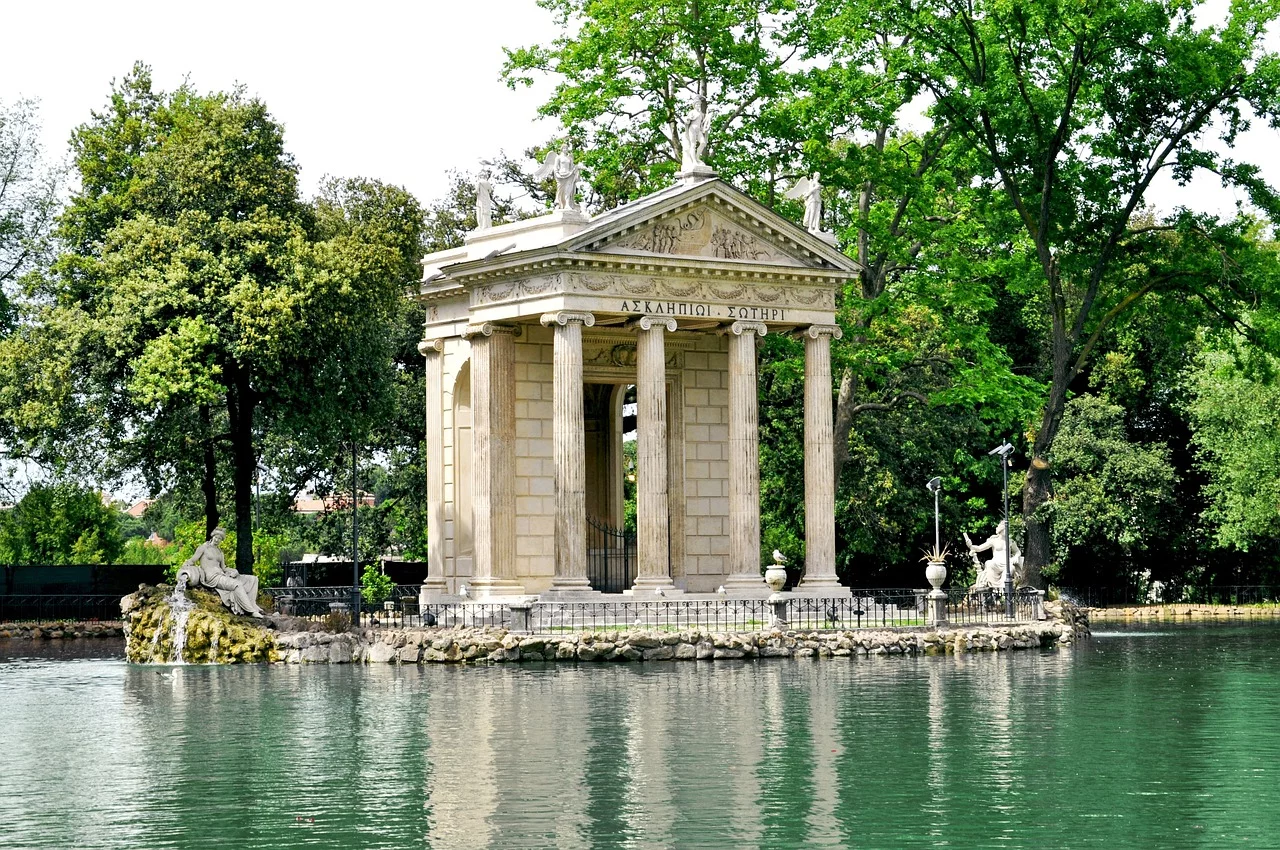
After the taxi noise of Piazza del Popolo, you step into the villa and the silence drops in — umbrella pines, a romantic lake, green parrot feeders.
Villa Borghese is the largest landscaped park in central Rome (80 hectares / 198 acres), laid out between 1606 and 1633 by Cardinal Scipione Borghese, nephew of Pope Paul V. Redesigned as an English-style garden in the 19th century, it holds a zoo, a hippodrome, a boating lake (€3 for 20 minutes), the Temple of Asclepius (1786), and several museums.
The Galleria Borghese, in the central villa, displays the cardinal's private collection: Bernini sculptures (David, Apollo and Daphne, The Rape of Proserpina), six Caravaggios (including the self-portrait David with the Head of Goliath), Titian, Raphael, Antonello da Messina. The density of masterpieces here outdoes any other museum in Rome.
Plan: 1 to 2 hours for the park, exactly 2 hours for the Galleria Borghese (timed slot enforced).
To enter the park: from the Flaminio metro station (Line A), climb the Pincio steps behind Piazza del Popolo — sweeping view over Rome before you even enter.
Trastevere
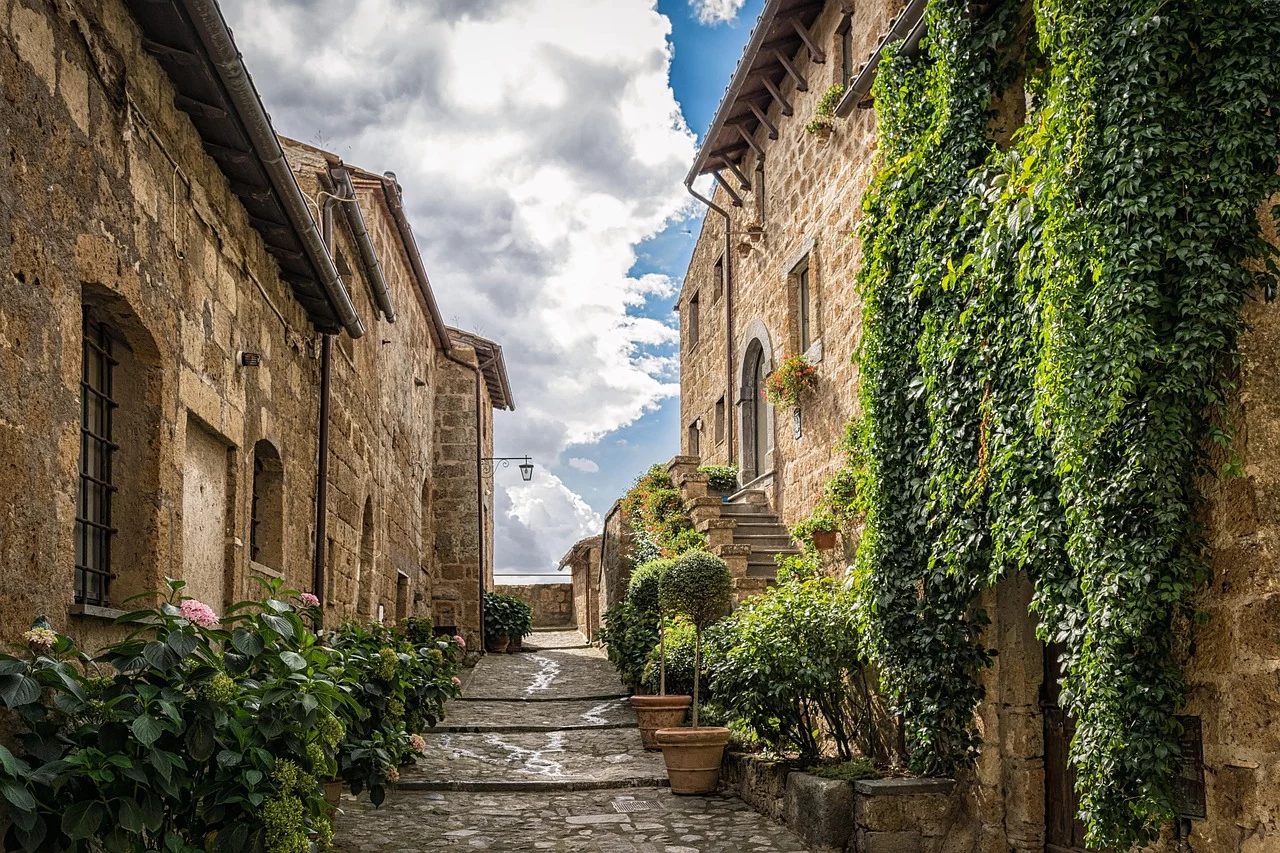
At 8 PM the lanterns flicker on above the cobbled alleys, the basilica of Santa Maria releases the sound of its organ, and terraces spill onto the pavement until midnight.
Trastevere (trans Tiberim — "across the Tiber") is the historic working-class quarter of Rome, separated from the center by the river. Inhabited since antiquity by sailors, craftsmen, and foreign minorities, it has kept a medieval grid of cobbled lanes and ocher brick buildings — a world apart from the papal Baroque on the opposite bank.
The basilica of Santa Maria in Trastevere, founded in the 4th century and rebuilt in the 12th, holds Byzantine-style mosaics by Pietro Cavallini that rank among the finest in Italy. The neighborhood is best explored without a plan: San Cosimato market, Vicolo del Cinque, Piazza Trilussa, and the climb up the Janiculum at dusk for the panorama over Rome.
Combined visit: 2 to 3 hours for the walk plus aperitivo, or a half-day with dinner.
Walk up to the Janiculum just before sunset via Via Garibaldi — a free panorama over all of Rome from Piazzale Garibaldi, better than the paid viewing decks (Vittoriano, St. Peter's).
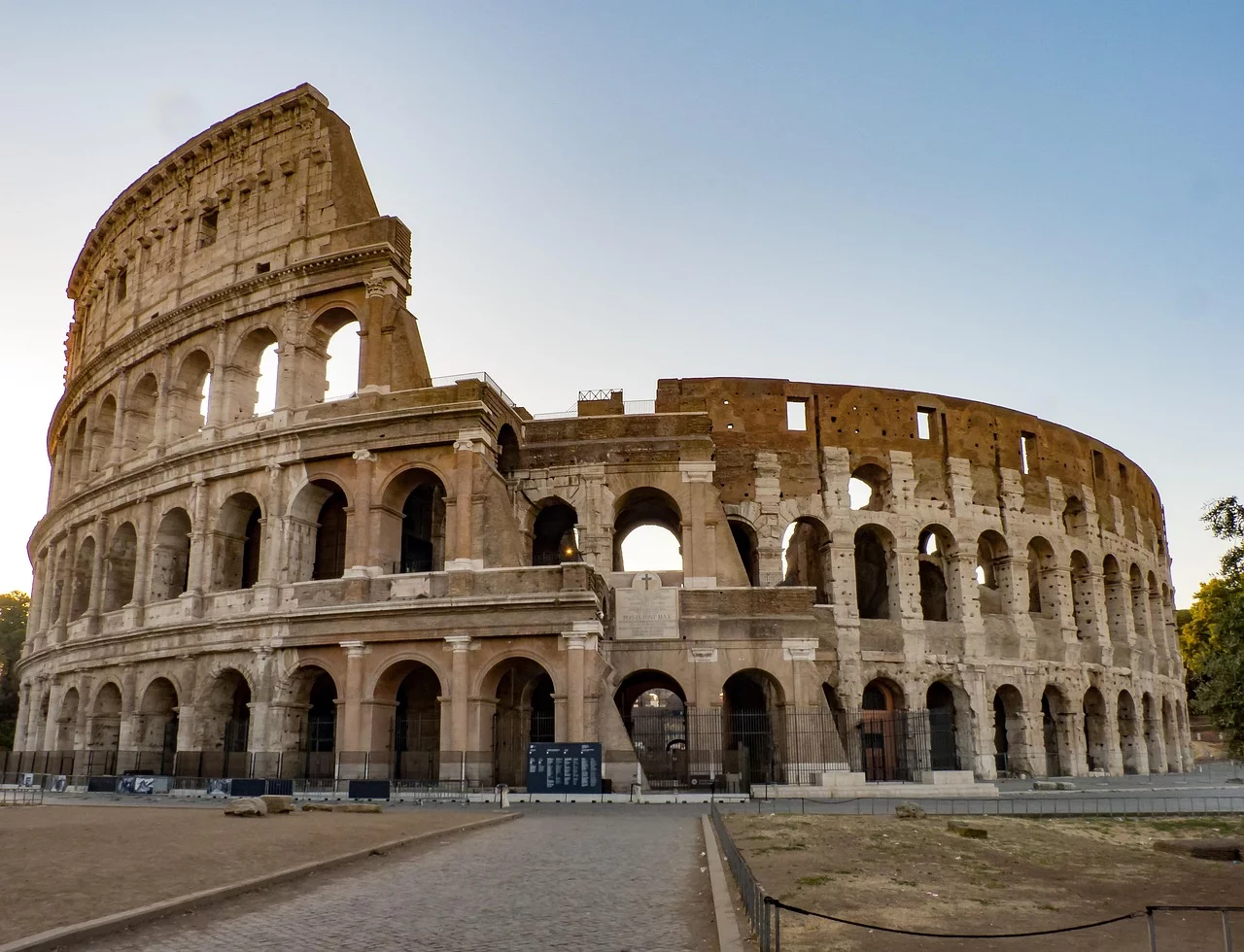
Colosseum
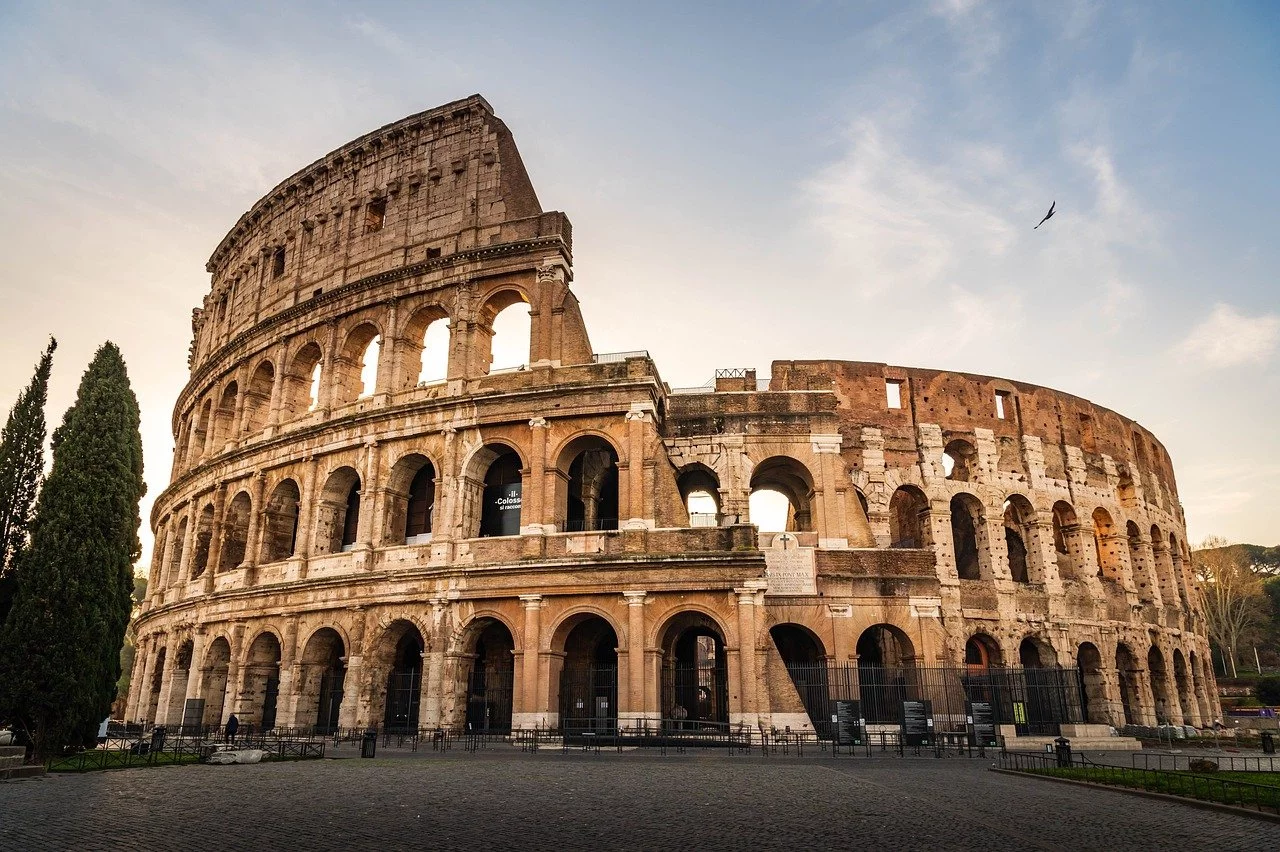
You enter the Colosseum through the outer arcades, and the silence never lasts — the vault throws back every footstep like ancient applause.
The largest amphitheater of the Roman world, the Colosseum was inaugurated in 80 AD by Emperor Titus, completed by Domitian, and inscribed as a UNESCO World Heritage Site in 1980. The ellipse, 188 by 156 meters (617 by 512 ft), could hold 50,000 to 65,000 spectators.
The visit covers three levels: the reconstructed arena floor (with the hypogeum visible below), the lower tiers, and the upper belvedere. Plan 1.5 to 2 hours at a slow pace, plus the Forum and Palatine included on the same ticket.
This is the one monument that genuinely rewards arriving right at opening (8:30 AM): between 11 AM and 4 PM, the security wait exceeds 45 minutes even with a ticket, and the arena bakes in full sun.
Ignore the touts dressed as centurions outside the entrance — they charge €10-20 per photo with no posted rate.
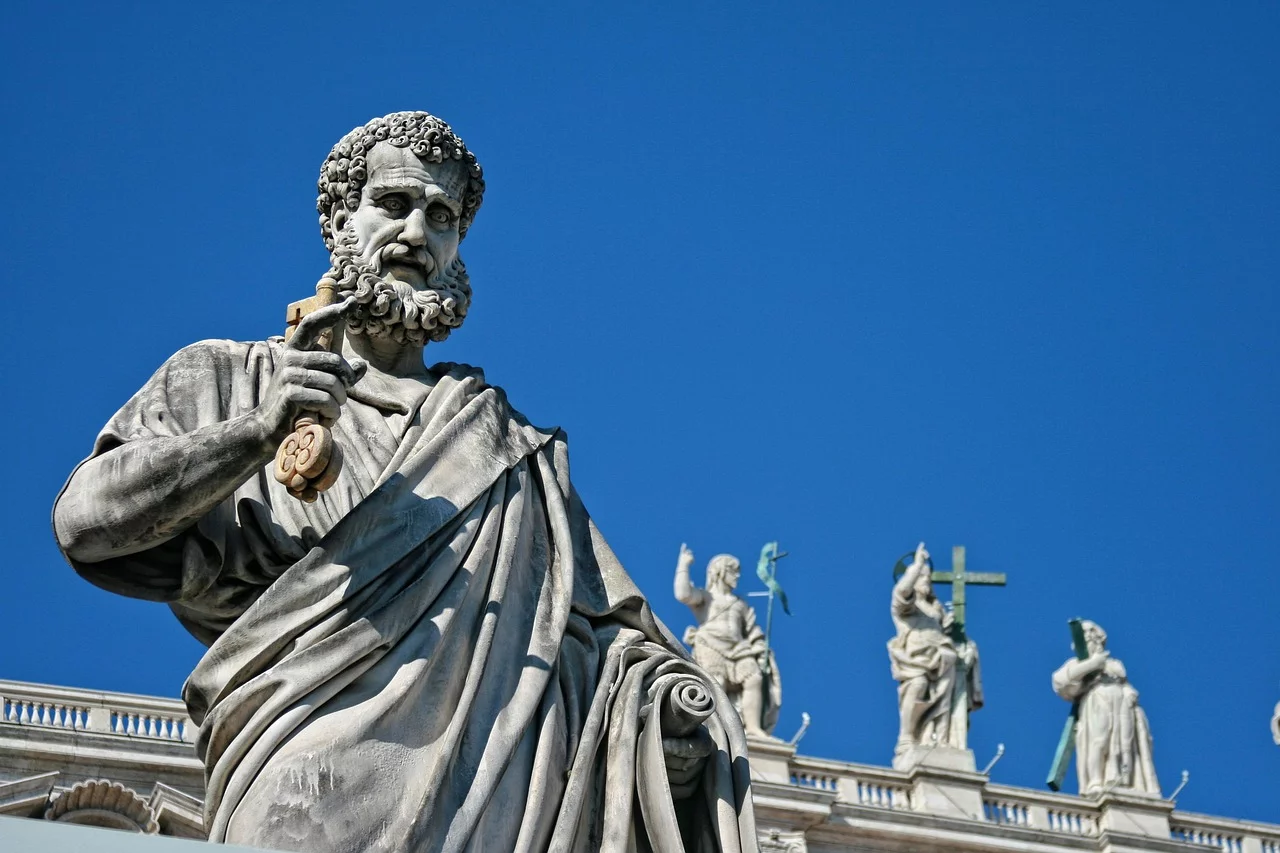
St. Peter's Basilica (Vatican)
The moment you pass Bernini's colonnade: the square opens like two arms and the facade pins you in place 200 m (656 ft) away.
The largest Catholic church in the world (15,160 m² / 163,180 sq ft, dome at 132 m / 433 ft), St. Peter's was built from 1506 to 1626 on the tomb of the apostle Peter, by Bramante, Raphael, Michelangelo (dome), and Maderno (facade). Bernini designed the four-row colonnade in 1656 (284 columns, 88 pillars).
Inside: Michelangelo's Pietà, sculpted at age 24; Bernini's baldachin; and the Chair of St. Peter. Climbing the dome (320 steps after the elevator) opens up the panorama of the Vatican and Rome.
Entry is free, but the security line runs 1 to 2 hours in high season — the only basilica in Rome where arriving at 7:45 AM saves you 90 minutes.
The dome climb is sold separately: €10 by elevator plus 320 steps, or €8 on foot (551 steps). The summit is the only spot where you can see the full geometric plan of Bernini's square.
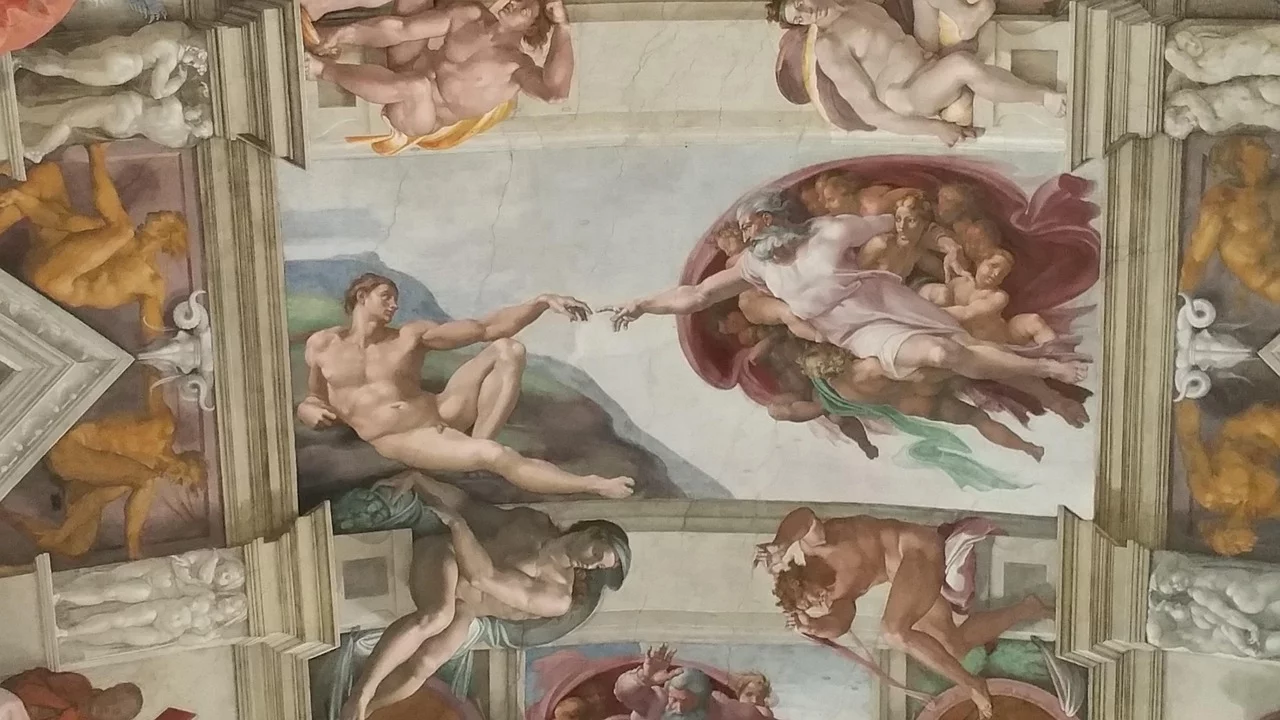
Vatican Museums and Sistine Chapel
After 7 km (4.3 miles) of galleries, the low door of the Sistine Chapel opens and everyone tilts their head back at once — silence enforced by the guards, you can almost hear retinas shift.
The Vatican Museums bring together 54 museums and galleries inherited from papal collections since the 15th century. The Sistine Chapel, painted by Michelangelo from 1508 to 1512 for the ceiling (Genesis, 343 figures) and 1535 to 1541 for the Last Judgment (altar wall), is the only space in the world where 1,800 people enter at the same time.
Before the Sistine Chapel, plan 2 hours to cross the Gallery of Maps (40 topographical frescoes from the 16th century), the Raphael Rooms (The School of Athens), and the Pinacoteca (Caravaggio, Leonardo).
Without a reservation, the queue at the Viale Vaticano gates hits 3 to 4 hours in high season.
Skip the last Sunday of the month: free admission, but the line starts at 6:30 AM for a 3-4 hour wait, and the visit itself is uncomfortably crowded.
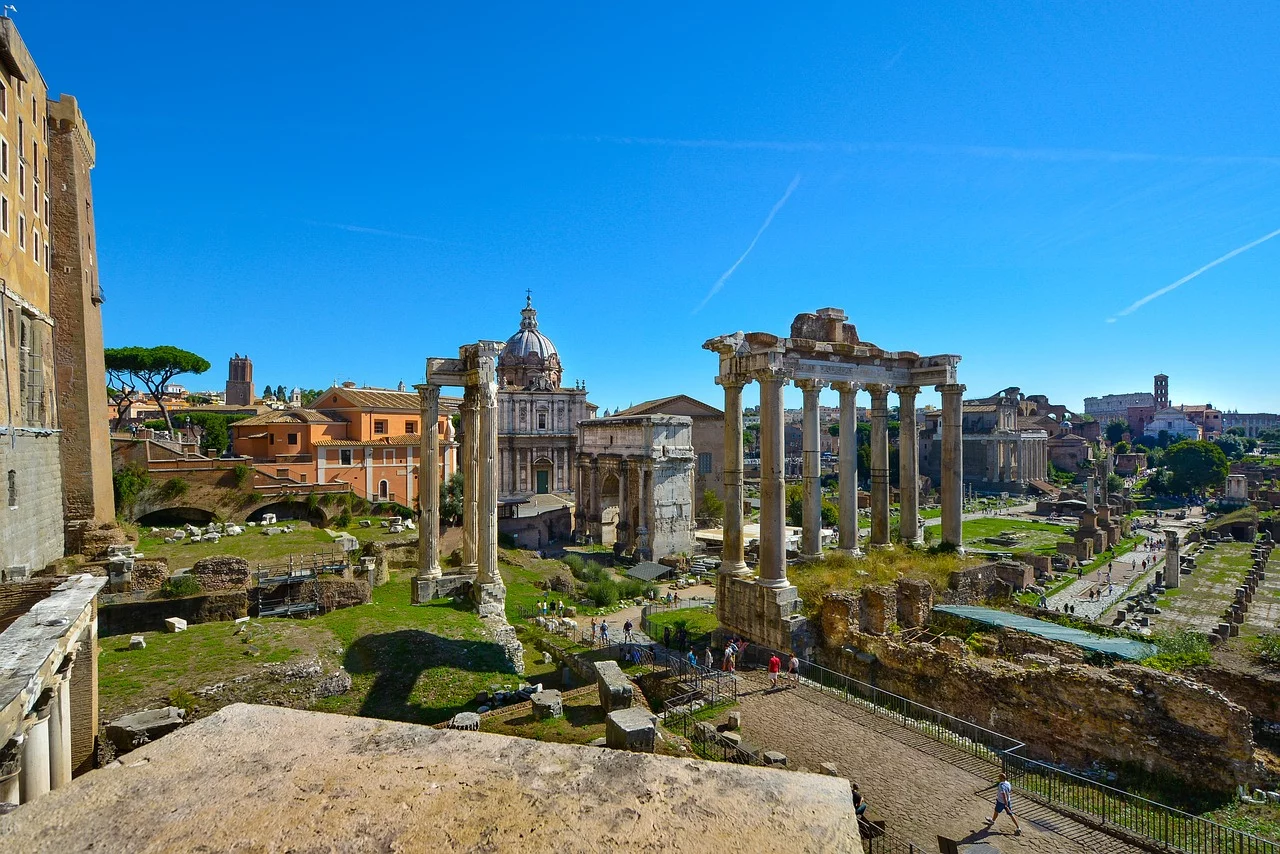
Roman Forum
You descend into the Forum from the Capitoline terrace, and suddenly you are walking among temples — uneven paving, broken columns, light bouncing off travertine.
The Roman Forum was for 700 years the political, judicial, and religious heart of the Republic and then the Empire. Across 1 km² between the Capitoline and Palatine hills stand the Curia (senate), the Basilica Aemilia and Basilica Julia, the Temples of Saturn, Vesta, and Castor, the Arch of Septimius Severus (203 AD), and the Via Sacra.
The route runs east to west: enter near the Colosseum → Arch of Titus → House of the Vestals → Temple of Caesar → rostra → Arch of Septimius Severus → exit onto Via dei Fori Imperiali. Plan 1.5 hours at a slow pace with a map or audio guide.
No shade across the entire route: bring a hat and water from April through September, and avoid 1 PM to 4 PM in July and August.
The official audio guide is €5 to rent at the entrance — better value than the paper guides sold at kiosks.
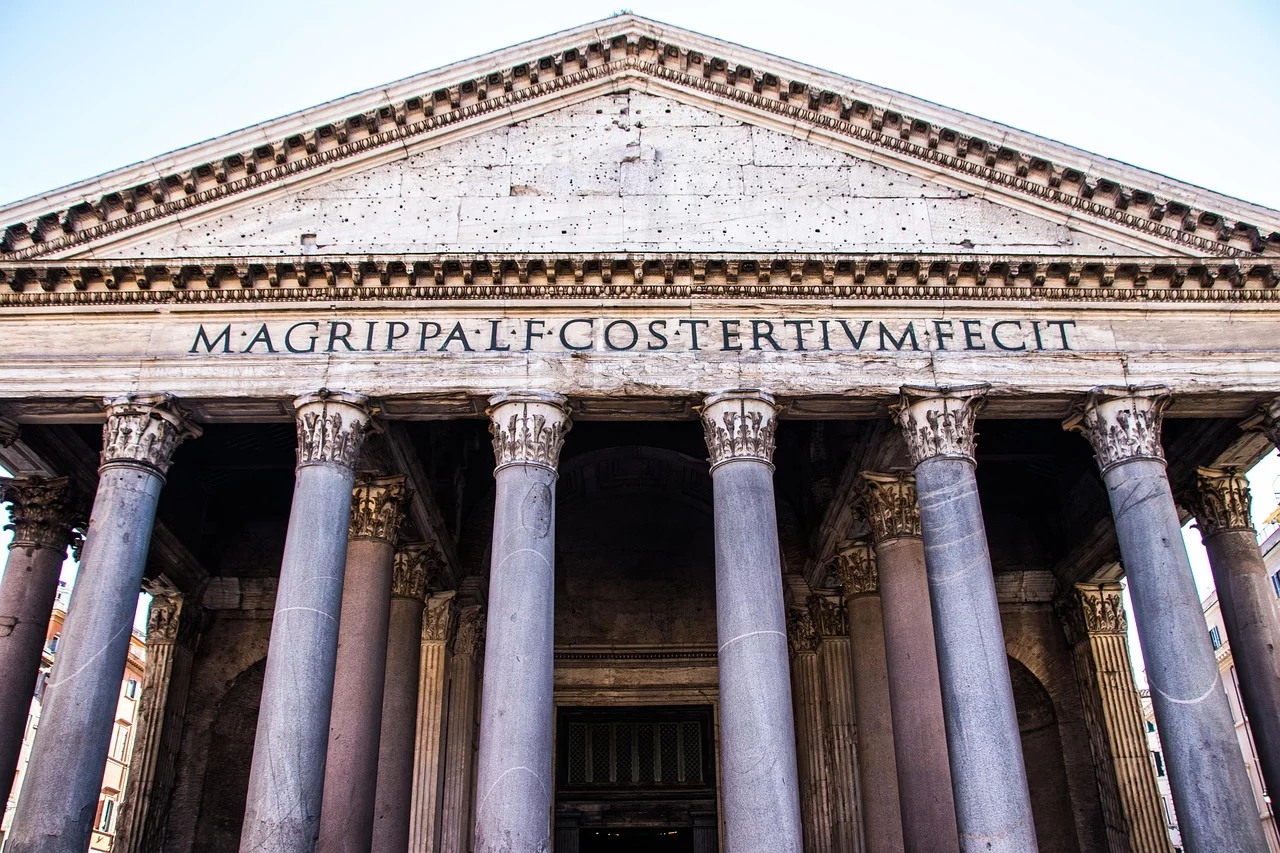
Pantheon
You look up at the oculus just as a shaft of sunlight cuts through the 43-meter dome (141 ft) and lands on the colored marble floor.
The Pantheon is the best-preserved ancient temple in the world, rebuilt by Hadrian around 125 AD on top of an earlier structure by Agrippa (the inscription M.AGRIPPA.L.F.COS.TERTIVM.FECIT still runs across the pediment). Converted into a Christian basilica in 609, it survived intact thanks to that continuous use.
The unreinforced concrete dome, 43.3 m (142 ft) in diameter, remains the largest of its kind in the world (ahead of St. Peter's and the US Capitol). The 8.7-meter oculus, the only source of light, drains rain through 22 hidden holes in the floor.
Tombs of Raphael and the Italian kings Victor Emmanuel II and Umberto I lie inside. Express visit in 20-30 minutes, longer if Mass is in session (Sundays).
Visit during a thunderstorm if you can: it is the only moment when you can watch rain fall through the oculus and disappear into the floor — a one-of-a-kind sight.
Trevi Fountain
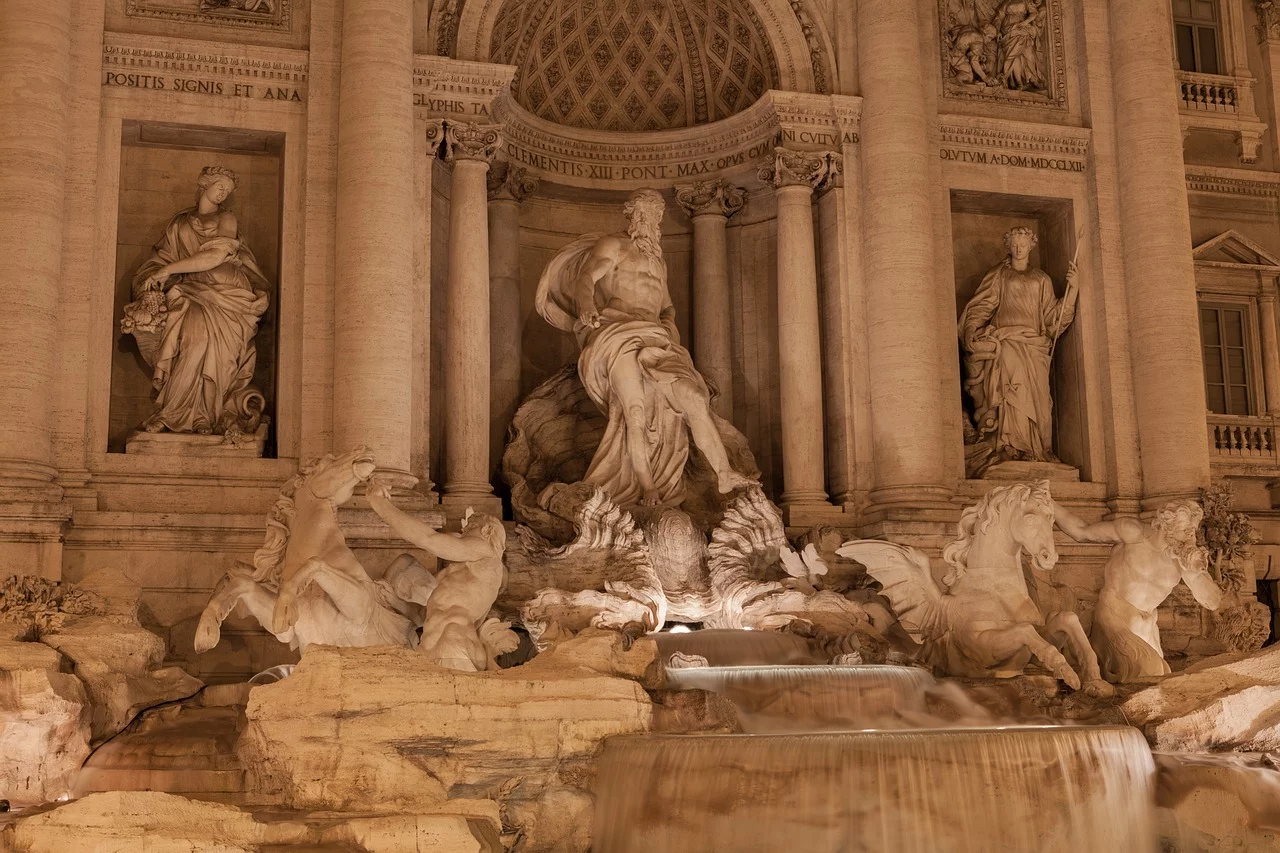
You step out of a narrow lane, the water roars 50 m (164 ft) away, and the facade blasts open all at once in light — Trevi is never seen wide-angle, always all at once.
Rome's most monumental fountain (26 m tall, 49 m wide / 85 by 161 ft) is the Rococo masterpiece of Nicola Salvi, completed in 1762. Set against the Palazzo Poli, it marks the arrival in Rome of the Aqua Virgo aqueduct, built by Agrippa in 19 BC and still running today.
The central statue is Oceanus (often mistaken for Neptune), flanked by tritons and sea horses that symbolize calm and stormy seas. Tradition: about €3,000 in coins are collected every day and donated to Caritas Roma for the homeless.
A quick stop (10 minutes), but plan to come twice: by day for the photo, by night for the warm lighting and thinner crowds.
No wading or sitting on the edge (fine €250-500, municipal police on permanent watch).
Piazza di Spagna and the Spanish Steps
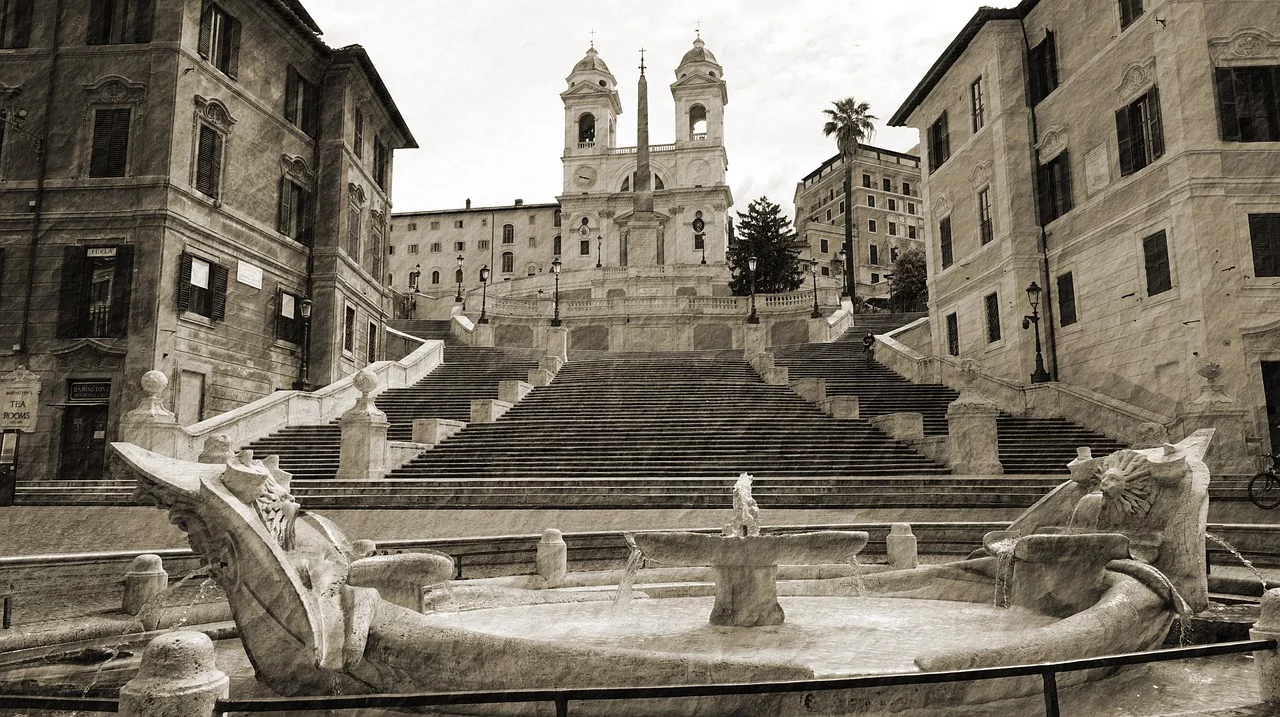
At the foot of the steps, the Barcaccia gurgles — a half-sunken boat by Bernini's father (1629), a nod to a historic Tiber flood — and at the top, the Trinità dei Monti church closes the view.
Piazza di Spagna takes its name from the Spanish embassy to the Holy See, established here in the 17th century. The monumental 135-step staircase, designed by Francesco De Sanctis in 1725, links the square to the Trinità dei Monti church (founded by the French kings in the 16th century).
To the right at the base of the steps, the Keats-Shelley House (where the poet died in 1821) and Via dei Condotti, lined with Bulgari, Prada, Valentino, Ferragamo, and Gucci. Caffè Greco at number 86 has been open since 1760 — Goethe, Stendhal, and Casanova all had their regular tables.
A contemplative 30-minute stop; come at sunset for warm light on the bright-pink steps.
Skip Via dei Condotti for actual shopping (luxury prices double those of New York or London) — window-shopping is free, but Monti or Via del Corso are better for real purchases.
Piazza Navona
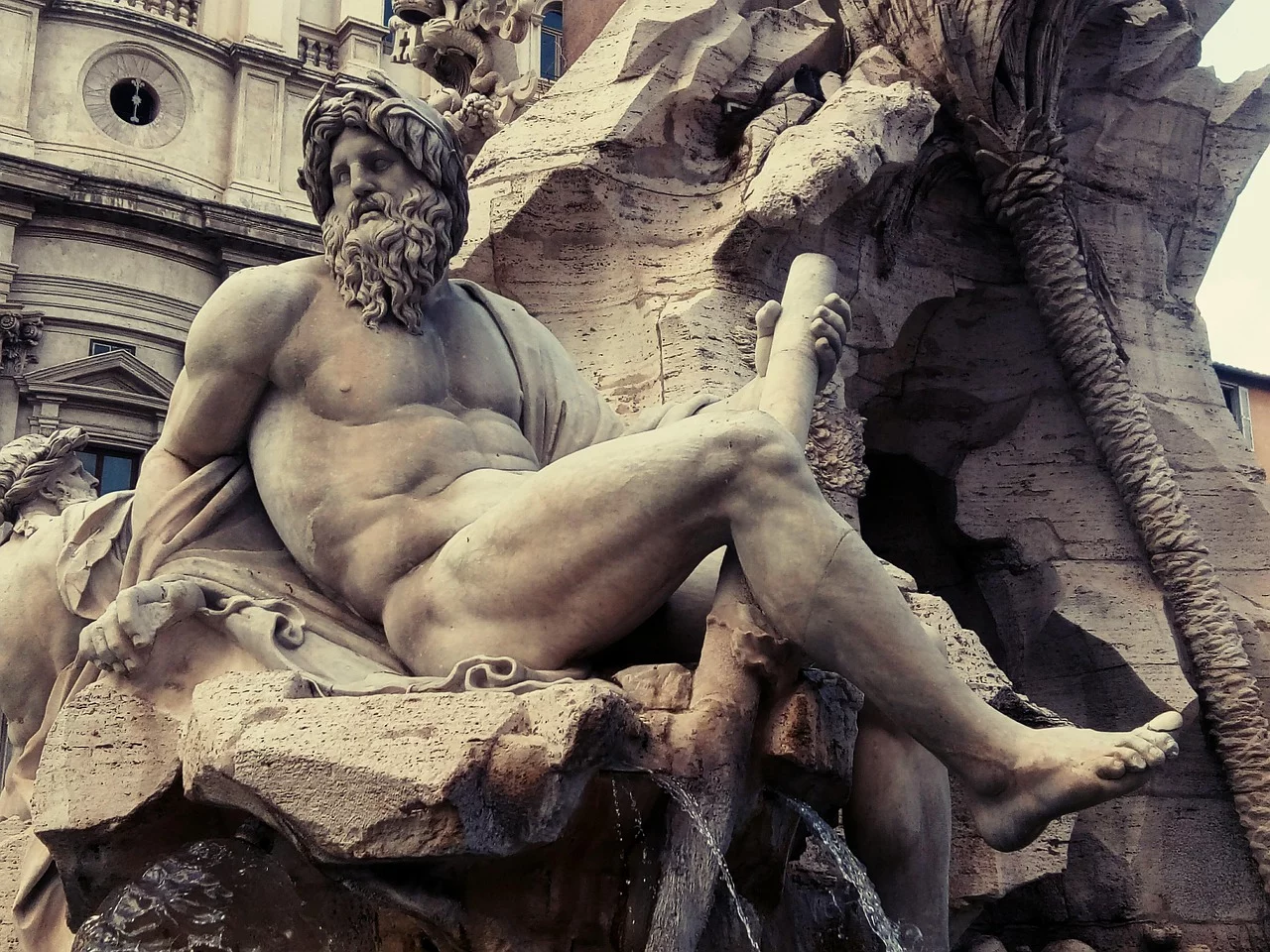
The square stretches in a long oval underfoot, and three aligned fountains pace your walk — the eye keeps returning to the obelisk Bernini raised in the center.
Piazza Navona sits on the Stadium of Domitian (1st century AD), whose elongated shape (240 by 65 m / 787 by 213 ft) it preserves, where athletic games (agones, the source of the name) were once held. Paved as a public square in the 15th century and redesigned by Innocent X in the mid-17th century.
The Fountain of the Four Rivers by Bernini (1651) at the center gathers the Nile, the Ganges, the Danube, and the Río de la Plata beneath an Egyptian obelisk. At the south end, the Fountain of the Moor (Bernini); at the north, the Fountain of Neptune. The church of Sant'Agnese in Agone (Borromini, 1652) faces the central fountain — the endless rivalry between the two Baroque masters.
Lively day and night: street painters, mimes, terraces. Plan 30-45 minutes.
To the south, Campo de' Fiori (5 min away) hosts a morning market — fresh produce, cured meats, cheeses, ideal for a picnic at Castel Sant'Angelo.
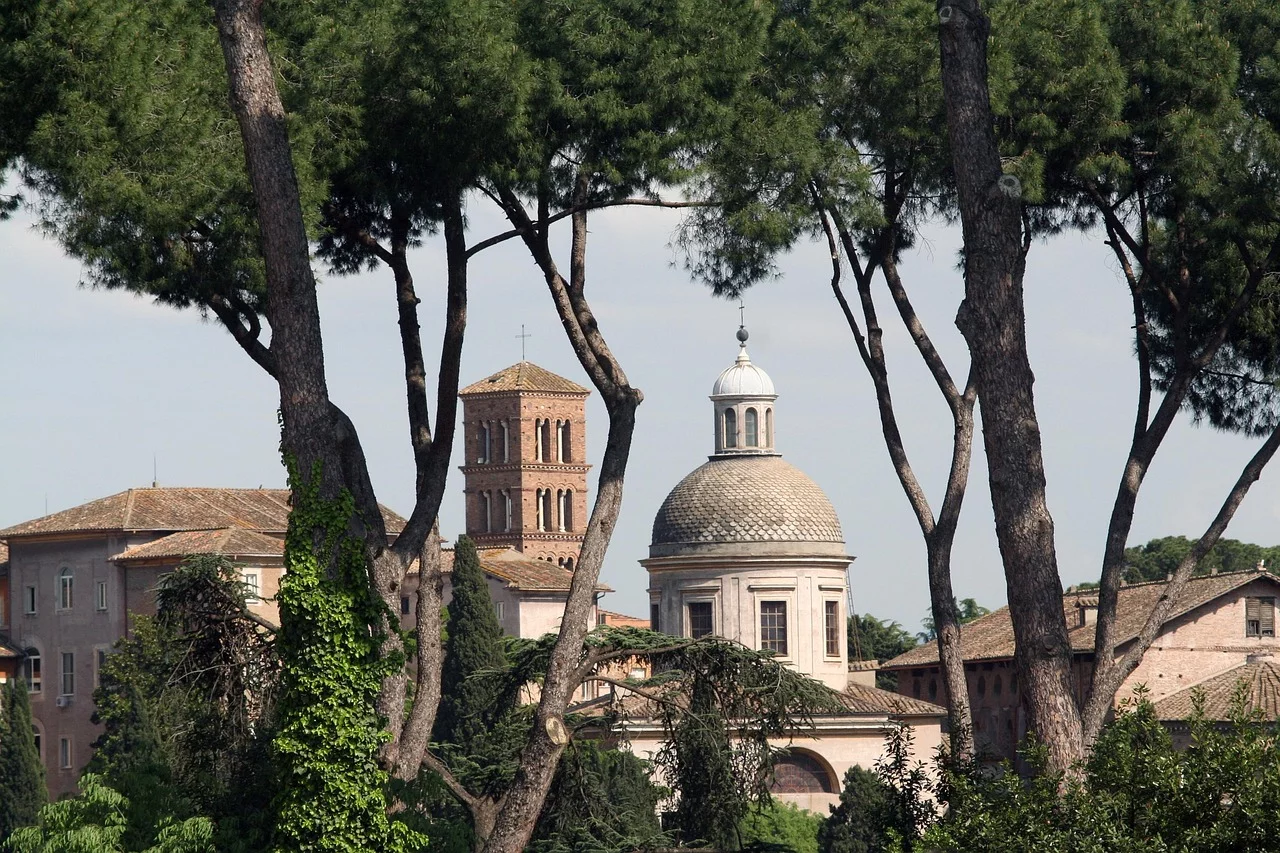
Palatine Hill
You climb through the Farnese Gardens, the first botanical garden in Europe (1550), and behind a single cypress the Forum suddenly opens up below.
The Palatine is one of the seven historic hills of Rome and the one most loaded with myth: according to Livy, Romulus founded Rome here in 753 BC. Augustus, Tiberius, and Domitian built their residences on the hill (the origin of the word "palace"), creating the Domus Augustana and the Domus Flavia.
The visit covers 10 hectares (25 acres): ruins of the imperial palaces, Nero's Cryptoporticus (a 130-meter underground passage), Stadium of Domitian, a sweeping view of the Circus Maximus from the southern belvedere, and the Farnese Gardens to the north for sunset. Plan 1 to 1.5 hours.
The Palatine is the greenest and quietest part of the central archaeological park — best visited in mid-afternoon when the Forum is roasting.
Bring a snack: there is no bar inside the archaeological park, so you would have to exit toward Via dei Fori Imperiali to eat.
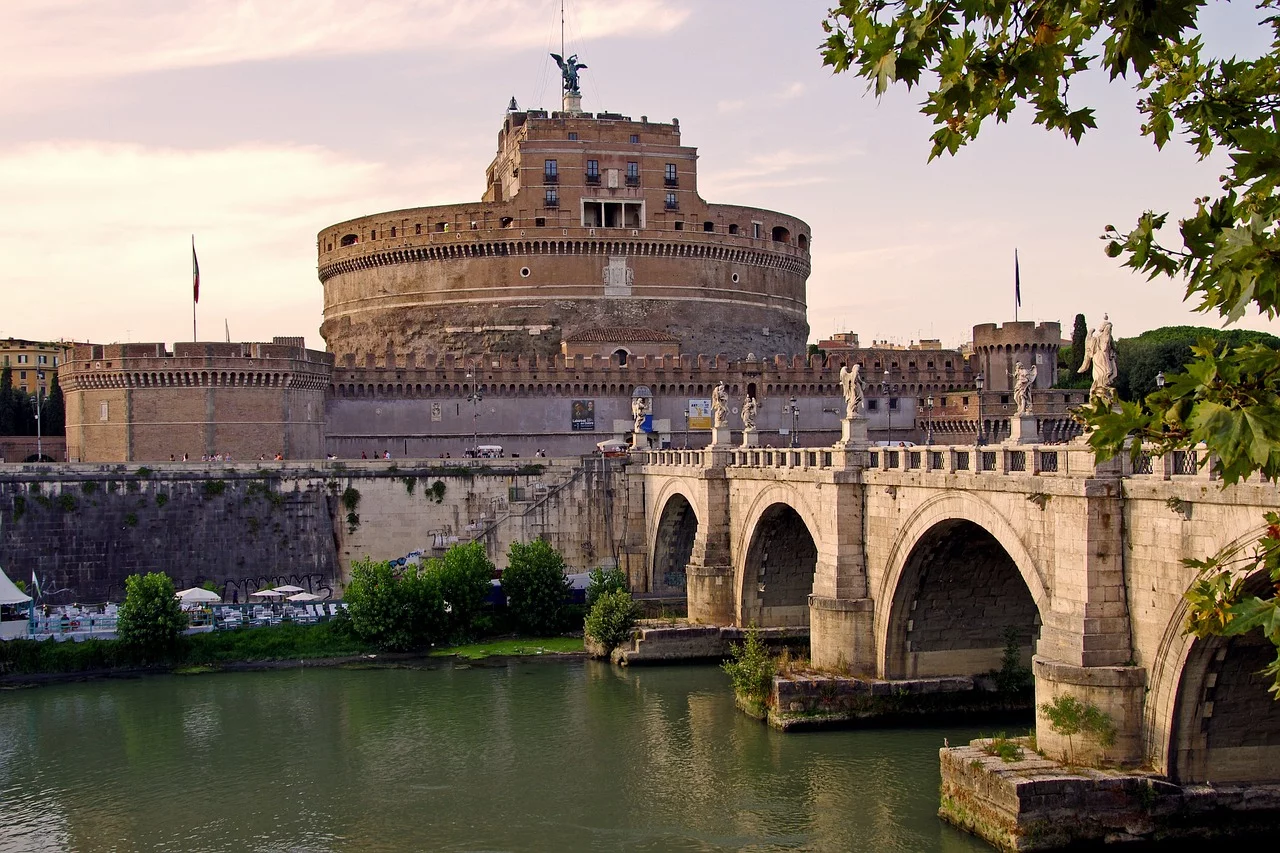
Castel Sant'Angelo
The Sant'Angelo bridge lines up ten angels by Bernini and his pupils, with the cylindrical drum of the castle at the far end — a one-of-a-kind silhouette on the Tiber.
The building was originally Hadrian's Mausoleum, completed in 139 AD to house the Antonine emperors. Turned into a defensive fortress in the Middle Ages and then a fortified papal residence, it connects to the Vatican via the Passetto di Borgo, an 800-meter walled corridor used by Pope Clement VII during the Sack of Rome in 1527.
The visit winds through seven levels: ancient spiral ramp, Cellini's cell, Renaissance papal apartments with frescoes, and a top terrace dominated by the statue of the Archangel Michael sheathing his sword. 360-degree panorama over St. Peter's Basilica and Michelangelo's dome.
Plan 1.5 to 2 hours. The site is less crowded than the Vatican next door: a great alternative when the St. Peter's queue overflows.
For a free photo, cross the Ponte Sant'Angelo at sunset — the best perspective on the castle and Bernini's ten angels, no ticket required.
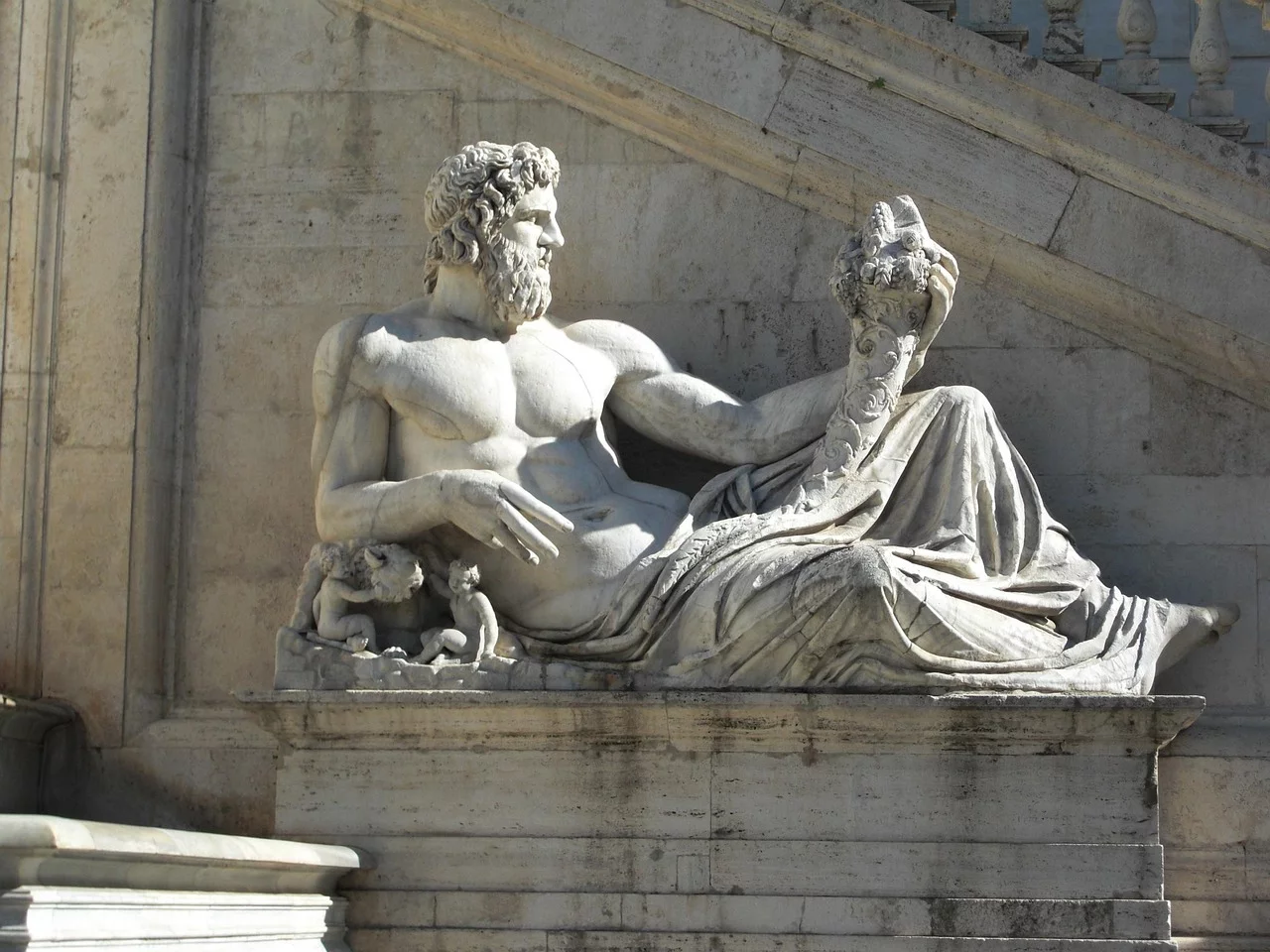
Piazza del Campidoglio and the Capitoline Museums
You climb the Cordonata, a ramp of flat steps designed for horses, and the square unfolds in a trapezoid — Michelangelo calculated the perspective so it looks deeper than it really is.
The Capitoline Square (Piazza del Campidoglio) was redesigned by Michelangelo in 1536 at the request of Pope Paul III, in anticipation of the visit of Charles V. The geometric 12-pointed star paving converges on the original equestrian statue of Marcus Aurelius (the on-site version is a copy; the original is inside the Capitoline Museums).
The Capitoline Museums, the oldest public museums in the world (1471), occupy the Palazzo dei Conservatori and the Palazzo Nuovo on either side of the Palazzo Senatorio. Collections include the Capitoline Wolf (Etruscan, 5th century BC), the Dying Gaul, the Marcus Aurelius statue, the Doves Mosaic, and the Borghese Gladiator.
Plan: 30 minutes for the square alone, 2 hours for the square plus museums.
The Vittoriano (Altare della Patria, 1911) is free on foot up to its intermediate terrace — only the final elevator to the highest viewing point is paid.
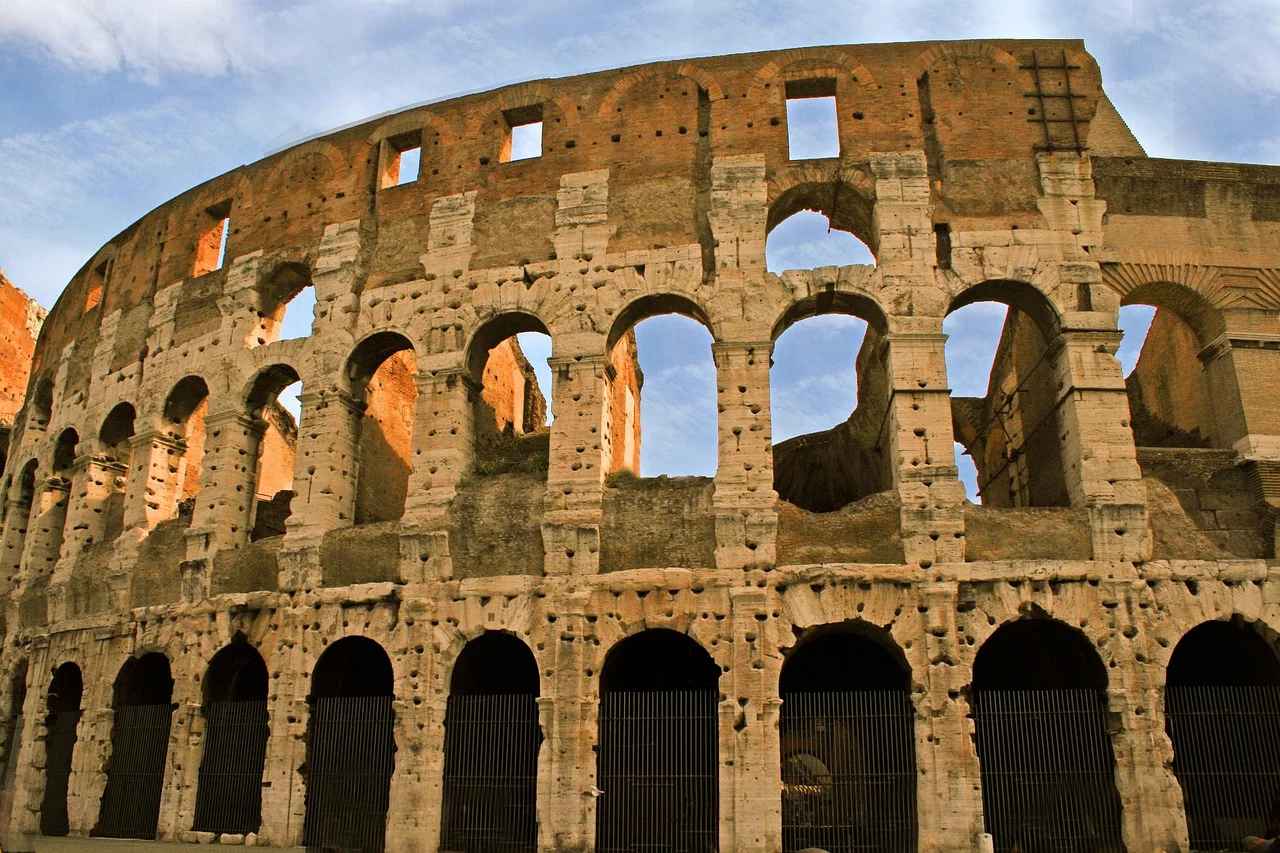
Guided Colosseum and Forum tour at sunset
Meet at 4 PM or 5 PM depending on season at Piazza del Colosseo with a licensed English-speaking guide. Dedicated time-slot access to the Colosseum (underground and arena floor subject to availability), walk through the Forum, and climb the Palatine for sunset over the Via Sacra. Key moment: 30 minutes later, the Arch of Septimius Severus glows red.
Suitable for all walking levels. Book online (GetYourGuide, Civitatis, Tours by Locals) 1 week ahead in high season — Colosseum entry included, no audio guide needed.
- 3 h dont 1 h sur le Palatin
- 55-75 € / personne, entrée + guide francophone inclus
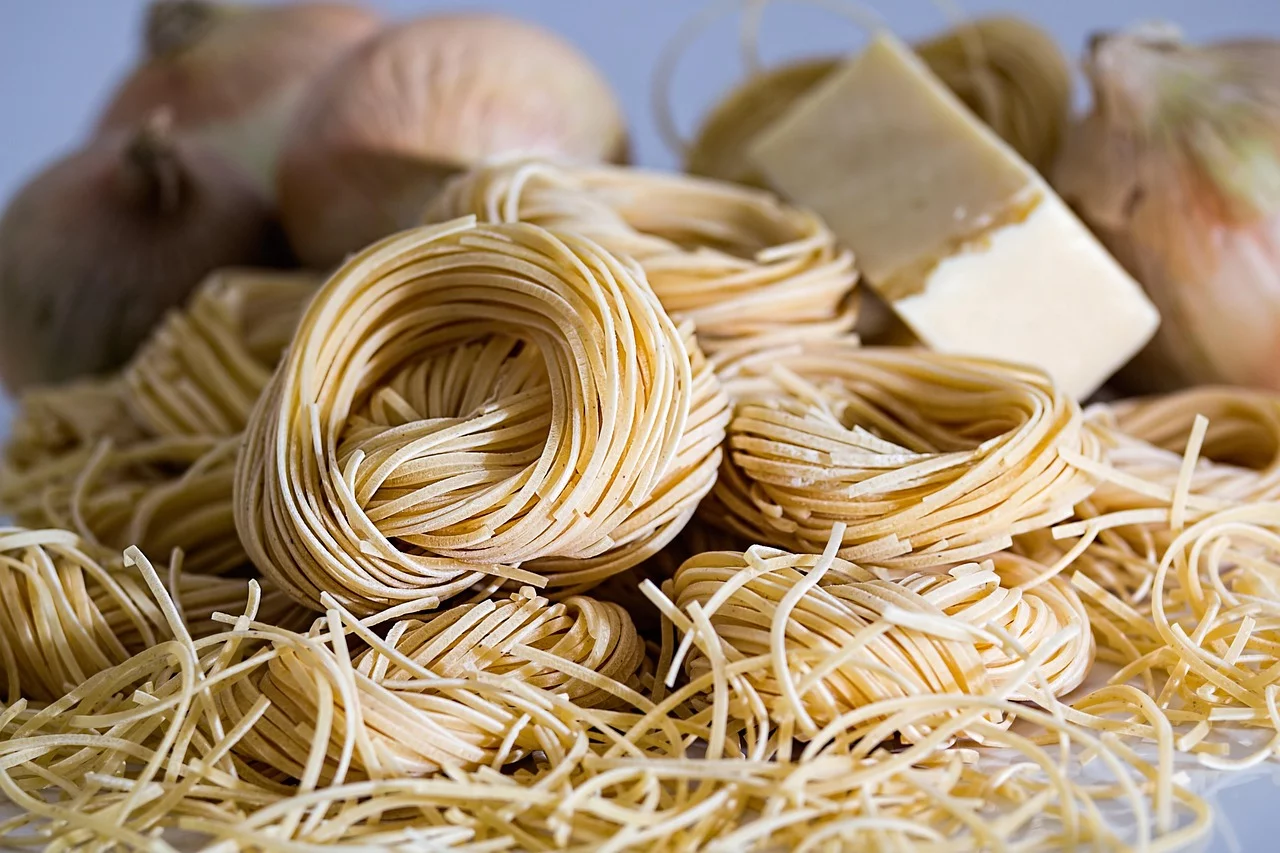
Roman cooking class: carbonara, cacio e pepe, tiramisu
A 3-hour workshop in an apartment in Monti or Trastevere with an Italian chef (often English-speaking depending on the slot): fresh pasta made by hand with a matterello (rolling pin), carbonara sauce with guanciale and pecorino, cacio e pepe, then homemade tiramisu. Tasting at the table with a Lazio wine.
Suitable for everyone, including cooking beginners and kids aged 8 and up. Book 48-72 hours ahead on Cookly, GetYourGuide, or Airbnb Experiences — ingredients and apron included.
- 3 h, dégustation et vin inclus
- 70-95 € / personne, repas et vin compris
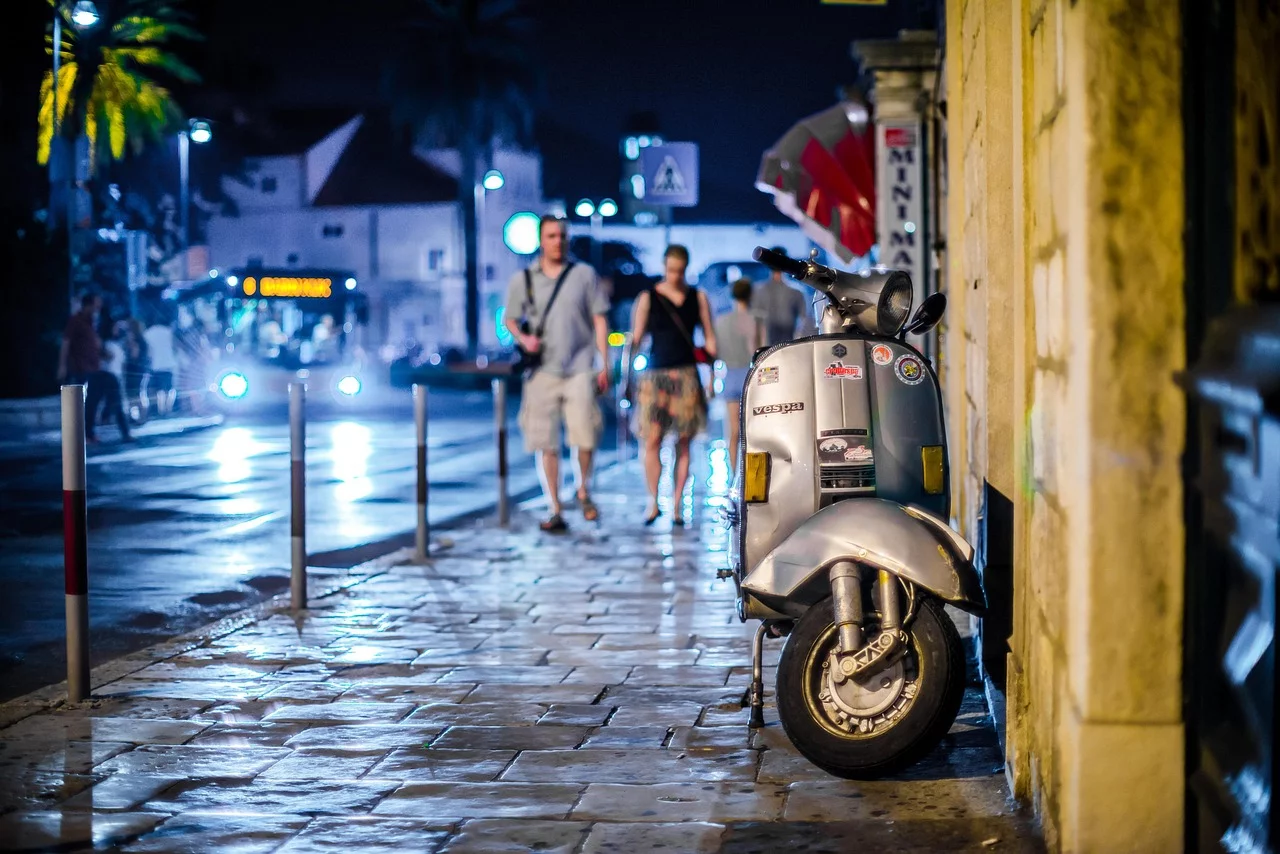
Vespa tour of historic Rome
Hotel pickup at 9 AM or 2 PM depending on the slot, helmet provided, ride passenger-style behind a licensed driver for a 3-hour loop: Colosseum, Aventine Hill and its famous keyhole (aligned view onto the dome of St. Peter's), Mouth of Truth, Janiculum, Trastevere, St. Peter's Square. Key moment: a solo photo stop at the base of the Circus Maximus, Vespa hood in the foreground.
Adults only (single passenger, no groups on one Vespa). Book 3-5 days ahead on Scooteroma, Dearoma, or ItalyXP — canceled in case of rain.
- 3 h
- 120-160 € / personne (passager)
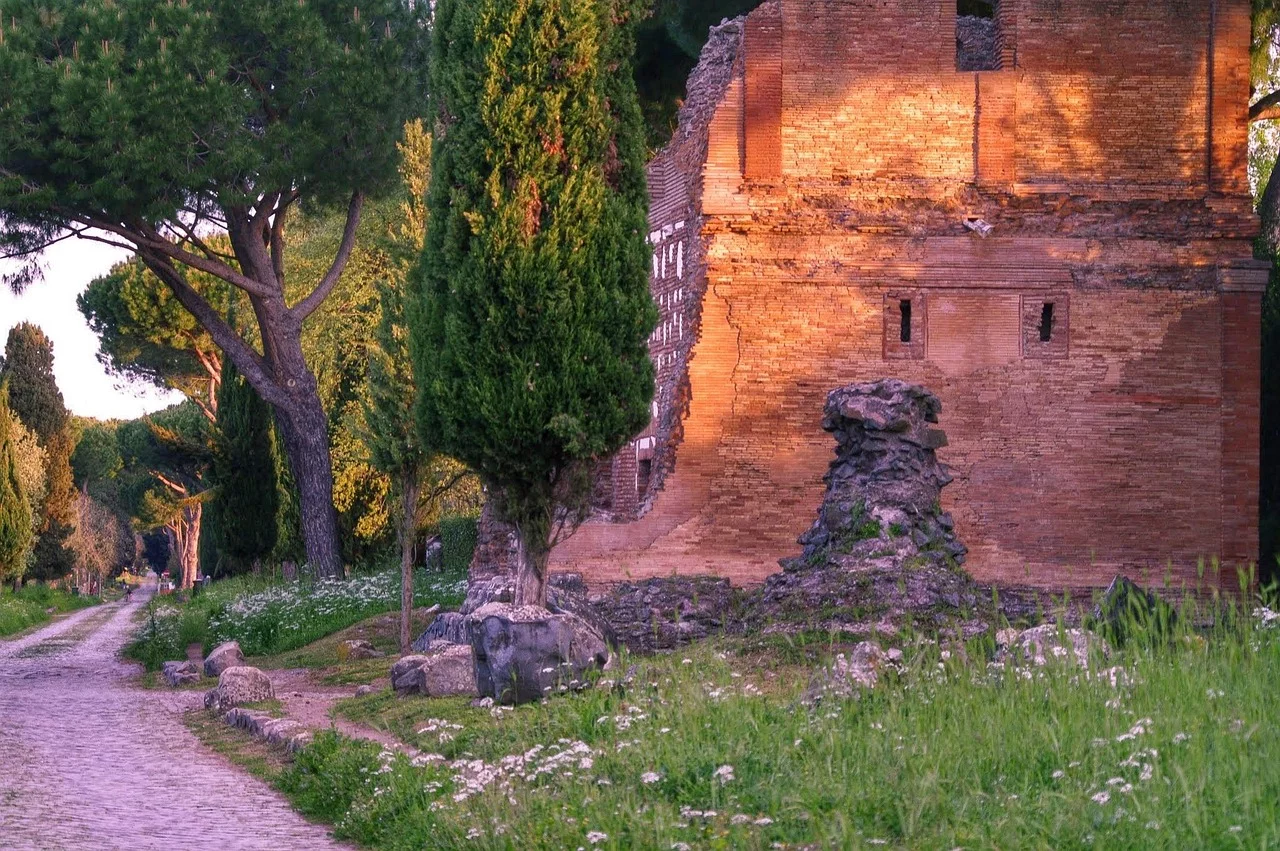
Catacombs of San Callisto and Via Appia by bike
Bus 118 from Circo Massimo (stop: Catacombe di San Callisto), descend into 20 km (12 miles) of early Christian underground galleries across 3 levels with an official guide (English available) — 30-minute visit. Exit, lunch at Hostaria Antica Roma on the Via Appia, then rent a bike from Roma Bici Pignatelli (€15/day) and ride 5 km along the ancient paving stones to the tomb of Cecilia Metella.
Suitable for families with kids aged 8 and up (for the bike portion) or all ages (catacombs only). No booking required for the catacombs on weekdays — slots 9 AM-12 PM or 2 PM-5 PM, closed Wednesdays.
- Demi-journée (4 h)
- 10 € entrée catacombes + 15 € location vélo
Getting there
Direct flights from London to Rome Fiumicino (FCO) take about 2h 40min, with round-trip fares from £80-150 in low season; from New York, count 8-9 hours direct.
British Airways, easyJet, Wizz Air, Ryanair, and ITA Airways operate daily direct flights from London (Heathrow, Gatwick, Stansted, Luton) to Rome. From the US, Delta, United, American, and ITA Airways fly direct from New York JFK, Newark, Boston, Washington Dulles, and Miami. From Australia and New Zealand, expect one stop via Dubai, Doha, or Singapore.
From Fiumicino (FCO), the fastest option is the Leonardo Express: a direct train to Termini station, €14 (~$15.50/£12), 32 minutes, departing every 15 minutes. The Terravision or SIT bus costs €7 but takes 50 to 70 minutes. The official white taxi has a fixed fare of €50 from FCO to the historic center (up to 4 passengers, luggage included).
From Ciampino (CIA) (low-cost Ryanair and Wizz Air), the Terravision bus reaches Termini in 40 minutes for €6. Fixed taxi fare from Ciampino to the center: €31.
Trains are also viable from elsewhere in Europe: London → Paris on Eurostar (2h 20min), Paris-Gare-de-Lyon → Milan on TGV (7 hours), then Milan → Rome on Frecciarossa (3 hours). A full day of travel, from €80 with Trenitalia.
Getting around
The historic center is walkable (Colosseum to Vatican is about 3 km / 2 miles). For longer distances, use metro lines A, B, and C with the €1.50 BIT ticket valid for 100 minutes (24-hour pass €8.50).
Rome has three metro lines that cross at Termini:
- Line A (orange): Vatican (Ottaviano), Spanish Steps (Spagna), Trevi (Barberini), Termini
- Line B (blue): Colosseum (Colosseo), Pyramid, EUR
- Line C (green): San Giovanni in Laterano, eastern outskirts — still expanding
The ATAC bus network is dense but slow and crowded inside the ZTL (Limited Traffic Zone of the historic center). The BIT ticket at €1.50 (~$1.65/£1.30) is valid for 100 minutes across metro + bus + tram with transfers. Integrated passes: Roma 24h €8.50, 48h €15, 72h €22, available on the MyCicero app or at Termini ticket machines.
The Roma Pass 48h (€36) or 72h (€58) covers transport plus 1 or 2 museum entries of your choice (Colosseum eligible) and additional discounts. Worth it if you visit 3 or more paid sites.
Heads up on the ZTL: the center is off-limits to unauthorized cars, with automatic cameras and a fine of about €95. Uber operates only in the Black/Premium tier, more expensive than official white taxis (fixed fares posted at the airport).
What to do
Rome's 13 must-sees: Colosseum, Vatican (basilica + museums + Sistine Chapel), Roman Forum, Pantheon, Trevi Fountain, Spanish Steps, Piazza Navona, Palatine Hill, Castel Sant'Angelo, Capitoline Hill, Villa Borghese, and Trastevere.
This guide breaks down the 13 sights you should not miss on a first trip to Rome, ranked by importance and detailed further down with coordinates, 2026 prices, and practical advice. The list covers 3 main clusters:
- Ancient Rome: Colosseum, Roman Forum, Palatine Hill, Pantheon, Capitoline Hill
- Vatican: St. Peter's Square and Basilica, Vatican Museums + Sistine Chapel
- Baroque and urban Rome: Trevi Fountain, Piazza Navona, Spanish Steps, Castel Sant'Angelo, Villa Borghese, Trastevere
For 4 days, add the Baths of Caracalla (€12), the Catacombs of San Callisto on the Via Appia (€10), or the basilica of San Giovanni in Laterano (free, the official cathedral of Rome).
Food
Four pastas define Rome: carbonara (egg, guanciale, pecorino), cacio e pepe (pecorino, black pepper), amatriciana (tomato, guanciale), and gricia (guanciale, pecorino, no egg).
Roman cuisine is rustic and rich, built on offal (the quinto quarto) and guanciale (cured pork jowl). Worth trying without hesitation:
- Carbonara — egg, guanciale, pecorino, and pepper — never with cream (the classic tourist mistake)
- Cacio e pepe — only pecorino romano and pepper, but emulsified to perfection
- Saltimbocca alla romana — veal cutlet, prosciutto, sage, white wine
- Carciofi alla giudia — fried artichokes from the Jewish ghetto, in season (February to April)
- Supplì — fried rice ball with mozzarella, Rome's answer to the Sicilian arancino
For pizza, Rome has its own school: thin, crispy crust (romana), different from the Neapolitan style. The pinsa, oval and airier, was also born here.
Skip the terraces on Piazza Navona, Trevi, and Piazza di Spagna — tourist traps with €30-40 main courses. Trastevere, Monti, Testaccio (market and trattorias), and the Jewish quarter (ghetto) offer the most authentic addresses at €12-18 per pasta dish.
Itineraries
For 3 days in Rome: Day 1 Ancient Rome (Colosseum-Forum-Palatine-Capitoline), Day 2 Vatican (basilica-museums-Sistine Chapel), Day 3 Baroque Rome (Pantheon-Navona-Trevi-Spanish Steps).
3-day itinerary (first visit):
- Day 1 — Ancient Rome: Colosseum 9 AM (booked slot) → Roman Forum → Palatine Hill → lunch in Monti → Capitoline Hill and Capitoline Museums → sunset from the Vittoriano
- Day 2 — Vatican: Vatican Museums 8 AM sharp (booked slot) → Sistine Chapel → St. Peter's Basilica (free entry via the Sistine exit) → climb to the basilica dome → lunch in Prati → Castel Sant'Angelo in the afternoon
- Day 3 — Baroque Rome: Pantheon 9 AM → Piazza Navona → Campo de' Fiori (market) → lunch in the Jewish ghetto (fried artichoke) → Trevi Fountain → Spanish Steps → aperitivo in Trastevere at sunset
If you have 4-5 days, add: Galleria Borghese and Villa Borghese (morning), Catacombs and Via Appia by bike (half-day), Ostia Antica (day trip by train from Porta San Paolo, €1.50), or Tivoli (Villa d'Este and Villa Adriana, half-day).
Climate & seasons
When to go : Italy ?
Monthly averages over the past 5 years (Open-Meteo).
Best months
- avril
- juin
- août
- octobre
| jan | fév | mar | avr | mai | juin | juil | août | sept | oct | nov | déc | |
|---|---|---|---|---|---|---|---|---|---|---|---|---|
| Our take | ||||||||||||
| Weather | ||||||||||||
| High | 13° | 15° | 17° | 19° | 24° | 31° | 34° | 33° | 28° | 23° | 18° | 14° |
| Rain (mm) | 76 | 67 | 98 | 64 | 83 | 38 | 18 | 45 | 104 | 79 | 151 | 104 |
| City sightseeing | City sightseeing janvier | City sightseeing février | City sightseeing mars | City sightseeing avril | City sightseeing mai | City sightseeing septembre | City sightseeing octobre | City sightseeing décembre |
When to go
The best months to visit Rome are April-May and September-October: 20-25 °C (68-77 °F), little rain, and manageable crowds.
Rome is pleasant from April to October, but summer (July-August) peaks at 35-38 °C (95-100 °F) and Vatican queues hit 3 to 4 hours without a reservation. Romans flee the city in August: many trattorias close for two or three weeks around Ferragosto (August 15).
The best windows:
- April-May: 18-24 °C (64-75 °F), gardens in bloom, ideal light for photos
- September-October: 20-26 °C (68-79 °F), the sea at Ostia is still warm, queues cut in half
- November-March: 8-15 °C (46-59 °F), rain possible, but the Colosseum and Forum are nearly empty on weekdays
Avoid the second half of December (holiday crush) and Holy Week (pilgrims, hotel rates double).
Budget
Expect €80/day backpacking, €150/day mid-range, €280/day high-end — central lodging, meals, and transport included, excluding flights and monument tickets.
Rome is pricier than Milan or Naples on hotel rates but stays reasonable for a European capital. Breakdown per category for two people:
- Lodging: €80 (hostel or 1-star hotel) — €130 (central 3-star) — €250+ (4 or 5-star)
- Meals: €8 (pizza al taglio) — €15-25 (trattoria) — €45+ (fine dining, no wine)
- Espresso at the bar: €1.20 — at an outdoor table: €4 to €6
- Transport: Roma Pass 48h €36 per person, or BIT €1.50 per ride
- Monuments: Colosseum SUPER €24 + Vatican €25 + Galleria Borghese €15 = about €65 per person
The aperitivo (drink + small plates included, €8-12) between 6 PM and 8 PM works as a budget dinner. On souvenirs: shop for craftwork in Monti (leather, marbled paper), not on Via dei Condotti (luxury) or Via del Corso (chain stores).
Where to stay
For a first trip to Rome, stay in Monti, Centro Storico, or near Piazza di Spagna — expect €90-150 per night in a 3-star hotel.
Rome doesn't break down into easy-to-read districts: each neighborhood has its own vibe, distance to sights, and price range. Four options for a first visit:
- Monti — former working-class district now gentrifying, cobbled lanes, wine bars, 5 minutes on foot from the Colosseum. Local atmosphere, reasonable prices (€90-130 per night, 3-star double).
- Centro Storico (Navona, Pantheon, Campo de' Fiori) — tourist epicenter, everything within walking distance, but lively until 2 AM. Higher prices (€130-220).
- Prati / Borgo — chic residential district 10 minutes from the Vatican, neighborhood markets (Trionfale), less touristy restaurants. Good value (€80-120).
- Trastevere — bohemian atmosphere, trattorias and wine bars, terraces packed from 8 PM onward. Quieter during the day (€90-140).
What to avoid: hotels stuck next to Termini station in the south, quiet but cut off from the pedestrian center, and EUR (a 1930s business district with no charm).
Safety
Rome is generally safe: violent crime is rare, but pickpockets operate on metro Line A, buses 64 and 40 (toward the Vatican), and around Termini station — exercise normal precautions.
No part of the historic center is off-limits, including at night. The real risks:
- Organized pickpockets on metro Line A (Termini to Vatican), buses 64 and 40, the Spanish Steps, and Trevi Fountain at peak times — keep bags zipped in front of you, never carry a wallet in a back pocket
- Bracelet scams near the Colosseum and Vatican: a fake "monk" or street vendor slips a bracelet onto your wrist and then demands €10-20. Say a firm no and walk away.
- Unofficial taxis at the airport and Termini: take only official white taxis with a meter, or the posted fixed fares (€50 FCO to center)
- Tourist-trap restaurants around the monuments: €8 cover charges, prices not posted, inflated bills
European emergency number: 112. If you are robbed, file a police report (denuncia) at the nearest station — required for insurance claims. The US embassy is at Via Vittorio Veneto 121; the UK embassy at Via XX Settembre 80a; the Canadian embassy at Via Zara 30; the Australian embassy at Via Antonio Bosio 5; the New Zealand embassy at Via Clitunno 44.
Formalities
Italy is part of the EU and the Schengen Area. US, UK, Canadian, Australian, and New Zealand citizens enter visa-free for up to 90 days within any 180-day period.
Citizens of the United States, United Kingdom, Canada, Australia, and New Zealand can enter Italy without a visa for tourist stays of up to 90 days within any 180-day period. A passport valid for at least 3 months beyond your planned departure date from the Schengen Area is required, with at least one blank page.
ETIAS (coming mid-2026): the European Travel Information and Authorisation System is expected to launch around mid-2026. Once active, visa-exempt travelers from the US, UK, Canada, Australia, and New Zealand will need to apply online for an ETIAS authorization (about €7, valid 3 years) before traveling to Italy or any other Schengen country. Check travel-europe.europa.eu/etias for the latest status before your trip.
Documents to carry:
- Passport valid 3+ months past departure, with one blank page
- Driver's license from your home country, plus an International Driving Permit (recommended for US, AU, NZ visitors who plan to drive — reminder: ZTL in the city center)
- Travel insurance is not mandatory but strongly recommended for medical care and repatriation, since US/UK/AU/NZ public health systems do not cover treatment in Italy
No vaccines are required. For non-Schengen-exempt nationalities, a Schengen short-stay visa is required (apply at the Italian consulate or via VFS Global, about €80 plus mandatory travel insurance). See US State Department — Italy or UK Foreign Office — Italy for current guidance.
Tips
Book the Colosseum and Galleria Borghese 2 to 3 weeks ahead, take the Leonardo Express (€14) from FCO, skip restaurants on the major squares, and order all your coffees at the bar.
The advice that genuinely changes your Rome experience:
- Mandatory booking for the Colosseum (timed slot) and Galleria Borghese (2-hour slot) — sold out a week in advance on weekends
- Vatican: arrive at 8 AM sharp on opening or in late afternoon (4-5 PM); avoid the last Sunday of the month (free entry, 3-hour line)
- Coffee: order at the bar (al banco) — €1.20 versus €4-6 on a terrace. Skip the cappuccino after 11 AM if you want to blend in.
- Free water: 2,500 public fountains (nasoni) provide drinkable spring water — refill your bottle
- Vatican dress code: shoulders and knees covered, men and women alike; no shorts inside the basilica
- Tipping: not mandatory (a coperto cover charge of €2-3 is often added); 5-10% for good service
- Walk: Colosseum to Vatican along the Tiber is 3 km (2 miles), 45 minutes — faster than a bus during rush hour
FAQ
Three days cover the 13 must-sees if you stay inside the historic center; four to five days let you add Galleria Borghese, catacombs, or Tivoli.
How many days do you need to visit Rome?
Three full days cover the 13 must-sees if you stay inside the historic center. Four to five days let you add Ostia Antica, the catacombs, or Tivoli.
Do US, UK, Australian, Canadian, or New Zealand citizens need a visa for Rome?
No. Italy is part of the EU and Schengen. Citizens of these countries can enter visa-free for up to 90 days in any 180-day period, with a passport valid for at least 3 months beyond the departure date. Once ETIAS launches in mid-2026, an online authorization (~€7) will also be required.
When did the Pantheon start charging admission?
The Pantheon has charged admission since July 3, 2023: about €5 (~$5.50/£4.50) for adults, free on the first Sunday of the month and for under-18s. Book on pantheonroma.com.
How do you get around Rome?
The historic center is walkable (Colosseum to Vatican is about 3 km / 2 miles). For longer distances, use the 3 metro lines (A, B, C) or ATAC buses: the BIT ticket at €1.50 is valid for 100 minutes across all public transport.
Do you need to book Colosseum tickets in advance?
Yes. A timed-slot reservation has been mandatory on colosseo.it since 2022. Tickets go on sale 30 days ahead. The SUPER ticket at €24 covers the Colosseum, Roman Forum, and Palatine Hill for 24 hours.
Which neighborhood should you stay in for a first trip to Rome?
Monti and Centro Storico for a first visit (compact, walkable). Trastevere for the evening vibe. Prati for the Vatican. Avoid hotels near Termini — quiet but cut off from the pedestrian center.
When is the best time to visit Rome?
April-May and September-October bring 20-25 °C (68-77 °F), little rain, and fewer crowds. Avoid July-August (35-38 °C / 95-100 °F, 2-hour Vatican queues) and the second half of December (holiday crush).
Is Rome safe for tourists?
Yes. Violent crime is rare. Stay alert for pickpockets on metro Line A, bus 64 (toward Vatican), Termini, and around the Trevi Fountain. Keep your bag zipped in front of you and carry a photocopy of your passport rather than the original.
Leave a comment
Share your thoughts or travel experience. Your email will not be published.