

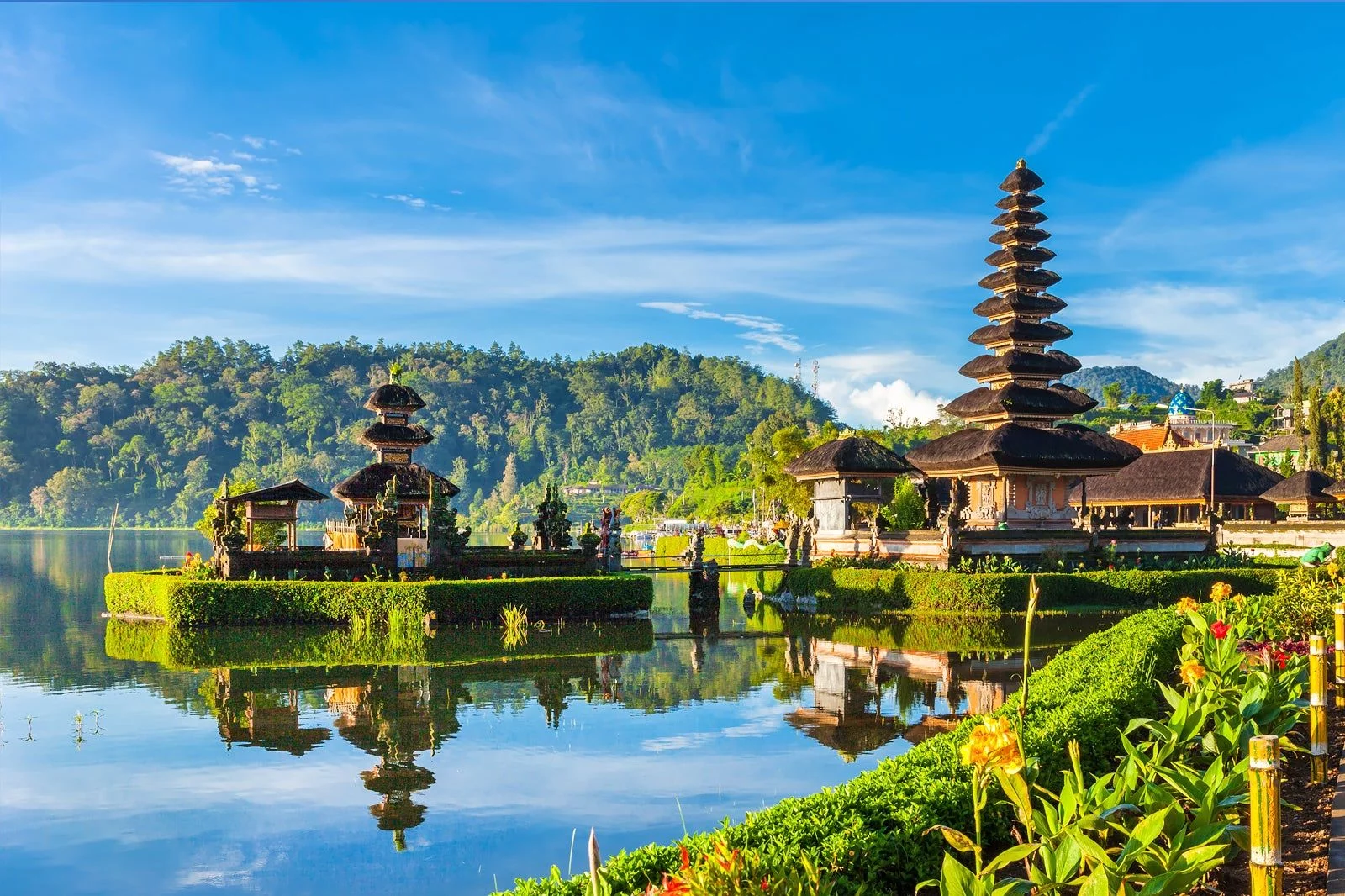
Bali covers just 5,780 sq km, yet packs 23 temples on a single site (Besakih), 600 hectares of UNESCO-listed rice terraces at Jatiluwih, and a 70 m cliff at Uluwatu. So no, you don't do Bali in three days. This guide cuts the noise to the 11 places that genuinely earn the detour, with 2026 prices, the smart time slots, and the classic traps to dodge.
Cultural anchor in Ubud, purification ritual at Tirta Empul, sunrise on Mount Batur, diving the USAT Liberty at Tulamben, walks through the forgotten valley of Sidemen: each site comes with access, real cost, and the right window. You'll also find the updated practical info: e-VOA, the 150,000 IDR Bali tourist levy in force since February 2024, the mandatory IDP for scooter rental, and two ready-to-copy itineraries (10 and 15 days).
Bali rewards you for slowing down. In 10 days, you cover the essentials: Ubud, Uluwatu, Tanah Lot, Tegallalang, Tirta Empul, Jatiluwih, Mount Batur, Nusa Penida, and a slice of the east coast. In 15 days, you add Besakih, Sidemen, and three diving nights at Amed/Tulamben. Book your e-VOA online 3 to 7 days before departure, settle the tourist levy on love.bali.go.id, get an IDP before you fly if you plan to scooter, and target May-June or September to dodge peak season. The rest is on the warungs, the canang sari smoking at dawn, and the smiles. Bali handles those.
Overview
Bali is a Hindu island of 5,780 sq km within the Indonesian archipelago, known for its temples, UNESCO-listed terraced rice fields, and dive sites.
Bali is 5,780 sq km in the Indonesian province of the same name, home to around 4.3 million people, 87% of them Hindu, set inside an Indonesia that is 87% Muslim. That religious singularity sets the island's rhythm: canang sari offerings laid out each morning in front of every door, temple processions several times a week, and a 210-day Balinese calendar that paces the festivals.
Geographically, the island is built around a central volcanic chain dominated by Mount Agung (3,142 m) and Mount Batur (1,717 m). In the south, the surf beaches of Canggu, Uluwatu, and Seminyak; in the centre, the cultural hub of Ubud and the terraced rice fields; to the east, the Amed-Tulamben dive coast and the unspoiled Sidemen valley; offshore, the satellite island of Nusa Penida (203 sq km) with its cliffs and manta rays.
Ngurah Rai International Airport (DPS) in Denpasar handles every arrival. Expect 18 to 22 hours of travel from Europe or North America with a mandatory stopover in Doha, Dubai, Singapore, Kuala Lumpur, or Istanbul, and $800 to $1,400 USD (€700-1,200) round-trip depending on the season from major hubs.
Amed / Tulamben
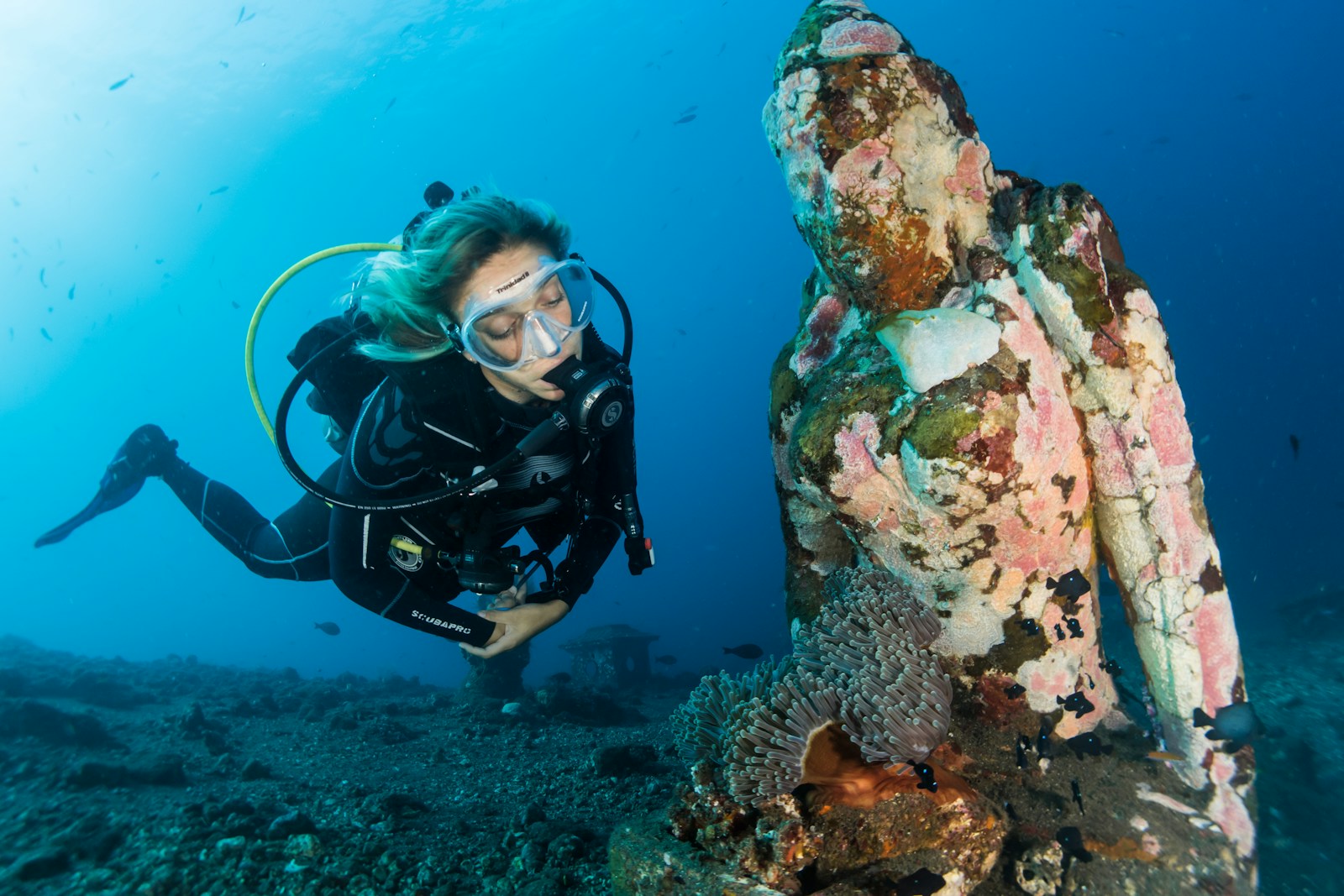
On the north-east coast, between the black slope of Mount Agung and the Lombok Strait, Amed and Tulamben string together seven fishing villages with grey-black volcanic sand beaches lined with colourful jukungs. The local legend is the USAT Liberty: a US cargo ship torpedoed in 1942 by the Japanese submarine I-166, then pushed back into the sea by the 1963 Mount Agung eruption, where it now rests between 3 and 29 m deep, just 30 m from shore. It's one of the only wrecks in the world accessible by diving and snorkelling straight from the beach — no boat, no entry from the surface, just a step into the black pebbles. You'll cross paths with tight schools of bigeye trevally, stonefish, nudibranchs, and in the cooler season, sometimes a Mola Mola at first light. It's also the counterpoint to the touristy south: no traffic jams, no Gojek, just local warungs at 35,000 IDR for nasi campur.
Sidemen
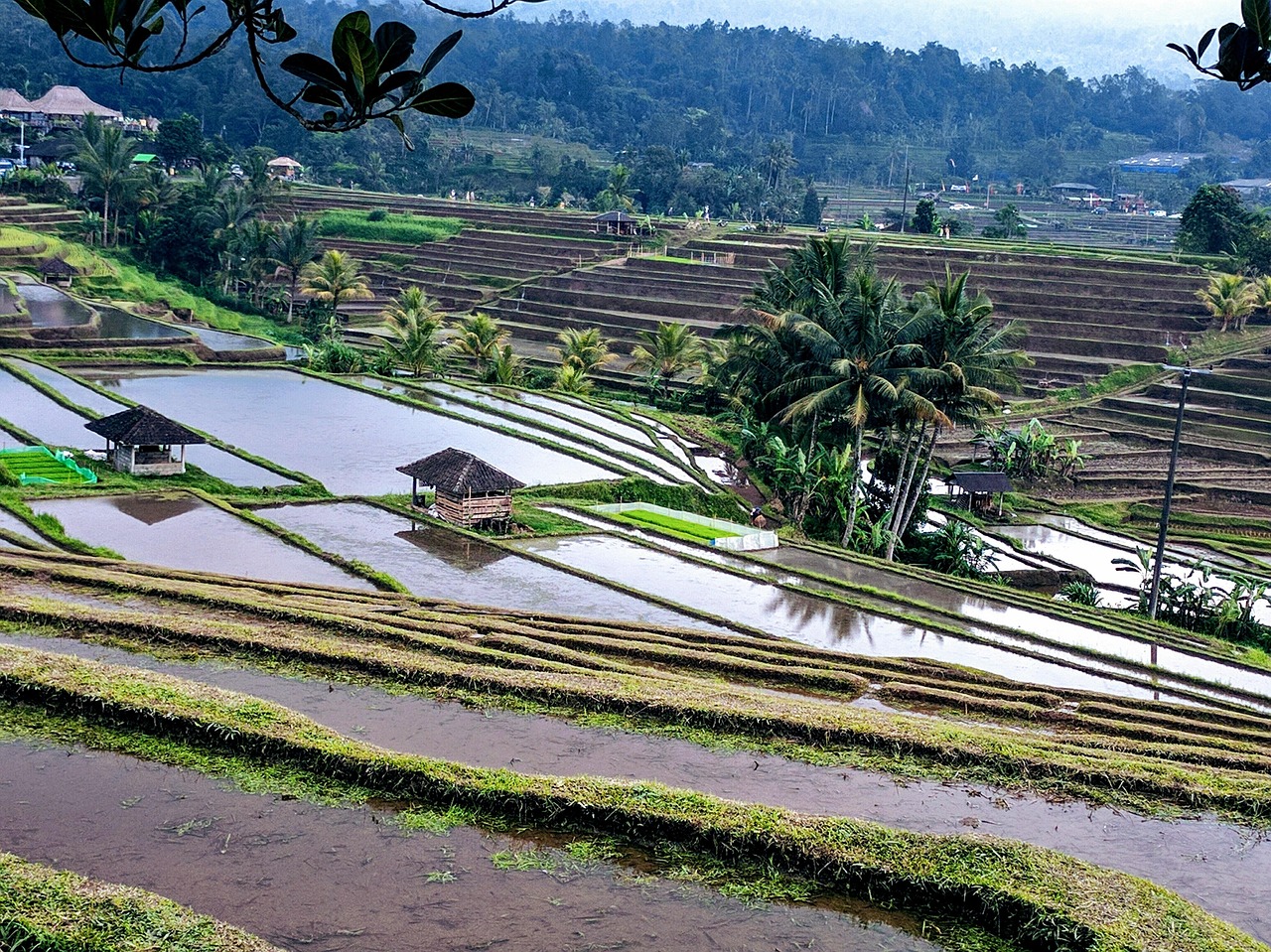
Sidemen is what Ubud was before Eat Pray Love: a valley 30 km east, framed by Mount Agung on one side and the Unda river on the other, where stepped agriculture still moves to the rhythm of the centuries-old subak. People come for the walks through steep terraced rice fields, for the local production of arak (palm spirit) and endek (traditional ikat weaving), and for hillside lodges that go for 600,000 to 1.5 million IDR a night with breakfast and a view of Agung. No mall, no chain, no Starbucks — at night, you hear frogs and the gamelan from a nearby temple. It's the perfect antidote to the overloaded south, 1 hr 30 by road from Ubud, and the ideal base to reach Besakih, Tirta Gangga, and Tulamben without the crowds.
Ubud
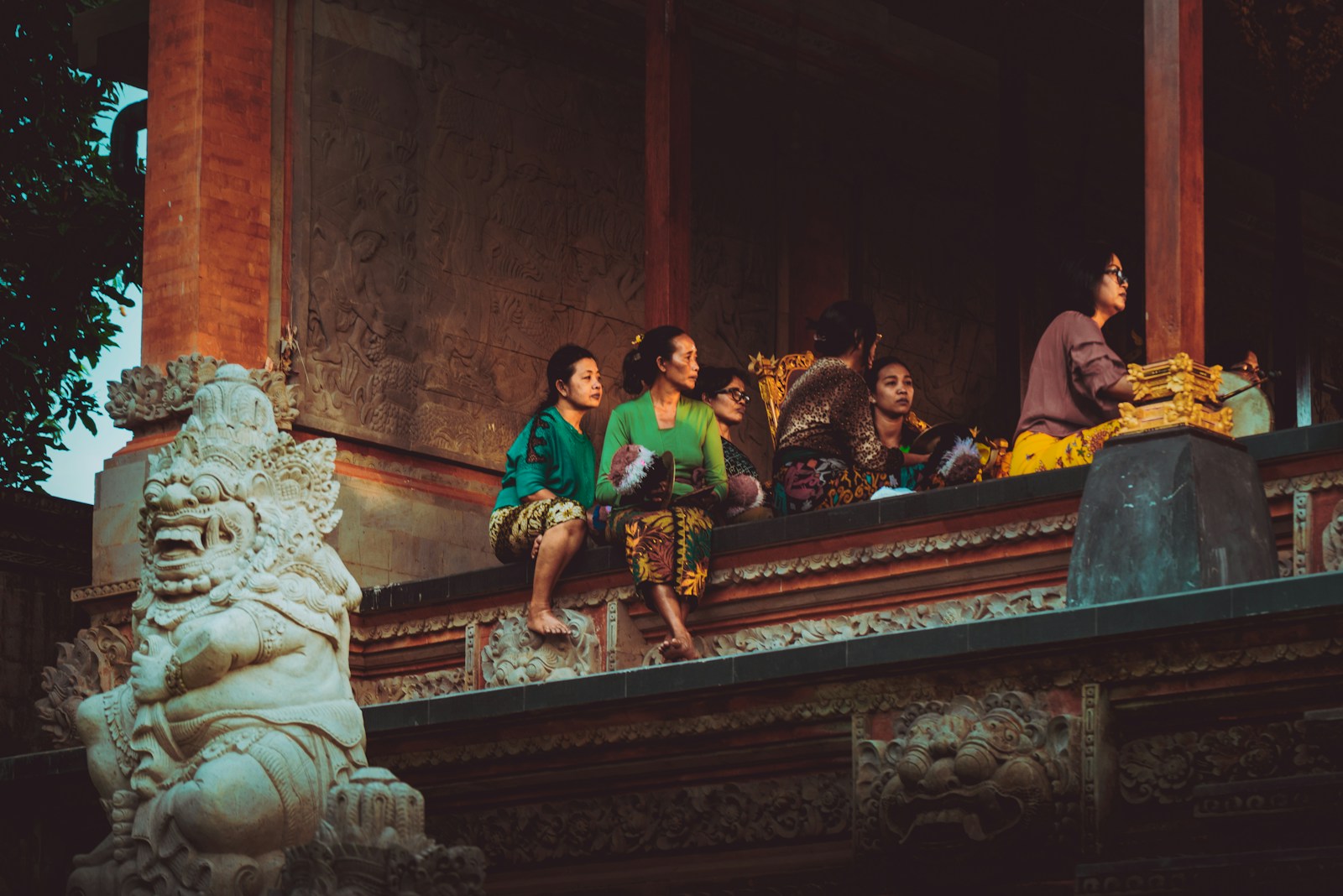
In Ubud, the morning always opens with the scent of incense on the canang sari laid in front of every shopfront. The town breathes at the pace of a gamelan. Cultural capital of Bali at 600 m altitude in the rice fields of the Gianyar regency, Ubud became famous in the 1930s thanks to the painter Walter Spies and the craft villages of Mas (wood), Celuk (silver), and Batuan (painting). You come here to walk the Campuhan Ridge at sunrise, watch the black-crested macaques in the sacred forest of Mandala Suci Wenara Wana (700 individuals, open 9 am to 6 pm, entry 100,000 IDR on weekdays), take a cooking class, or sit through a gamelan session at the Puri Saren royal palace. It's the only base from which you can reach everything by scooter in 30 minutes: Tegallalang, Tirta Empul, Goa Gajah, Tegenungan.
Tanah Lot
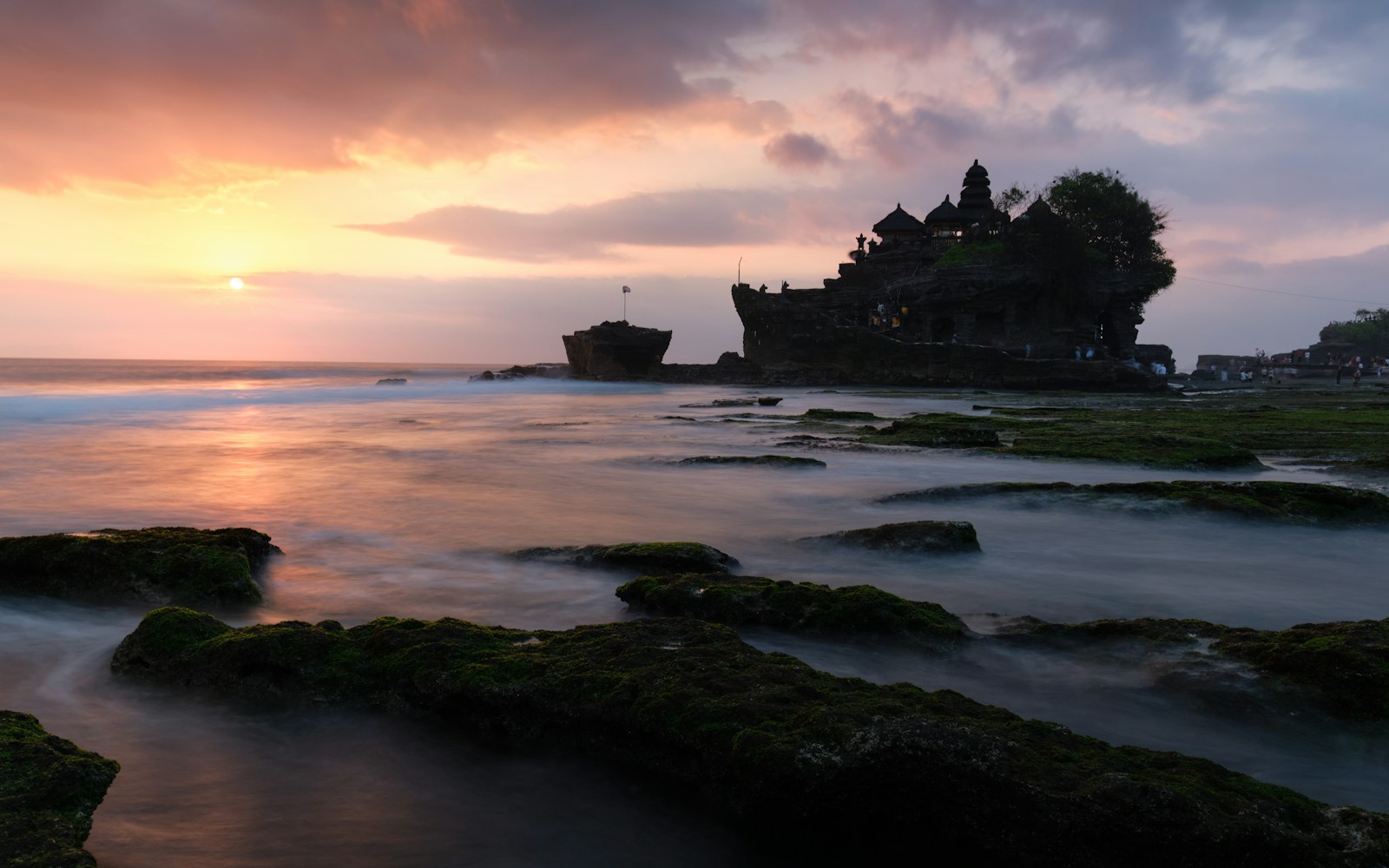
At low tide, you cross the salt puddle and touch the foot of the rock: that's the whole point of Tanah Lot — a temple perched on an islet that the rising tide circles in. Founded according to tradition by the Javanese sage Dang Hyang Nirartha in the 16th century, it's one of the seven sea temples (pura segara) that form Bali's spiritual coastal belt, guarding against ocean spirits. The rock has eroded so badly that a Japanese-funded programme in the 1980s rebuilt more than a third of its base in concrete made to look like stone. The result is invisible but explains why Tanah Lot still stands. People come for the silhouette at sunset, to bless their forehead at the fresh-water spring that bubbles out below the rock, and for the black-and-white sea snakes kept in a nearby cave (20,000 IDR tip). With more than 500,000 annual visitors, it's Bali's photo icon — provided you get there well before the 5 pm bus.
Uluwatu Temple + Kecak
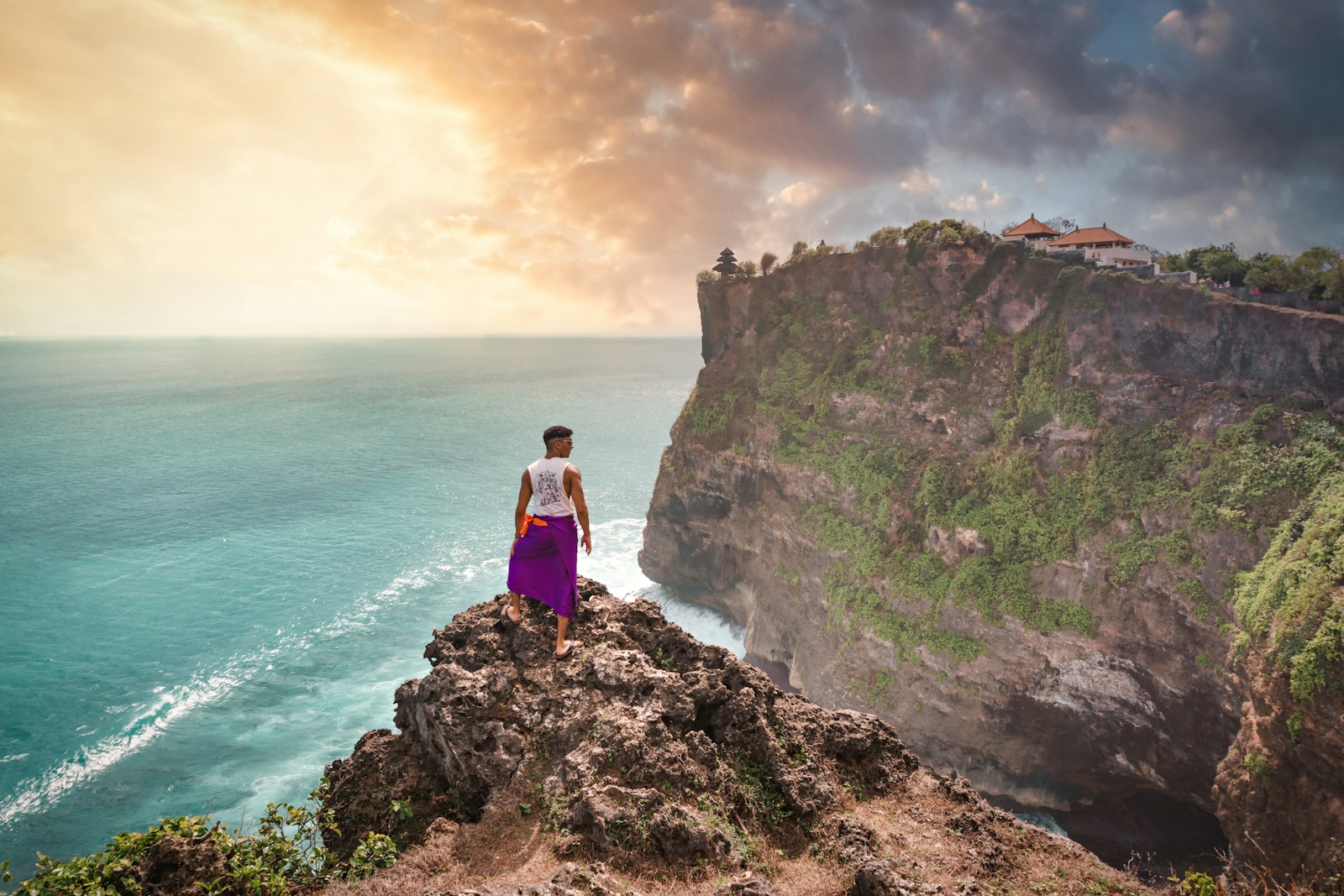
Uluwatu starts with the void: 70 m of limestone cliff dropping into the Indian Ocean, and up top a black-stone temple facing the setting sun. Built in the 11th century by the sage Empu Kuturan then expanded in the 16th by Dang Hyang Nirartha, Pura Luhur Uluwatu is one of the nine directional temples (kayangan jagad) that protect the island, dedicated to Sang Hyang Widhi in his Rudra form. The local stars are the long-tailed macaques: primatology studies have shown they practise barter — they steal glasses, phones, and flip-flops to trade them with the temple guardians for food. The cherry on top: the Kecak fire dance, a daily performance at 6 pm where 70 bare-chested chanters form a living circle around a fire pit and mime the Ramayana. No other temple in Bali combines this level of geological, cultural, and choreographic staging.
Pura Besakih (Mother Temple)
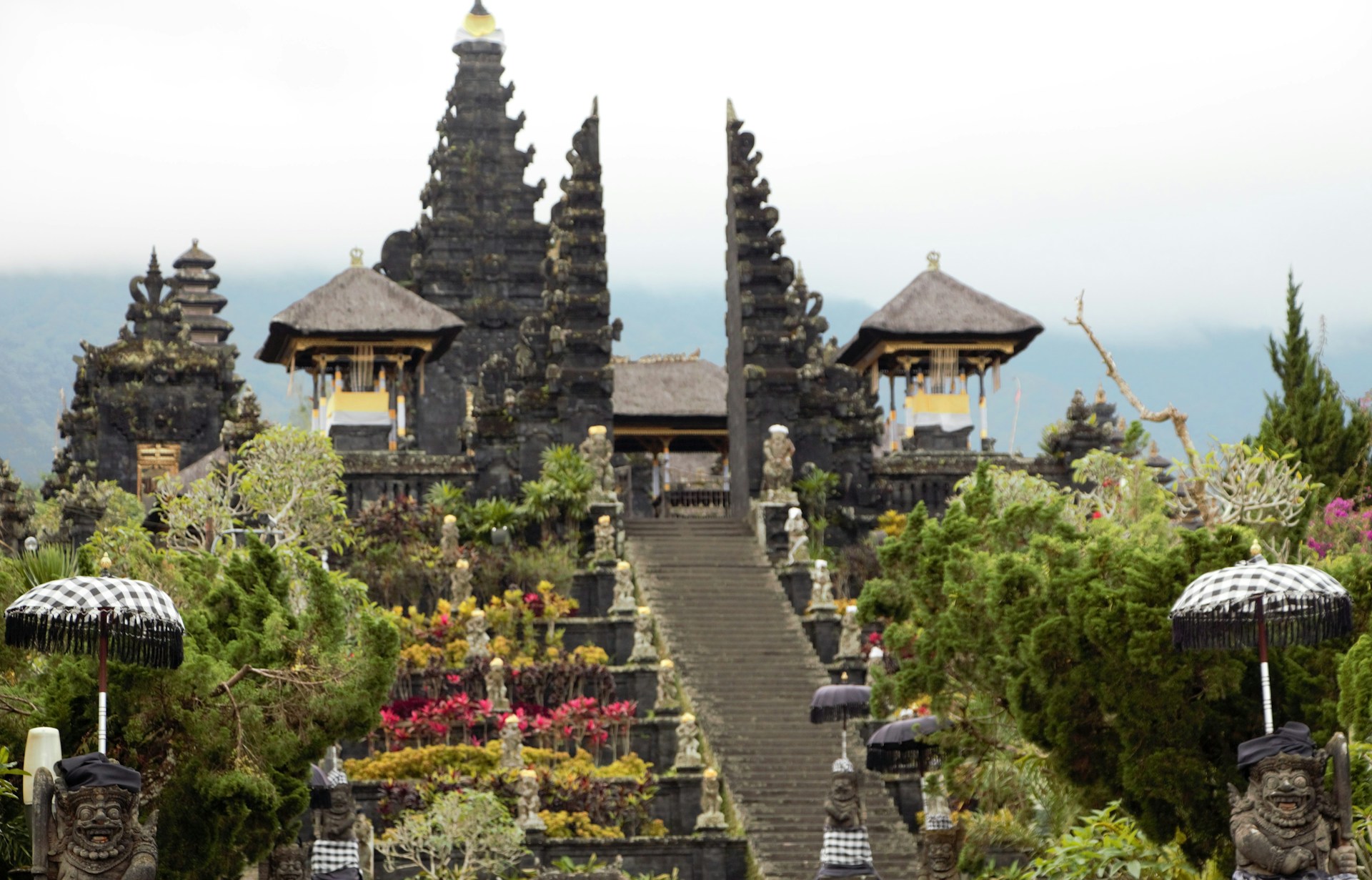
At the foot of Mount Agung (3,142 m), clinging to 1,000 m altitude, 23 interlocking temples on six black terraces form Pura Besakih — the largest, oldest, and holiest temple of Balinese Hinduism. The megalithic foundations may be 2,000 years old, Hindu worship has been documented here since 1284, and the Gelgel dynasty installed the state temple here in the 15th century. During the 1963 eruption that killed more than 1,000 people, lava stopped a few metres from the main Pura Penataran Agung sanctuary — a fact the Balinese read as divine protection. People come for the 17th-century lotus throne (Padmasana), for the silent processions of the pemangku priests, and for the vertiginous perspective on Agung when the clouds lift. Authority Besakih inaugurated a new forecourt and electric shuttle system in 2023, which wiped out the old shakedown by self-appointed "guides".
Jatiluwih UNESCO Subak
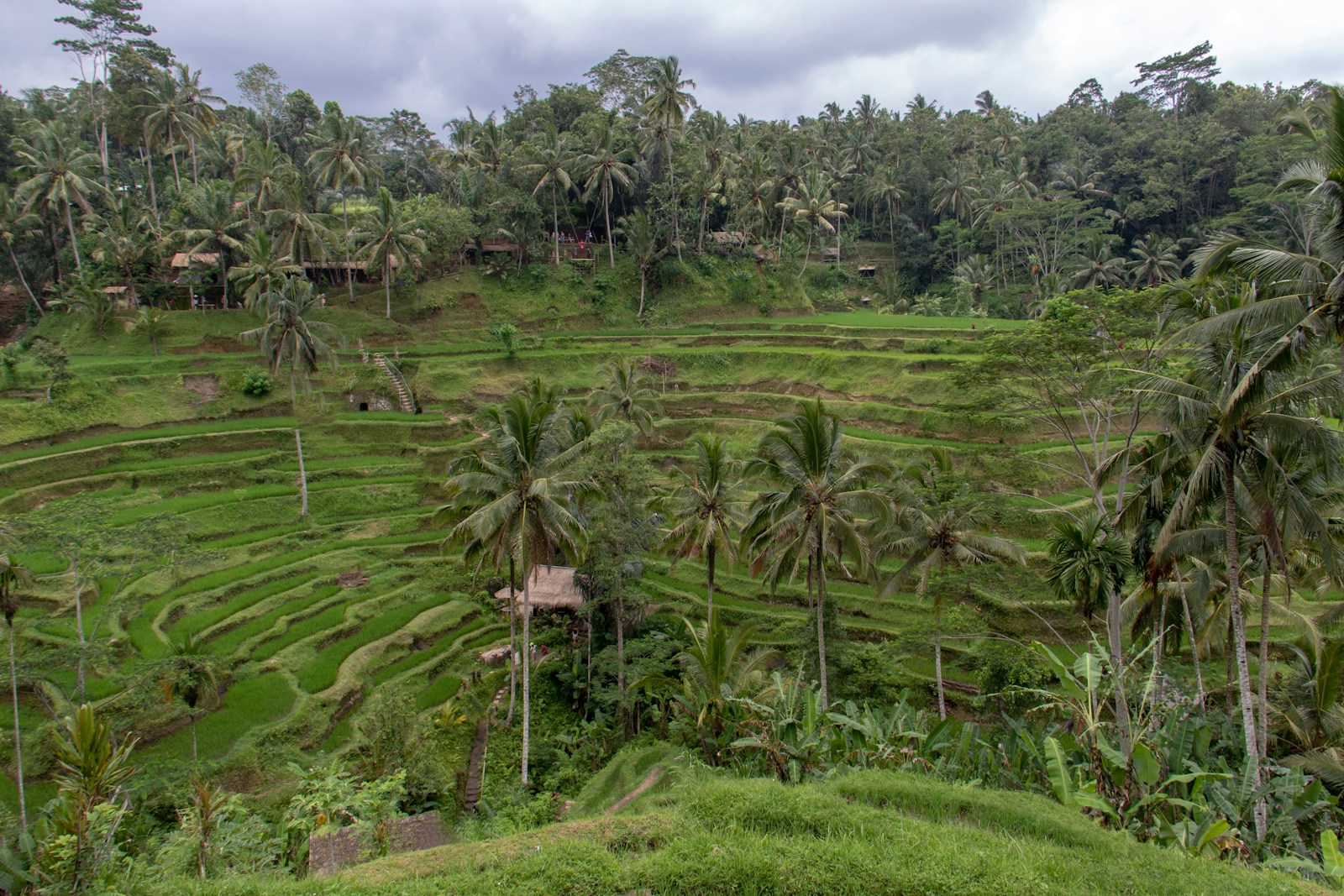
As you wind down the serpentine road from Pacung, the soft green of Jatiluwih's stepped rice terraces opens out over 600 hectares — Bali's foundational image, without the selfie sticks. Inscribed in 2012 on the UNESCO World Heritage list under "Cultural Landscape of Bali Province: the Subak System as a Manifestation of the Tri Hita Karana Philosophy", Jatiluwih is the showcase of Bali's communal irrigation system, which dates from the 9th century and covers close to 20,000 hectares across the island — 1,559 cooperative subaks managed by 50 to 400 farmers each. The Tri Hita Karana philosophy ties human, nature, and the divine together via the pura ulun danu (lake temples) and the collective regulation of water. On site: four marked walking loops from 1 to 5 km, warungs perched above the terraces (try the nasi merah, local red rice), and unmatched quiet.
Mount Batur (Kintamani)
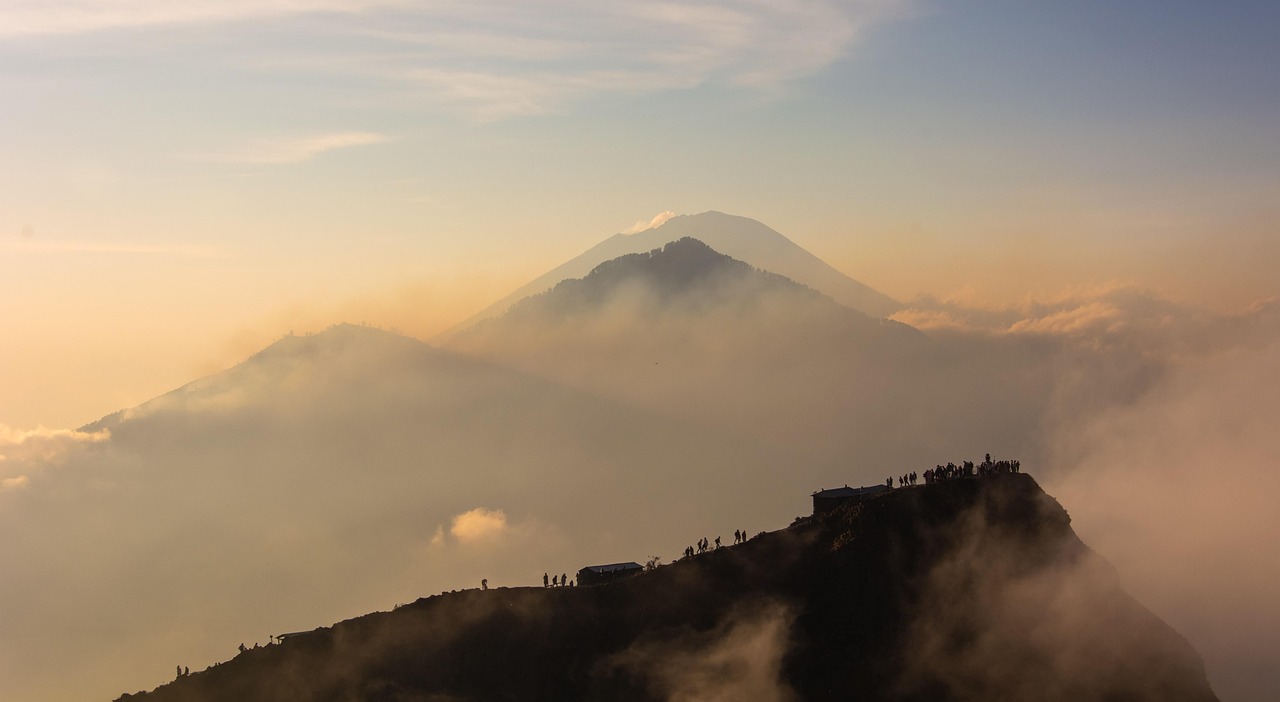
At 3:30 am, headlamp on, you start up the 1,717 m of Gunung Batur on a black volcanic gravel trail that still smells of sulphur. It's an active stratovolcano, last erupted in 2000, set inside a double caldera formed 29,000 then 20,000 years ago, and listed since 2012 in UNESCO's Global Geoparks Network. At the top, the sunrise lights up Mount Agung first across the way, then Lake Batur below, then Lombok's Mount Rinjani on the horizon — fifteen minutes of pure magic. The descent goes through live fumaroles where the guide steam-cooks your eggs in volcanic vents. The summit is mandatorily run by HPPGB (Kintamani's local guides association): no climb without an official guide since the 2024 crackdown, with checkpoints along the trail.
Nusa Penida
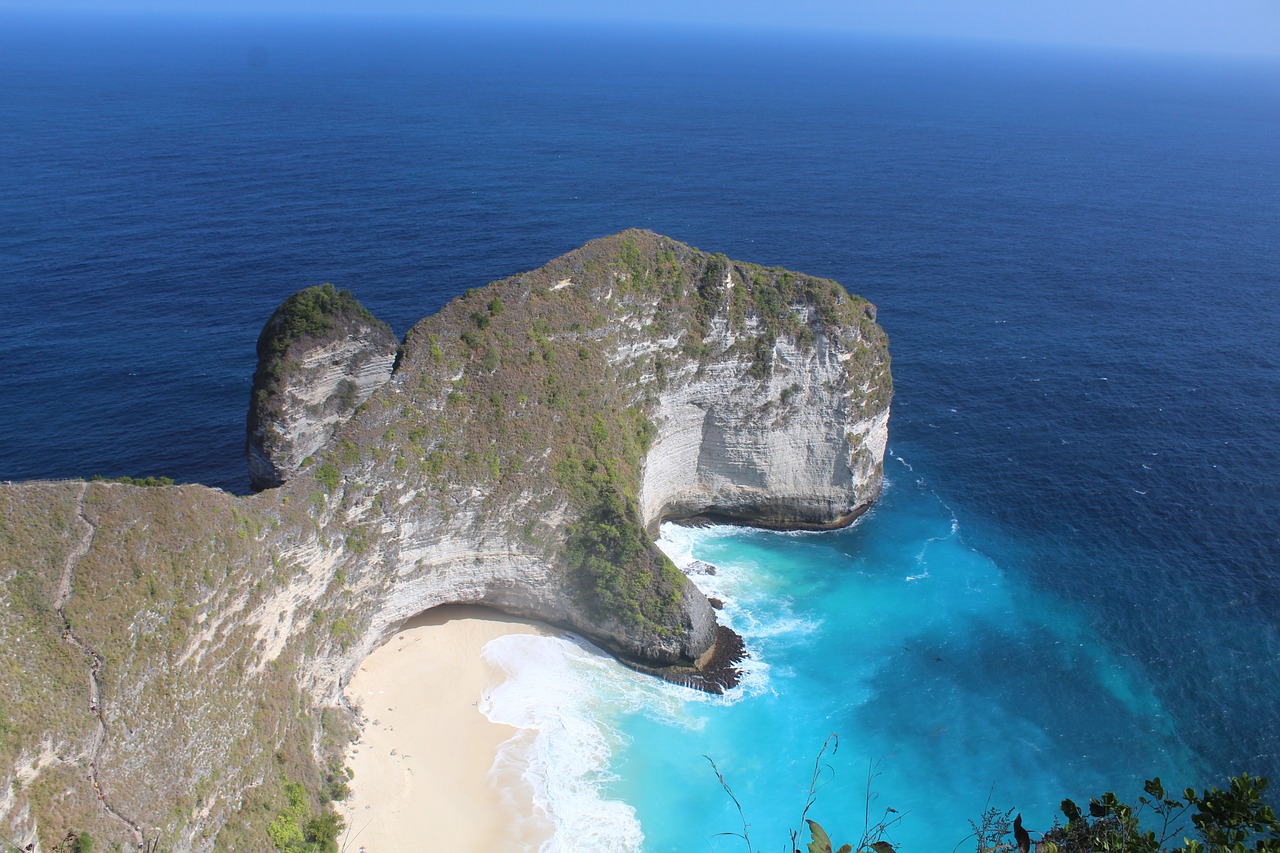
Nusa Penida — literally "the priests' island" in Balinese — is Bali on a Jurassic Park budget: 203 sq km of limestone cliffs dropping into a turquoise sea, beaches reached by 400 steps carved into the rock, and 65,800 inhabitants who speak a distinct Balinese dialect. Famous Kelingking Beach has the shape of a T-Rex leaning over the water, viewed from a belvedere 200 m above the sand; Diamond Beach and Atuh Beach share the south-east point with their rock spires; Broken Beach (Pasih Uug) forms a natural arch open to the ocean; underwater, Manta Point and Crystal Bay (1,419 ha of coral) guarantee manta ray encounters year-round. It's also a bird sanctuary: the Bali starling reintroduction programme went from fewer than 10 birds in 2005 to over 100 by 2009.
Tegallalang Rice Terraces
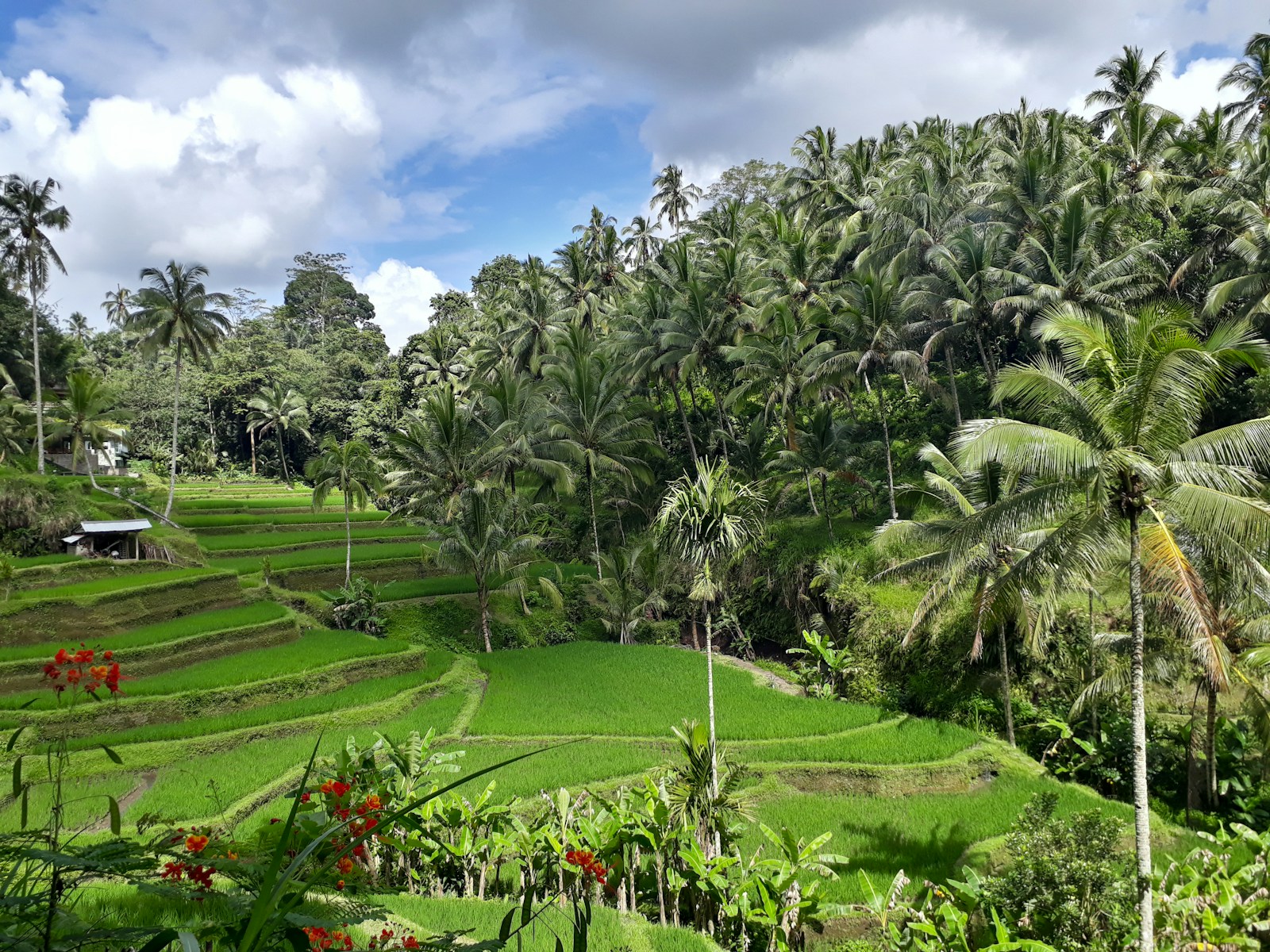
Fifteen minutes north of Ubud, the Ceking valley carves out an amphitheatre of stepped rice fields stitched together by the subak system since the 9th century: this is Tegallalang, Bali's Instagram rice terrace. Smaller than Jatiluwih but more dramatic in relief, in recent years it has sprouted a cloud of Bali Swings (giant swings over the void), photo "love nests", and balcony cafés. The rice field is still actively farmed: you'll cross paths with barefoot farmers in the water at first light, and some accept a 10,000-20,000 IDR tip to walk across their plot. It's the spot for travellers who haven't got time to reach Jatiluwih but still want the postcard shot — provided you turn up at the right hour.
Tirta Empul
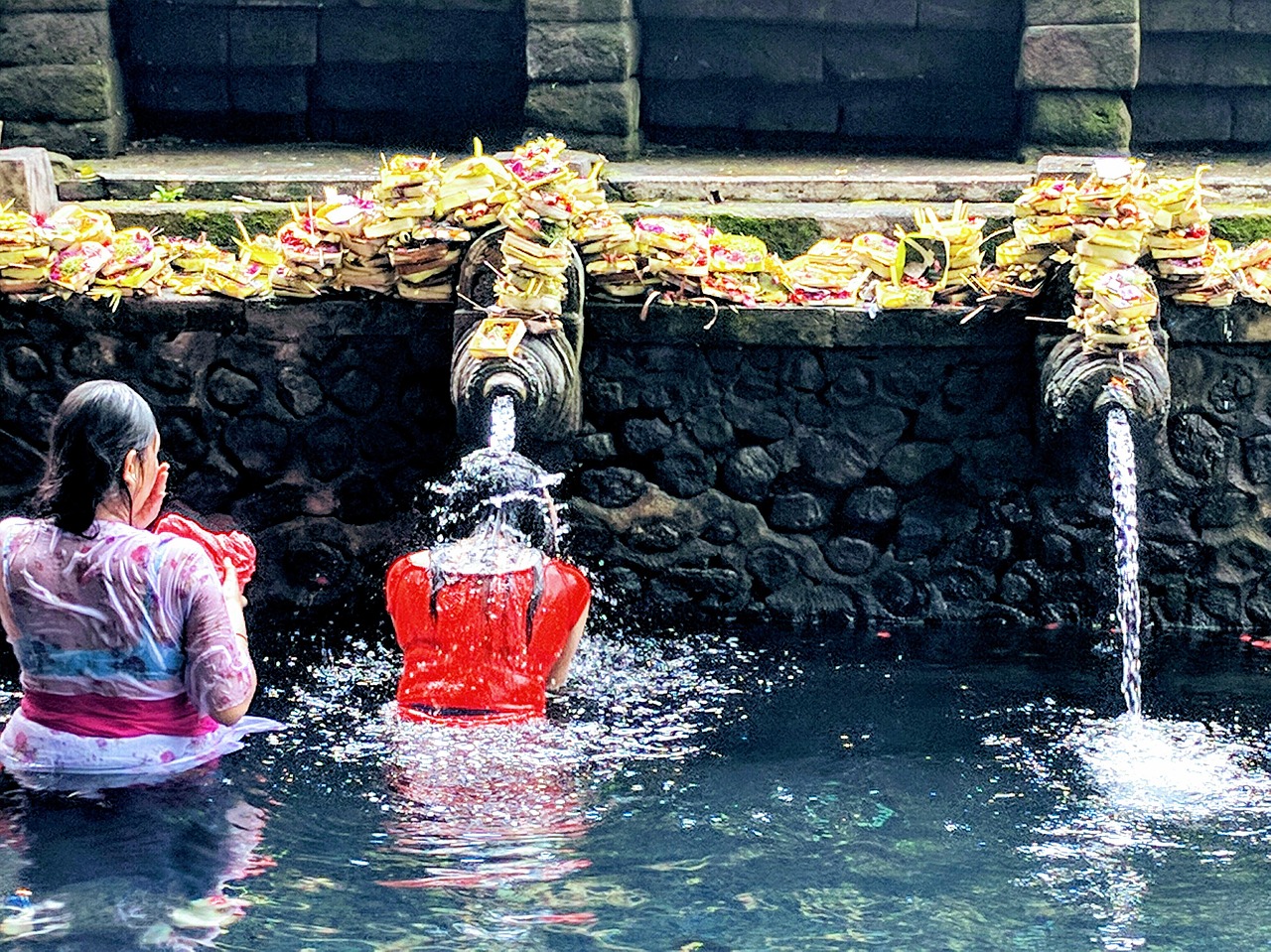
In Tampaksiring, a natural spring rises from the ground at 18°C into two rectangular black-stone pools fed by 30 spouts — this is Pura Tirta Empul, founded in 962 under the Warmadewa dynasty and dedicated to Vishnu. Balinese visitors perform the melukat purification ritual here: you step into the water and bow three times beneath each spout, following a precise order (left to right, skipping the 27th and 28th, which are reserved for funeral rites). Beyond the spiritual experience open to foreigners, the complex unfolds across three courtyards — jaba pisan, jaba tengah, jeroan — typical of classic Balinese architecture. A 2017 local study found bacterial contamination (E. coli) at some spouts: bathing remains allowed but avoid swallowing the water.
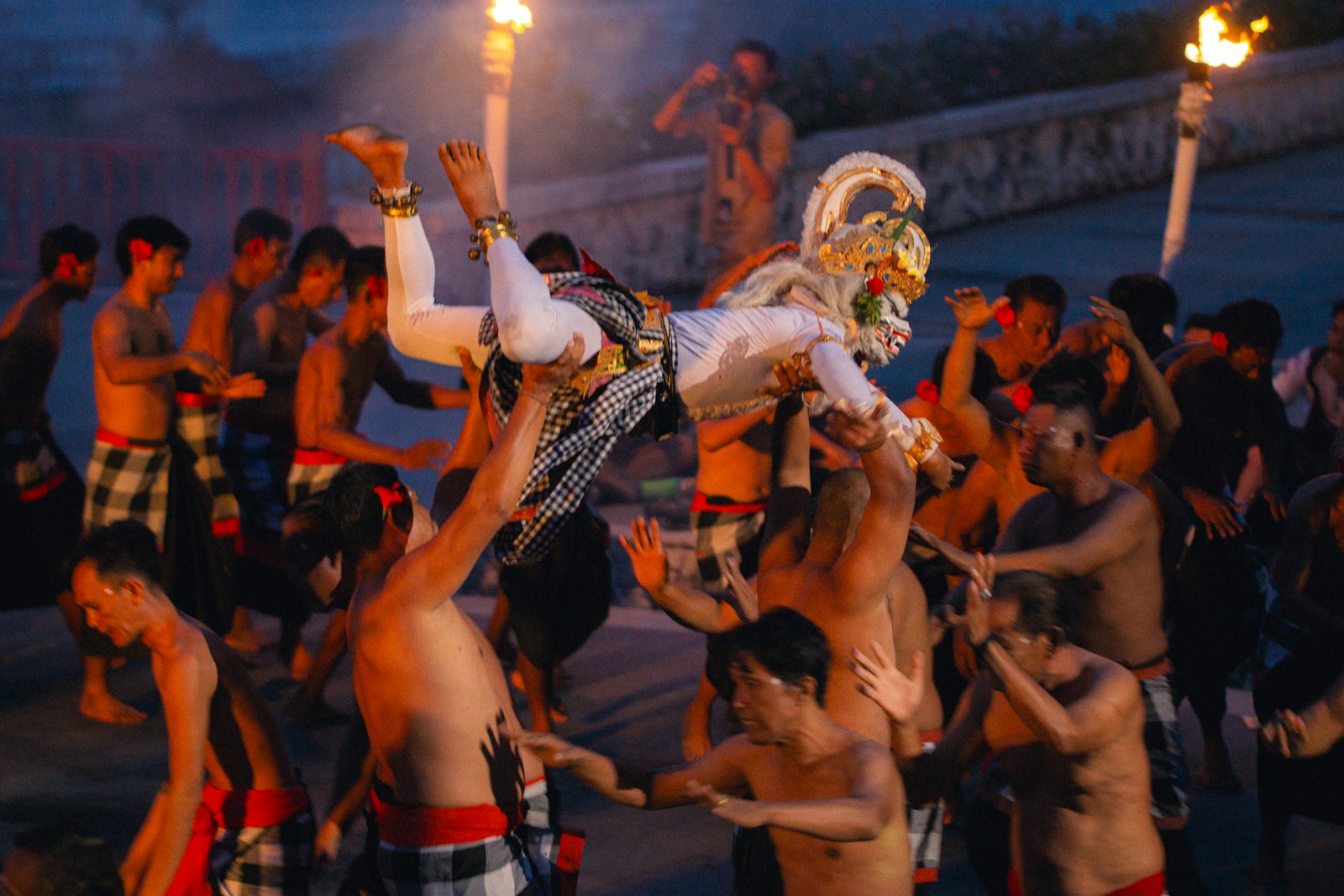
Kecak fire dance at Uluwatu
70 bare-chested chanters in a circle surround a fire pit on the edge of a 70 m cliff facing the sunset, staging the Ramayana episode where Hanuman frees Sita from Ravana's grip. A modern creation (1930s) drawn from the traditional sanghyang ritual, it's one of the rare Balinese cultural experiences that lives up to its postcard promise. Buy the ticket on site at 4:30 pm (150,000 IDR), turn up at 5 pm, and keep your sunglasses in your bag (macaques).
- 1 h de spectacle + 1 h sur place avant (visite temple)
- 150 000 IDR / personne (~9 €) + 50 k entrée temple
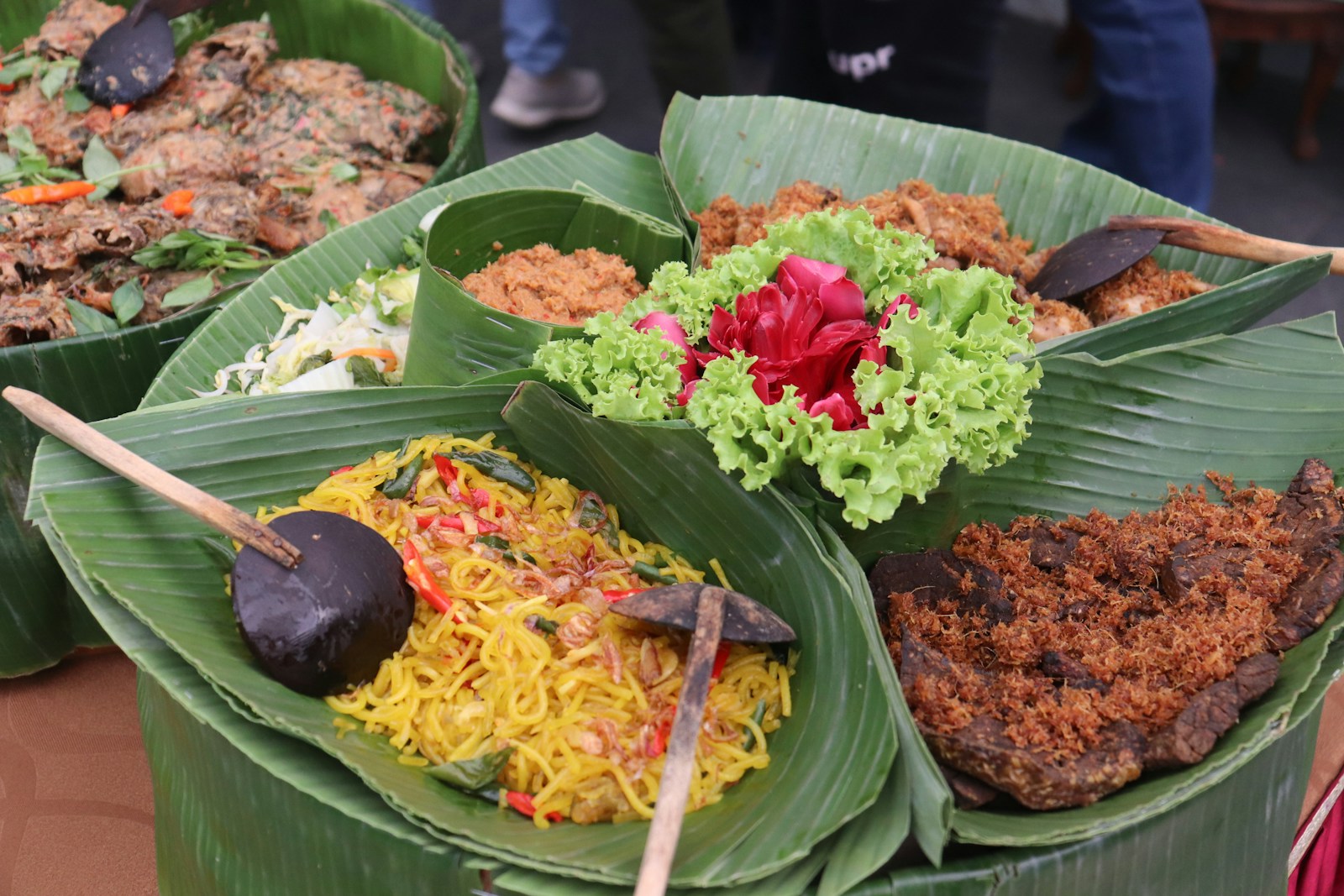
Balinese cooking class in Ubud
A half-day at a local chef's: morning market at Pasar Ubud to identify the ingredients (galangal, kemiri, daun salam, bumbu), then preparation of 5 to 8 dishes — fish sate lilit, lawar, base genep, gado-gado, soto ayam. The Casa Luna, Paon Bali Cooking Class, and Lobong Culinary Experience workshops are the benchmarks. Pickup included from your Ubud hotel, lunch and printed recipes to take home.
- 4 à 5 h (8 h-13 h ou 14 h-19 h)
- 550 000-750 000 IDR / personne (~33-45 €)
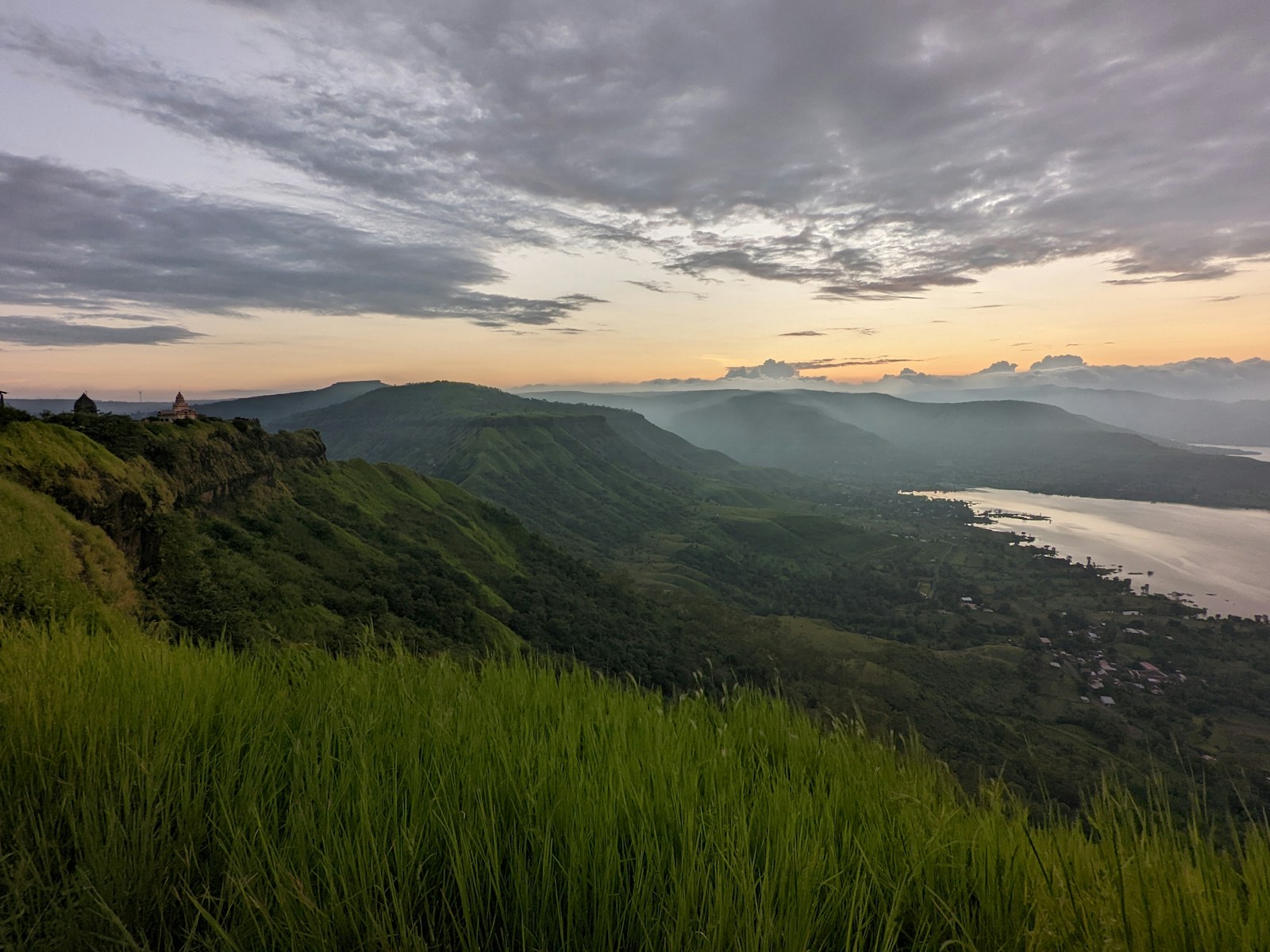
Sunrise Mount Batur trek
Hotel pickup at 1:30 am, start from the Toya Bungkah parking at 4 am, 1 hr 45 to 2 hr ascent on a black volcanic gravel trail up to the 1,717 m summit. Breakfast of eggs steam-cooked in volcanic vents + coffee + bananas at the top, sunrise over Mount Agung, Lake Batur, and Lombok. Descent via the crater and the fumaroles. Mandatory HPPGB guide since the 2024 crackdown — book with a licensed operator like Mt-Batur.com, Mount Batur Sunrise Trekking, or an independent licensed guide.
- 8-9 h porte-à-porte depuis Ubud (1 h 30-9 h 30)
- 400 000-600 000 IDR partagé / 600 000-900 000 IDR privé (~24-55 €)
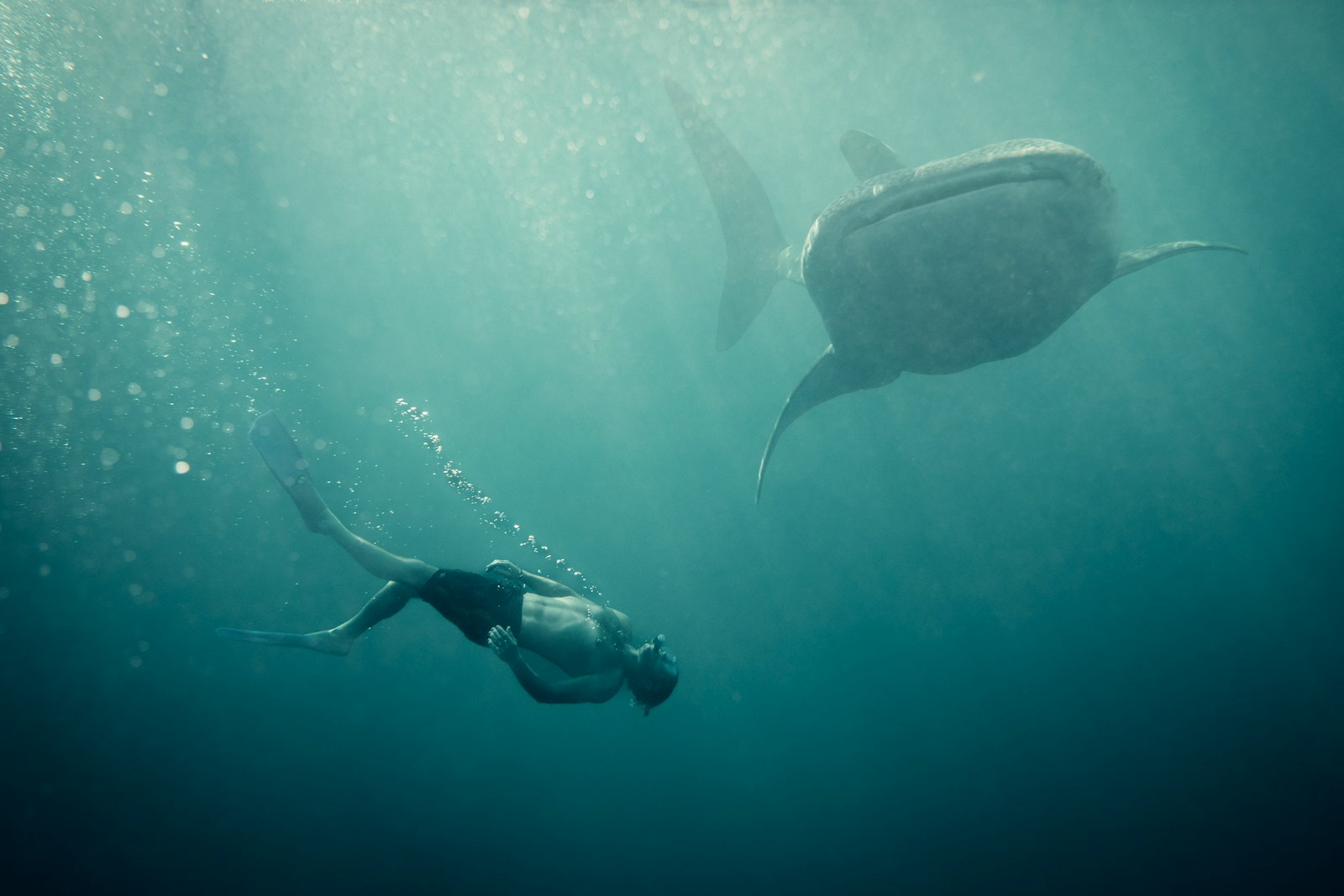
Nusa Penida snorkelling from Sanur
Fast boat from Sanur harbour at 8 am, 30 min crossing. Tour of 4 snorkelling sites: Manta Point (manta rays year-round, 5-7 m depth), Crystal Bay (coral reef, occasional Mola Mola in the cooler July-October season), Gamat Bay, and Wall Point. Buffet lunch on board or at a Toya Pakeh warung. Mask/snorkel/vest included, back to Sanur around 4 pm. Ideal for travellers who don't want to overnight on Penida or drive 6 hours on the island's rough roads.
- Journée complète, 8 h-16 h 30
- 750 000-1 100 000 IDR / personne (~45-65 €)
Getting there
No direct flights link the US, UK, Australia, or continental Europe to Bali; you'll connect through Doha, Dubai, Singapore, Kuala Lumpur, or Istanbul on a 18 to 22-hour journey.
The only entry point is Ngurah Rai International Airport (DPS) in Denpasar, in the south of the island. No carrier flies direct from Europe or North America: a stopover is mandatory, expect 18 to 22 hours door-to-door and $800-1,400 USD (€700-1,200) round-trip from major hubs. Australia is the rare exception, with direct flights from Sydney, Melbourne, and Perth in 4-6 hours.
Which airlines fly to Bali?
- Qatar Airways via Doha, often the cheapest and the most efficient stopover
- Emirates via Dubai, A380 comfort through to Singapore
- Singapore Airlines via Singapore, top service but pricier
- Malaysia Airlines and AirAsia via Kuala Lumpur, low-cost options
- Turkish Airlines via Istanbul, long layover but convenient westbound connection
- Qantas, Jetstar, Virgin Australia direct from Australia
2026 heads-up
Travel advisories flag occasional service interruptions on Gulf routes in May 2026 tied to regional tensions. Check your flight status 24 hours before departure and keep a 3-hour buffer for any connection.
After you land
The airport sits 12 km from Kuta, 25 min from Seminyak, 45 min from Sanur, and 1 hr 15 from Ubud without traffic. Official Bluebird taxis run on the meter; Grab and Gojek operate from the airport via a dedicated pickup zone.
Getting around
You get around Bali by scooter (IDP required, 60,000-100,000 IDR/day), via Gojek/Grab in the south and Ubud, or with a private driver (sopir) at 550,000-700,000 IDR per day.
The scooter: maximum freedom
Rent at 60,000 to 100,000 IDR per day (cheaper by the week), it's the ideal tool for Ubud, Canggu, and the east coast. IDP required since 2024 or you risk a 250,000 to 1 million IDR fine. Helmet mandatory for rider and passenger. Skip night riding and the routes up to Mount Batur if you're a beginner.
Gojek and Grab: the cheap option
Both ride-hailing apps work across the whole south (Seminyak, Canggu, Kuta), Sanur, and Ubud, with car or motorbike rides. Trips usually run 25,000 to 60,000 IDR, food delivery available. The catch: these apps are blocked around coastal temples where local cooperatives ban their use, so you'll need a local taxi back.
The private driver (sopir): the most comfortable
A private driver for the day costs 550,000 to 700,000 IDR for 10 hours, fuel included. Unbeatable for stringing together Besakih + Tirta Gangga, or Jatiluwih + Tanah Lot in a single day.
Ferries to Nusa Penida
Departures from Sanur, 30 to 45 min crossing, 150,000 to 300,000 IDR one way depending on the operator (Maruti Express, Caspla, Angel Billabong Express). Book the night before in high season.
Other options
- Kura-Kura Bus and Perama Tour for budget intercity links
- Bluebird taxi on the meter in the south only
What to do
Bali combines 11 essential sites and a handful of key activities: sunrise Mount Batur trek, Ubud cooking class, snorkelling with manta rays at Nusa Penida, and the Kecak dance at Uluwatu.
The heart of the trip comes down to 11 flagship places detailed further down: Ubud, Tanah Lot, Uluwatu, Pura Besakih, Jatiluwih, Mount Batur, Nusa Penida, Tegallalang, Tirta Empul, Amed/Tulamben, and Sidemen. Each one has its prime time of day and its own access logic, broken down site by site.
Experiences worth booking
Four activities frame these sites and give the trip its depth:
- Kecak fire dance at Uluwatu: 70 chanters in a circle at sunset on the cliff, 150,000 IDR ticket, 1 hr show
- Balinese cooking class in Ubud: morning market at Pasar Ubud then 5 to 8 dishes prepared (Casa Luna, Paon Bali, Lobong), 550,000-750,000 IDR for the half-day
- Sunrise Mount Batur trek: 1:30 am pickup, 1,717 m summit by 6 am, 400,000-600,000 IDR group rate with mandatory HPPGB guide
- Nusa Penida snorkelling from Sanur: Manta Point, Crystal Bay, Gamat Bay, and Wall Point by fast boat, 750,000-1.1 million IDR for the day
What else?
Surf at Canggu and Uluwatu, yoga retreat in Ubud, walks through the rice fields of Sidemen or Jatiluwih, traditional Boreh or Mandi Lulur massages from 150,000 IDR an hour. Plan 2 to 3 guided experiences over a 10-day trip to keep things from feeling overstuffed.
Food
Balinese cuisine lives in the local warungs (nasi campur 25,000-40,000 IDR), with specialities like babi guling, sate lilit, and bebek betutu, all the way up to the starred tables of Locavore and Mosaic in Ubud.
Warungs: the backbone
Small family-run eateries, unbeatable prices: nasi campur (rice with several toppings) at 25,000-40,000 IDR, mie goreng at 20,000, sate ayam at 30,000. Hunt for the warungs locals fill at midday, that's your best freshness gauge.
Dishes worth ordering
- Babi guling: spit-roasted suckling pig with spices, the Balinese ceremonial dish. Benchmark: Warung Babi Guling Ibu Oka in Ubud
- Sate lilit: minced fish skewers blended with coconut, lemongrass, and spices, mounted on lemongrass sticks
- Bebek betutu: duck marinated in bumbu base genep, wrapped in leaves and cooked 8 hours
- Lawar: salad of green vegetables, coconut, and minced meat
- Nasi merah: red rice from the Jatiluwih terraces, sweet and nutty
Ubud fine dining
Bali has earned its place as a serious culinary destination. In Ubud: Locavore (100% local cuisine, tasting menu), Mosaic (one Michelin), Aperitif (Australian-Indonesian chef). Expect 1.5 to 2.5 million IDR for the tasting menu before drinks.
Morning market in Ubud
Pasar Ubud opens by 5 am, the fruit and vegetable market runs full-throttle until 8 am. After 9 am, the souvenir market takes over.
Itineraries
10 days cover the essentials (Ubud, south, Nusa Penida, east), 15 days let you add Sidemen, Besakih, and three diving nights at Amed.
10-day itinerary: the essentials
- D1-D2: Arrive at Ngurah Rai, base in Seminyak or Canggu. Beach, surf, first warungs, jet-lag recovery
- D3: Uluwatu day trip (temple + Kecak at 6 pm), back to Seminyak
- D4: Transfer to Ubud via Tanah Lot at sunset. Settle into Penestanan or Nyuh Kuning
- D5: Tegallalang at first light, Tirta Empul at 9, Monkey Forest in the afternoon
- D6: Mount Batur trek with 1:30 am pickup, back in Ubud by 10, pool downtime, optional cooking class
- D7: Jatiluwih in the morning, lunch on site, back to Ubud
- D8: Transfer to Sanur, 8 am fast boat to Nusa Penida. West tour (Kelingking, Broken Beach, Crystal Bay)
- D9: Manta Point snorkelling, back to Sanur late afternoon
- D10: Massage, last beach in Sanur or Seminyak, flight home
15-day itinerary: the full version
Keep the 10-day base and add:
- D11-D12: Transfer to Sidemen, two nights in the valley, walk through the rice fields, endek weaving workshop
- D13: Visit Pura Besakih at 8 am opening, back to Sidemen or on to Amed
- D14-D15: Amed/Tulamben, diving or snorkelling on the USAT Liberty wreck, two nights on the north-east coast, return flight from Denpasar (3 hr 30 by road)
Possible extensions: Lombok and the Gili Islands as a Lombok extension over 4-5 days after Sanur.
Climate & seasons
When to go : Indonesia ?
Monthly averages over the past 5 years (Open-Meteo).
Best months
- juin
- août
Avoid
- janvier
- février
- mars
- octobre
- novembre
- décembre
| jan | fév | mar | avr | mai | juin | juil | août | sept | oct | nov | déc | |
|---|---|---|---|---|---|---|---|---|---|---|---|---|
| Our take | ||||||||||||
| Weather | ||||||||||||
| High | 26° | 27° | 27° | 26° | 26° | 25° | 24° | 24° | 25° | 26° | 27° | 27° |
| Rain (mm) | 385 | 371 | 363 | 193 | 185 | 132 | 159 | 129 | 157 | 201 | 381 | 311 |
When to go
The best time to visit Bali is the dry season from April to September, with a sweet spot in May-June and September-early October to avoid the crowds and the July-August prices.
The dry season runs April to September, the rainy season December to March (short but intense downpours, mainly in the afternoon). May-June and September form the ideal window: clear skies, calm seas on the east coast, fair villa rates, and few cruise ship buses at Tanah Lot or Uluwatu.
When to avoid Bali
January and February bring the heaviest rains. Reports flag an active La Nina event for Q1 2026, with watch alerts for landslides in high-altitude zones (Bedugul, Kintamani, the road to Besakih). Indonesia's meteorological agency BMKG is keeping its thunderstorm advisory in place.
What about high season?
July-August and the New Year period are dry but packed: villa rates climb +30%, crowds swarm Uluwatu, Tegallalang, and Kelingking Beach, and traffic jams thicken between Canggu and Seminyak. Surfers and European families pile in by the thousands.
The shoulder months
October and November mark the transition: still plenty of dry days, lush vegetation, falling rates, and near-empty sites at first light. April delivers stunning mornings after the last showers.
Budget
Plan for €30 / $32 USD a day in backpacker mode, €70 / $75 USD mid-range, and €180 / $190 USD luxury, not counting the international flight ($800-1,400 USD round-trip).
On-the-ground costs stretch a lot: you can live well in Bali on €30 / $32 USD a day, or blow $200 USD on a single private Nusa Penida tour.
Backpacker mode: €30 / $32 USD per day
- Warungs: nasi campur 25,000-40,000 IDR, 3 meals for 100,000-150,000 IDR/day
- Family homestay in Ubud, Amed, or Sidemen: 180,000-280,000 IDR a night
- Scooter rented by the week: 60,000-80,000 IDR/day
- Site entries: 50,000-150,000 IDR per site
Mid-range mode: €70 / $75 USD per day
- Healthy restaurants in Ubud or Canggu, Locavore-light style: 150,000-300,000 IDR per meal
- 3-star hotel with pool in Seminyak or Sanur: 700,000 to 1.2 million IDR a night
- Shared or half-day private driver: 300,000-400,000 IDR
- One guided excursion per week (Batur, Nusa Penida)
Luxury mode: €180 / $190 USD per day and up
- Private villa with pool and staff in Canggu or Ubud: 2 to 5 million IDR a night
- Full-day private driver: 550,000-700,000 IDR
- Starred restaurants: Locavore, Mosaic, Aperitif (1.5-2.5 million IDR)
- Private tours: Nusa Penida or Batur trek private 600,000-1.5 million IDR
International flight
Plan $800 to $1,400 USD (€700-1,200) round-trip from major European or North American hubs depending on the season, with a mandatory stopover.
Where to stay
Your base depends on the style: Ubud for culture, Seminyak/Canggu for beach and nightlife, Sanur for families, Amed for diving, Sidemen for quiet.
Bali is best done across several bases in succession, never a single hotel. For a 10 to 15-day trip, plan 2 to 3 stops to limit driving and soak up each vibe.
Ubud: the cultural base
Cultural capital at 600 m altitude, ideal for day-tripping to Tegallalang, Tirta Empul, Goa Gajah, and Mount Batur. Stay in Penestanan or Nyuh Kuning, quieter than Monkey Forest Road. Expect 180,000-280,000 IDR a night in a family homestay, 700,000-1.2 million IDR in a 3-star hotel with pool.
Seminyak, Canggu, Kuta: beach country
Seminyak for upscale comfort, Canggu for surfers and digital nomads, Kuta for tight budgets and nightlife. Private villa with pool 2-5 million IDR in Canggu during high season.
Sanur: the family pick
Flat sea, reef-protected beach, perfect for kids aged 3 to 8. Fast boat jetty to Nusa Penida is on site.
Amed and Tulamben: the dive base
North-east coast, black volcanic sand, direct shore access to the USAT Liberty wreck. Simple lodgings at 250,000-500,000 IDR a night, local warungs at 35,000 IDR per meal.
Sidemen: the forgotten valley
Antidote to the crowded south, view over Mount Agung, hillside lodges at 600,000 to 1.5 million IDR including breakfast.
Safety
Bali remains one of the safest destinations in Southeast Asia; the main risk is a scooter accident, the leading cause of medical evacuation.
The main risks in 2026
- Scooter accidents: the top cause of medical evacuation from Bali. IDP, helmet, and closed shoes mandatory. Without an IDP, your travel insurance refuses to pay, and a medevac to Singapore tops $50,000 USD
- Rainy season December-March with occasional landslides, flagged by travel advisories for Q1 2026 (active La Nina per BMKG)
- Drugs: extremely heavy penalties in Indonesia, up to the death penalty for trafficking. Zero tolerance, even for personal use
- New penal code in force January 2026 that criminalises cohabitation outside marriage and adultery. Very rarely enforced against tourists, but worth knowing
- Thieving macaques at Uluwatu and the Ubud Monkey Forest: remove glasses, caps, and let nothing dangle from your bag
Volcanoes and earthquakes
Mount Agung is at alert level 1 (Normal) in H1 2026 per PVMBG, after the 2017-2019 eruptions. Check magma.esdm.go.id before any trek to Besakih.
Terrorism and health
No active terrorist threat in 2026. No malaria in Bali, but dengue is year-round: an effective repellent is recommended. International hospitals: BIMC Kuta and Siloam Denpasar, emergency line 112.
Formalities
Most travellers need an e-VOA at 500,000 IDR for 30 days, a passport valid 6 months, and must pay the 150,000 IDR Bali tourist levy on love.bali.go.id before arrival.
Visa: e-VOA required
Most nationalities including US/UK/AU/CA/NZ/EU citizens need an e-VOA. Citizens of 169 visa-exempt countries (mainly Indonesia's ASEAN partners) should check the official list at imigrasi.go.id. Apply for the e-VOA at molina.imigrasi.go.id 3 to 7 days before departure: 500,000 IDR (~$32 USD / €30), valid 30 days, extendable once for another 30 days through the Imigrasi office in Denpasar. Counter VOA purchase is still possible at Ngurah Rai but queues run longer. Return ticket and proof of accommodation required.
Bali tourist levy
In force since 14 February 2024 (Bali Governor Regulation No. 2 of 2024, amended No. 25 of 2025): 150,000 IDR (~$10 USD / €9) per person, payable on love.bali.go.id before arrival or at the cashless kiosks in the airport. Card or QRIS payment only, QR code emailed back to you. Exemptions: KITAS/KITAP holders, diplomatic visas, crew, student visas, family reunification.
Passport and health
- Passport valid 6 months past entry, 2 blank pages, in good condition (no tears)
- No mandatory vaccines; recommended: tetanus-diphtheria, hepatitis A, typhoid, hepatitis B, and rabies for long stays or rural travel
- SatuSehat health declaration via allindonesia.imigrasi.go.id within 72 hours before arrival
Driving a scooter
An International Driving Permit (IDP) is mandatory since the 2024-2025 crackdown. Without one, expect a fine of 250,000 to 1,000,000 IDR, possible confiscation, and crucially, your travel insurance will refuse to cover any claim.
Tips
Book the e-VOA and Bali levy before take-off, carry cash for the temples, head out early in the morning to dodge crowds, and keep an IDP for scooter rental.
Seven tips that change the trip
- Settle the Bali levy (150,000 IDR) online at love.bali.go.id before boarding. The QR code emailed back to you spares you the kiosk queue at Ngurah Rai after 22 hours of travel
- Apply for the e-VOA 3 to 7 days before departure at molina.imigrasi.go.id. The airport VOA counter works but burns 45 minutes after customs
- Get an IDP from your local authority before you fly if you plan to rent a scooter. Without it, you face a 1 million IDR fine and zero insurance cover in an accident
- Aim for 7-9 am at the major sites: Monkey Forest at 9 am sharp, Tegallalang at 7:30, Jatiluwih before 9, Tirta Empul from 9. After 10 am, the buses roll in and the heat hits
- Keep cash on you at all times: every temple, every site entry, every warung, and every farmer who lets you cross their rice field operates on cash. ATMs at Indomaret/Alfamart, cap of 2.5 million IDR per withdrawal
- Dress modestly at temples: a sarong is lent at the entry, but your shoulders must be covered. A light scarf in your bag does the job
- Never descend Kelingking Beach in flip-flops or without water: 400 vertical steps in full sun. Closed shoes and 1.5 L of water minimum
FAQ
Yes, most travellers need an e-VOA at 500,000 IDR (~$32 USD / €30) for 30 days, extendable once; apply online at molina.imigrasi.go.id 3 to 7 days before departure.
Do I need a visa for Bali in 2026?
Yes for most travellers. US/UK/AU/CA/NZ/EU citizens need an e-VOA at 500,000 IDR (~$32 USD / €30) for 30 days, extendable once for another 30 days through the Imigrasi office in Denpasar. Apply online at molina.imigrasi.go.id 3 to 7 days before departure or buy at the VOA counter at the airport. Passport valid 6 months minimum and a return ticket required. Citizens of 169 visa-exempt countries should check imigrasi.go.id.
What's the best season for Bali?
Dry season April to September, sweet spot May-June and September. Skip January-February (heavy rains, active La Nina per travel advisories and BMKG in 2026). July-August are dry but packed, with a 30% mark-up on villas and dense traffic from Canggu to Uluwatu.
How do I pay the Bali tourist levy?
Mandatory levy of 150,000 IDR (~$10 USD / €9) per person in force since 14/02/2024. Pay at love.bali.go.id before arrival (Visa/Mastercard/QRIS) or at the cashless kiosks at Ngurah Rai airport. A QR code is emailed back for the check at arrival. KITAS holders, crew, and student visas are exempt.
Scooter or Gojek/Grab to get around?
Gojek and Grab cover the south (Seminyak, Canggu, Kuta), Sanur, and Ubud, at 25,000-60,000 IDR per ride. To reach Tegallalang or Tirta Empul, the scooter (60,000-100,000 IDR/day) is unbeatable, but the IDP has been mandatory since 2024 or you face a 250,000 to 1 million IDR fine. For a full-day tour, a private driver at 550,000-700,000 IDR remains the best time/comfort/safety ratio.
Is tap water drinkable in Bali?
Never. Drink only sealed bottled water or water filtered through a certified system (Refillmybottle stations, 19 L warung gallons). Skip ice cubes at very basic warungs; tourist-facing restaurants almost all use machine-made ice.
Could Mount Agung erupt during my trip?
The volcano stays active but PVMBG lowered its alert to level 1 (Normal) in 2025, after the major 2017-2019 eruptions. A few steam emissions were recorded in December 2025 with no immediate threat. Monitor magma.esdm.go.id before any trek to Besakih.
Is Bali a good family destination?
Yes, Bali is an excellent family destination: hotels with pools everywhere, welcoming restaurants, Sanur beaches (flat sea, ideal for 3-8 year olds), Waterbom Park in Kuta, Bali Safari Marine Park. Avoid scooters with kids who lack proper helmets and the crush at Monkey Forest with under-4s. English-speaking paediatricians available at BIMC and Siloam Hospital Denpasar.
Leave a comment
Share your thoughts or travel experience. Your email will not be published.