

Overview
Bangkok blends golden temples, skyscrapers and street food, and remains the unmissable gateway to Thailand.
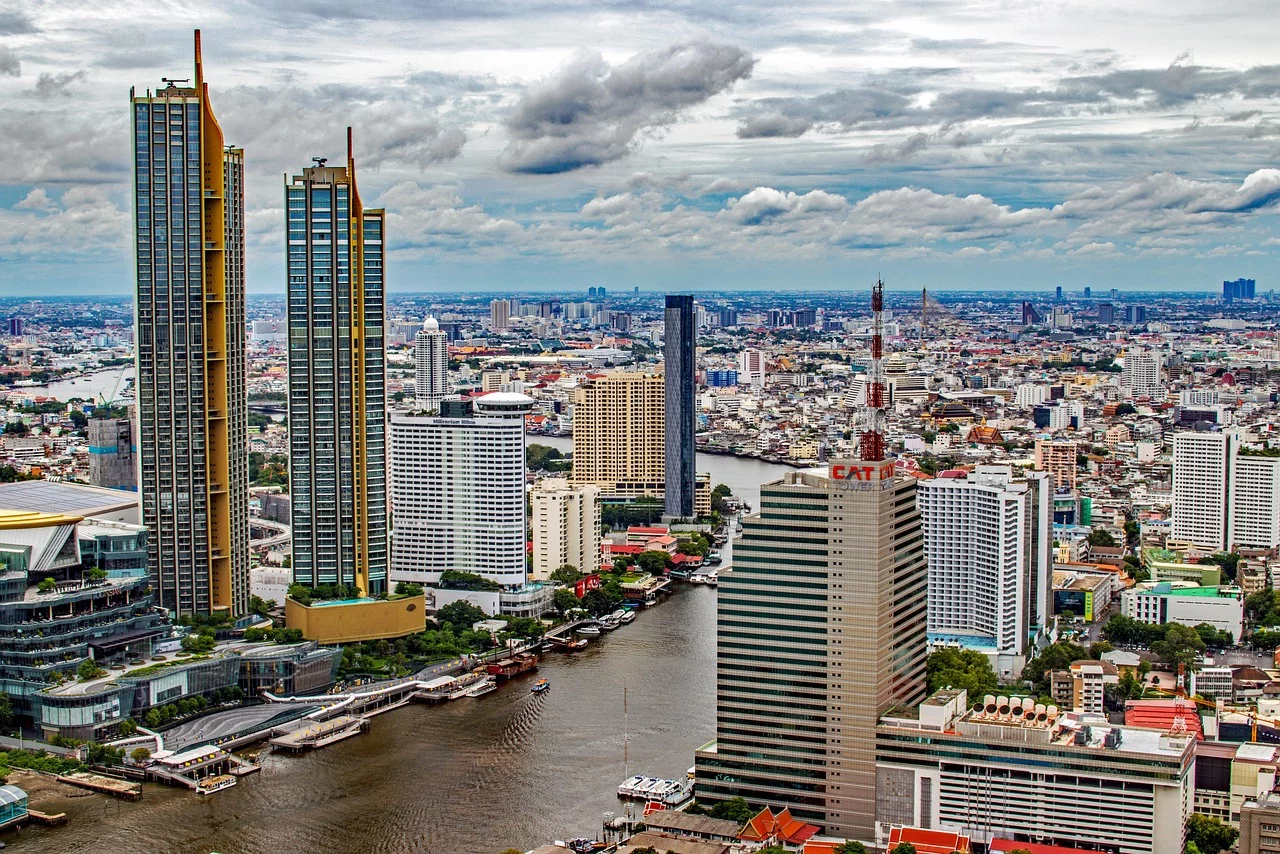
Bangkok, or Krung Thep to Thai people, is the sprawling capital of a country that draws tens of millions of visitors every year. The city lives day and night, between Buddhist temples, giant markets and glass towers.
The historic heart, Rattanakosin, is home to the Grand Palace and the most revered temples. Further east, the Sukhumvit and Silom districts line up shopping malls, rooftops and elevated metro stations. In between flows the Chao Phraya, the "river of kings", still crossed by express boats and small barges.
People come for the culture, but also to eat. Bangkok's street food is famous worldwide, and a street meal often costs just a few euros. This variety explains why the city regularly ranks among the most visited in the world.
In this guide, you will find 15 must-sees, from temples to floating markets, plus practical tips on formalities, transport and budget so you can plan your stay with peace of mind.
Grand Palace & Wat Phra Kaew (Emerald Buddha)
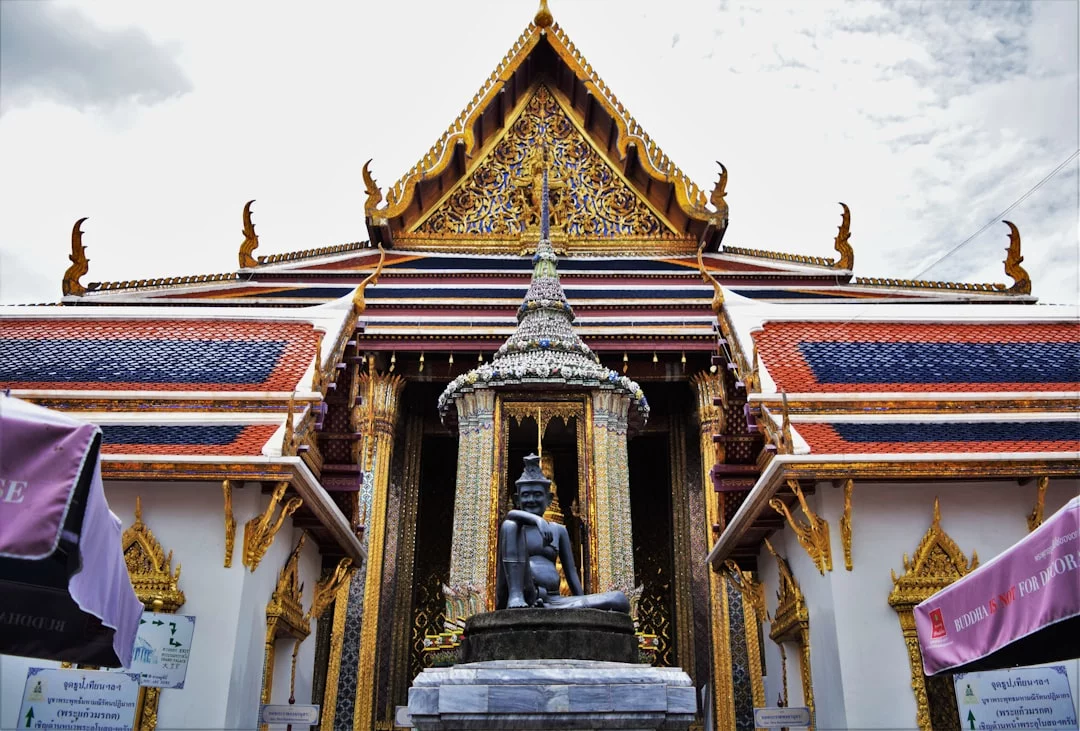
From the moment you step in, the glow of gold and glass mosaics grips you: the Grand Palace is a dazzle of pointed roofs and shimmering spires.
Former residence of the kings of Siam, it is home to Wat Phra Kaew and the revered Emerald Buddha, considered the palladium of the kingdom.
You wander among royal pavilions, golden chedis and the Ramakien frescoes, in the heart of the historic Rattanakosin district.
It is quite simply the most visited monument in Bangkok, the obligatory stop on any first trip.
Wat Pho (Reclining Buddha)
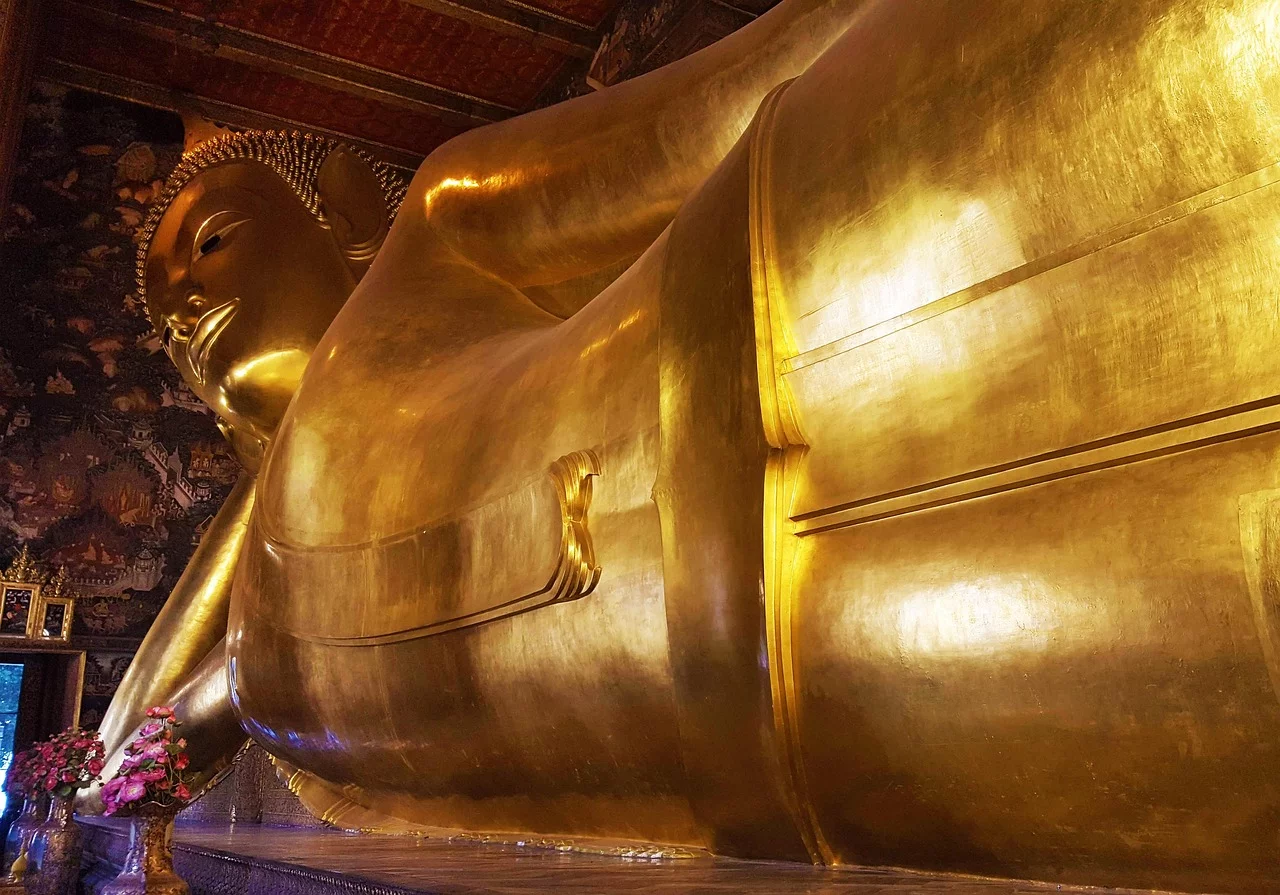
You walk into the pavilion and stand open-mouthed: a golden Reclining Buddha 46 metres long fills the entire space.
Its feet, several metres long, are inlaid with mother-of-pearl, and the temple is regarded as the birthplace of traditional Thai massage.
You admire the statue, walk the galleries of Buddhas and can treat yourself to a massage at the temple school.
Immediate neighbour of the Grand Palace, Wat Pho is naturally visited right afterwards.
Wat Arun (Temple of Dawn)
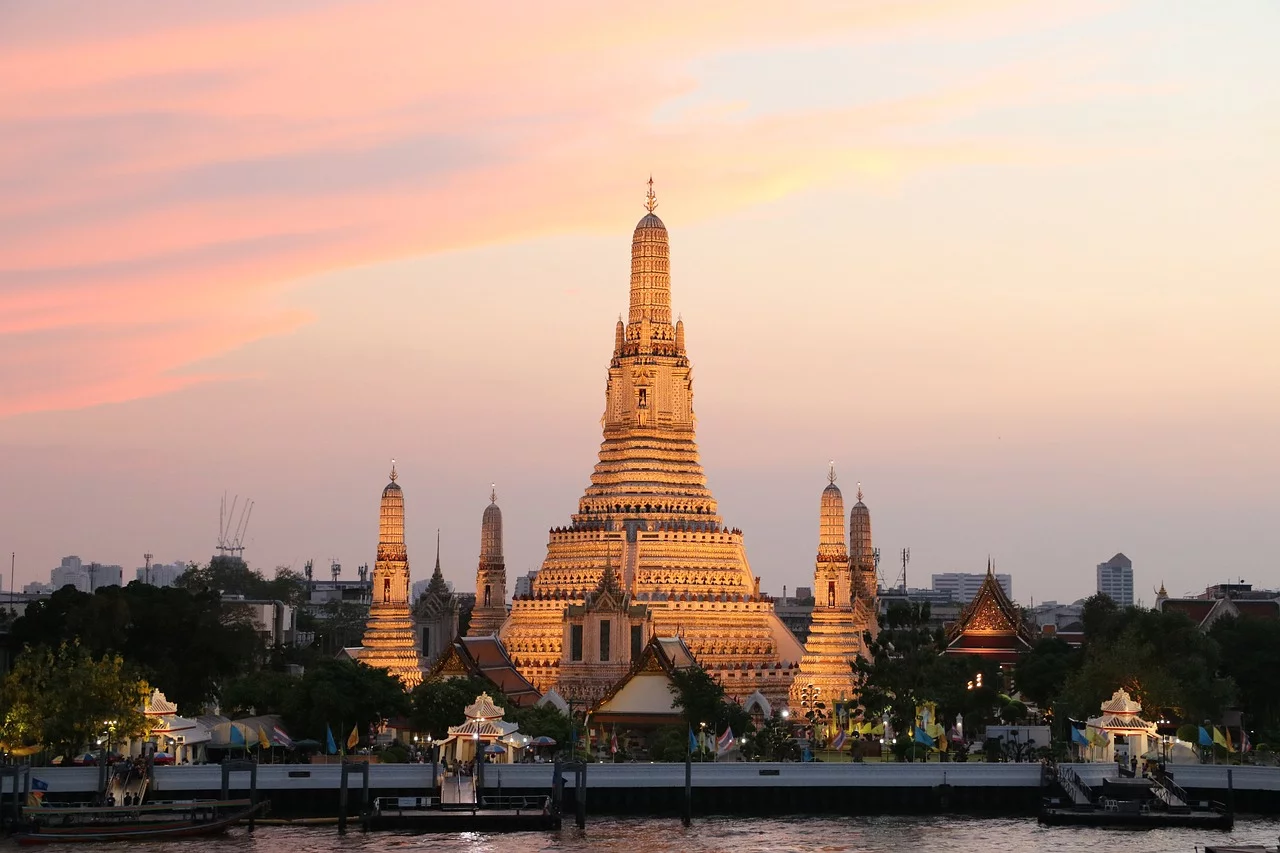
On the far side of the river, a slender tower rises towards the sky, its surface glittering with a thousand flecks of porcelain in the sun.
Wat Arun, or the Temple of Dawn, is a Khmer-style prang about 70 metres high, fully decorated with fragments of porcelain, on the west bank of the Chao Phraya.
You climb its steep stairs for a fine view of the river and circle the terraces to admire the ceramic decoration.
Its silhouette at sunset is one of the most iconic images of Bangkok.
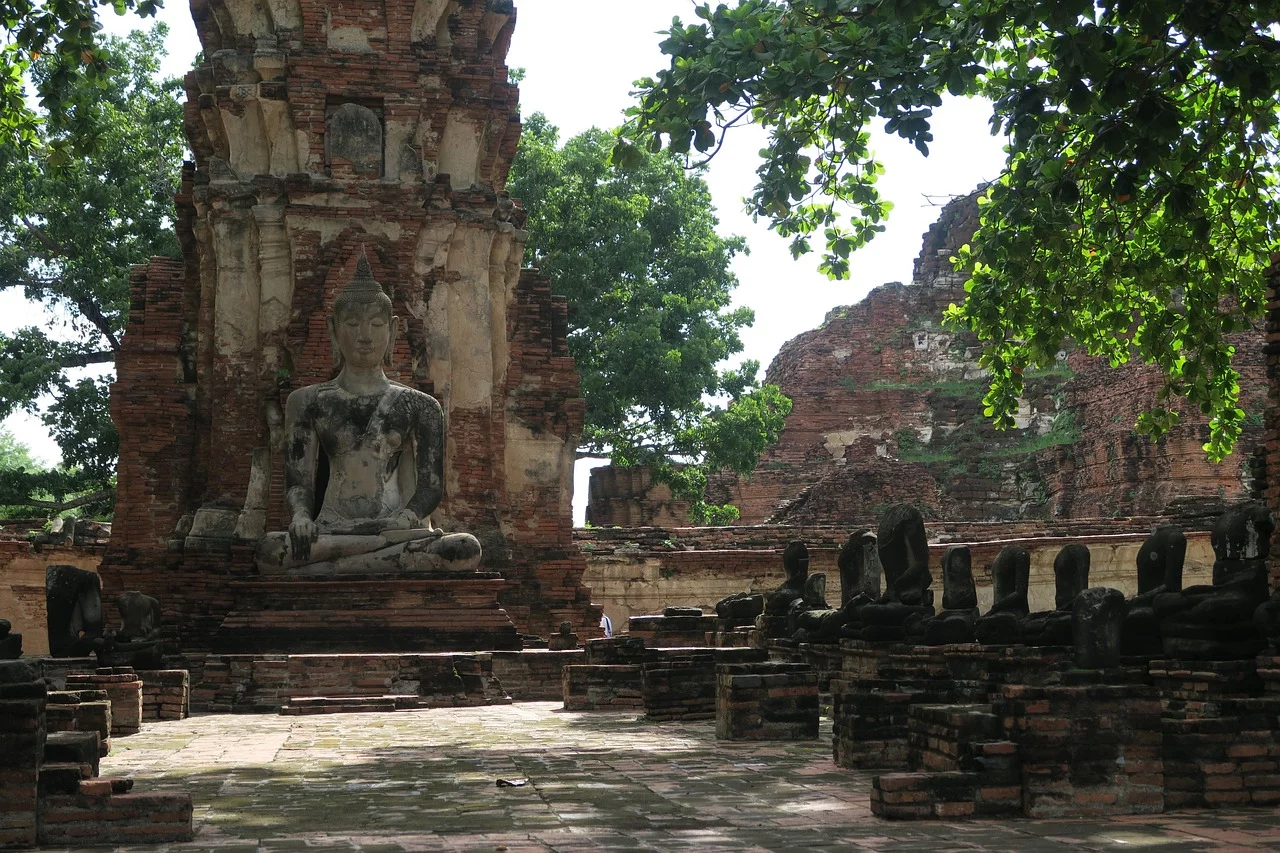
Ayutthaya day-trip (UNESCO)
Across the lawns, rows of reddish brick chedis and headless Buddhas tell of a kingdom's bygone grandeur.
Former capital of Siam founded in 1350, Ayutthaya has been a UNESCO World Heritage site since 1991 and preserves impressive ruined temples.
You wander from site to site, the most famous image being the Buddha head wrapped in the roots of a fig tree, at Wat Mahathat.
It is the most rewarding day-trip you can take from Bangkok.
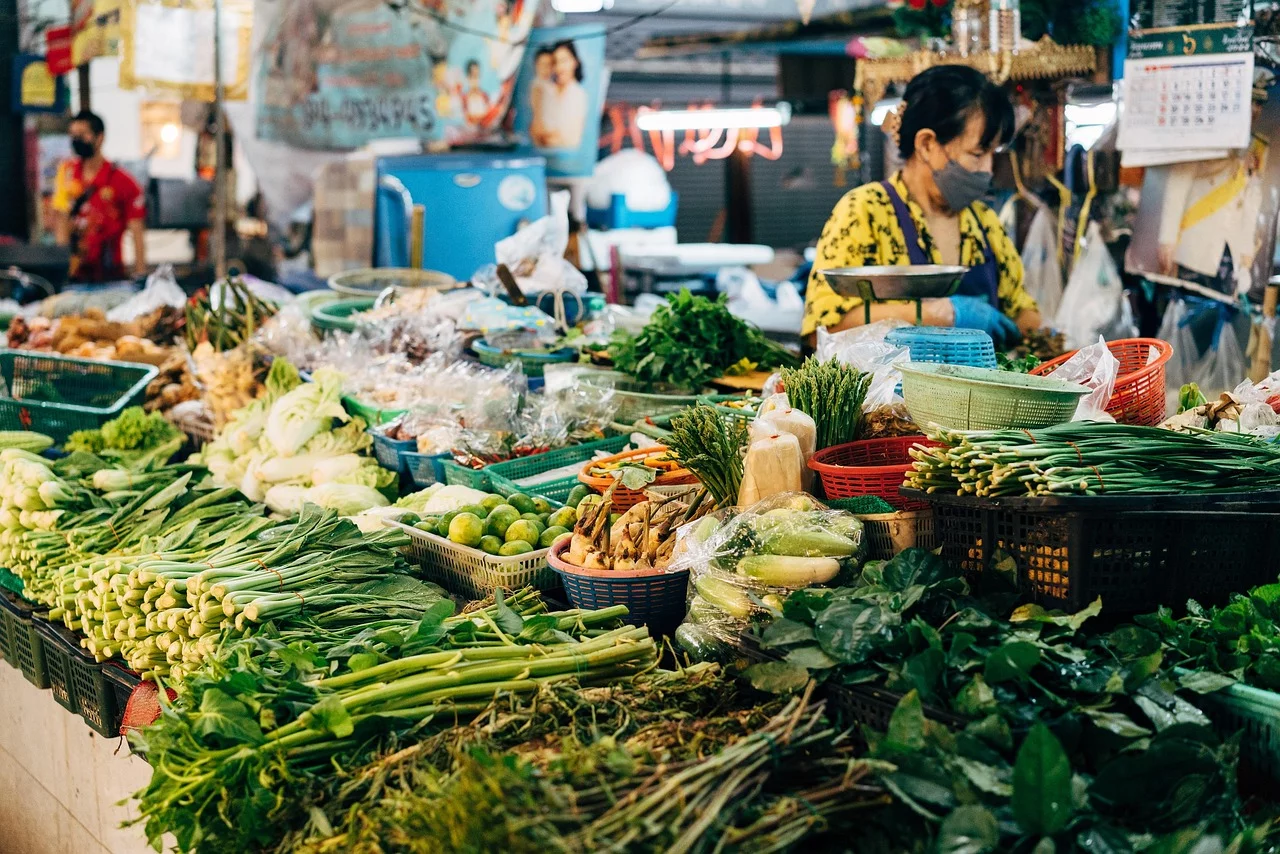
Chatuchak Weekend Market
You dive into a maze of narrow lanes piled with clothes, plants, art objects, animals and food, in an electric heat.
The Chatuchak weekend market brings together more than 15,000 stalls over about 14 hectares, mostly active on Saturdays and Sundays.
You come to browse, grab a bite and bring home cheap souvenirs, letting yourself be carried along by the crowd.
It is one of the largest weekend markets in the world, an experience in its own right.
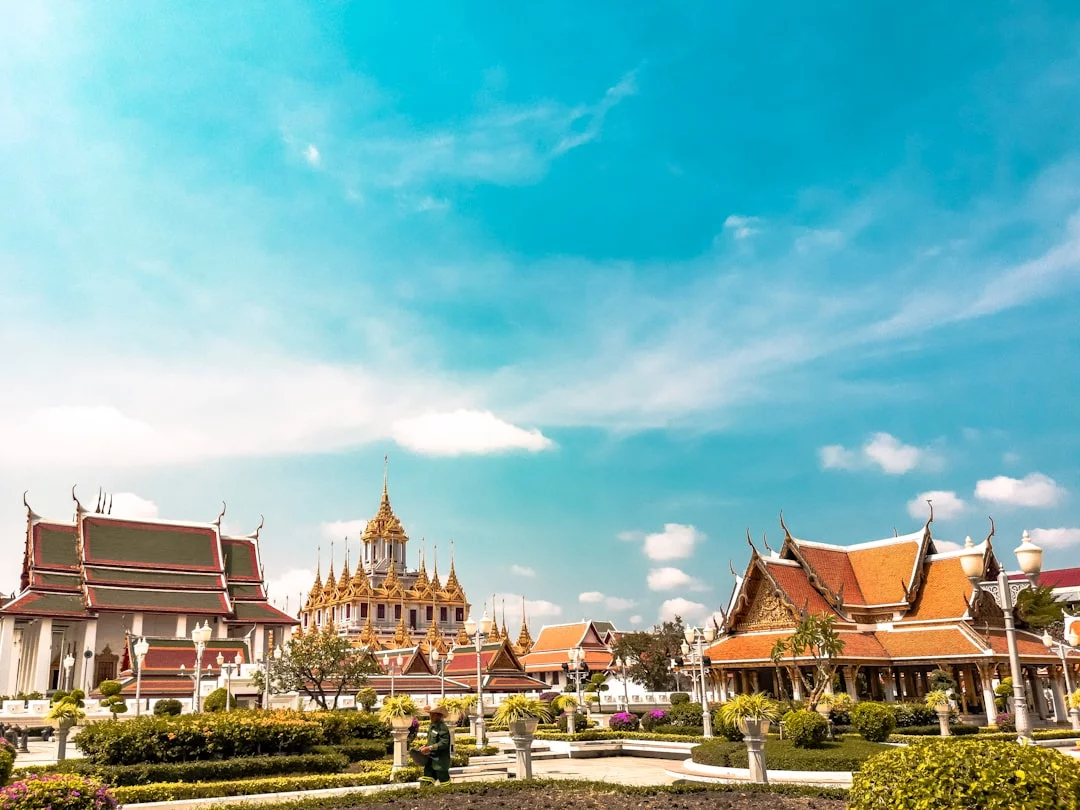
Wat Saket (Golden Mount)
The climb begins with a spiral staircase lined with bells, in tropical greenery, up to a golden chedi that gleams at the top.
Wat Saket, or the Golden Mount, sits atop an artificial hill reached by a staircase of 318 steps, offering a 360° panorama.
You climb it for the view over old Bangkok and for the peaceful atmosphere of the terraces around the stupa.
It is one of the rare high points accessible in the historic centre.
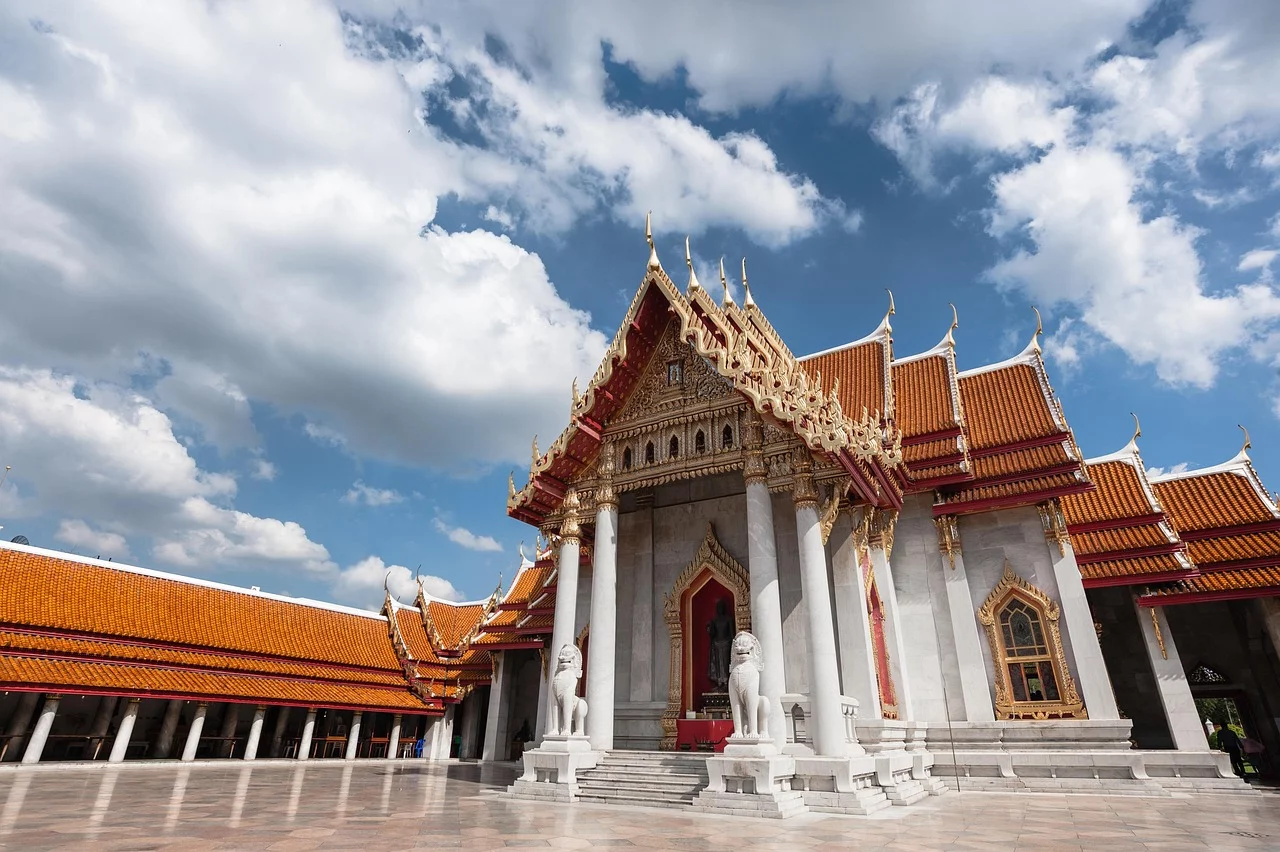
Wat Benchamabophit (Marble Temple)
The immaculate white of the marble contrasts with the orange roofs and the sky: this temple has an almost unreal elegance.
Wat Benchamabophit is built of Carrara marble imported from Italy; it featured on the old 5-baht note and houses a gallery of 52 Buddhas.
You walk around it to admire the building's symmetry, the marble lions and the collection of statues in the cloister.
It is one of the most photogenic temples in Bangkok, and the least crowded of the royal trio.
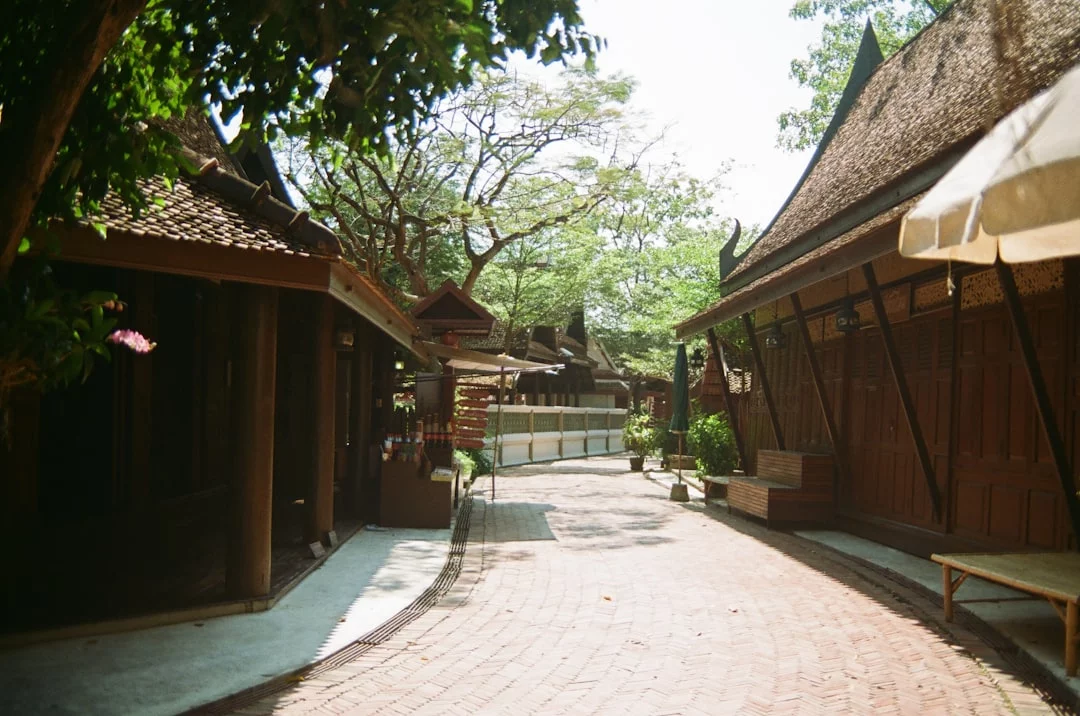
Jim Thompson House
You leave the city's din to enter a haven of dark wood, between weathered teak and a lush tropical garden.
This house-museum belonged to the American Jim Thompson, who revived the Thai silk industry before vanishing mysteriously in 1967; it houses his collection of Asian art.
You visit it to discover the traditional teak architecture, the works gathered by its owner and the timeless atmosphere of the garden.
It is a cultural, soothing pause in the heart of a modern district.
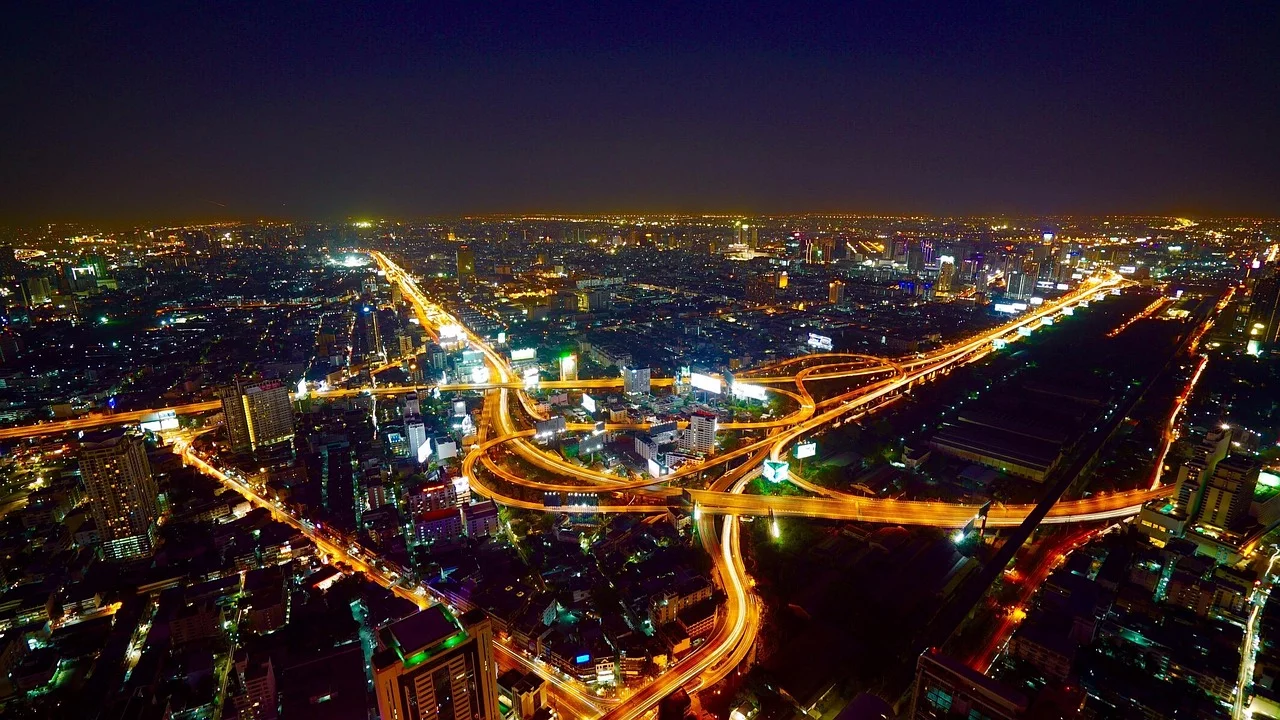
Mahanakhon SkyWalk
The lift races towards the sky, and suddenly Bangkok stretches out at your feet, its towers and avenues glittering to the horizon.
The Mahanakhon SkyWalk is the highest observation deck in Thailand, with a striking glass floor and a 360° view.
You go up for the thrill of the transparent floor, the panorama over the city and a drink at the high-altitude bar at sunset.
It is the best modern viewpoint for taking in the sheer scale of the capital.
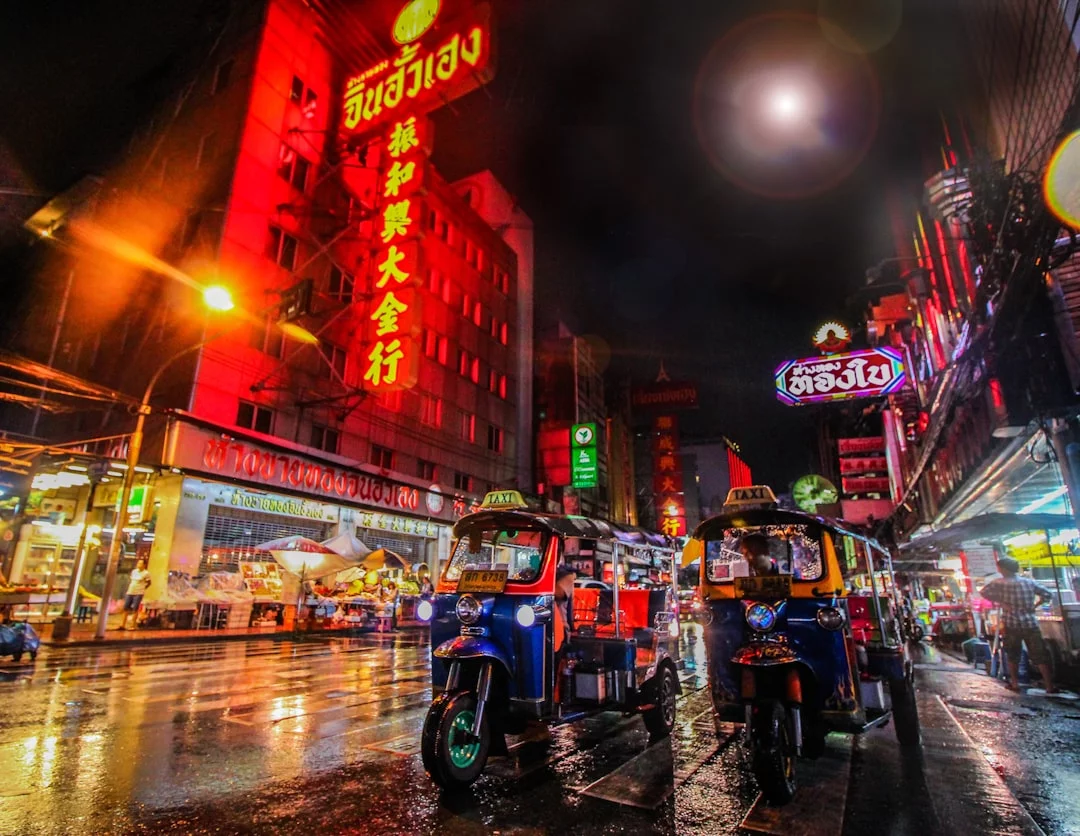
Chinatown / Yaowarat
Night falls, the neon lights flicker on and Yaowarat Avenue turns into a river of lights, grill smoke and spicy scents.
Chinatown is one of the largest Chinatowns outside China, famous for its neon signs and its street food in the evening.
You lose yourself in the alleys, tasting grilled seafood, noodles and desserts, from one stall to the next as they spill onto the roadway.
It is the most intense and most delicious night-time experience in Bangkok.
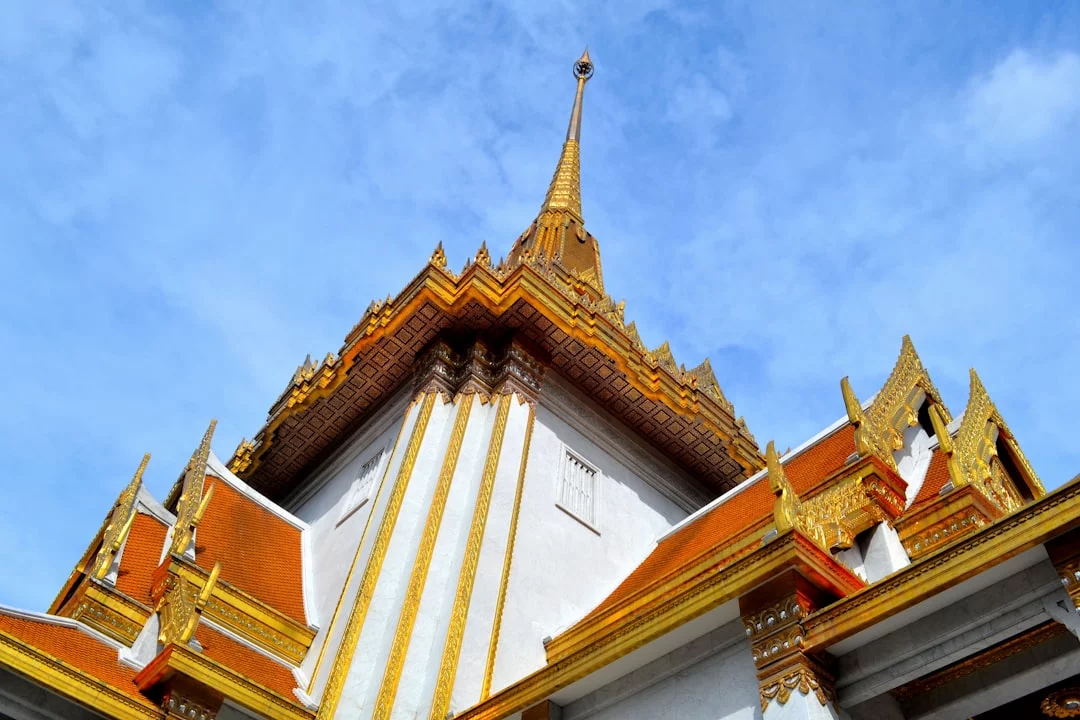
Wat Traimit (Golden Buddha)
In the dim light of the sanctuary, a colossal statue radiates a gold so pure and dense it seems unreal.
Wat Traimit houses the largest solid gold Buddha in the world, weighing about 5.5 tonnes, whose value was revealed by accident in the 20th century.
You admire the statue and discover, in the small museum, the story of its rediscovery beneath a layer of stucco.
It is a brief but striking visit, ideal at the gateway to Chinatown.
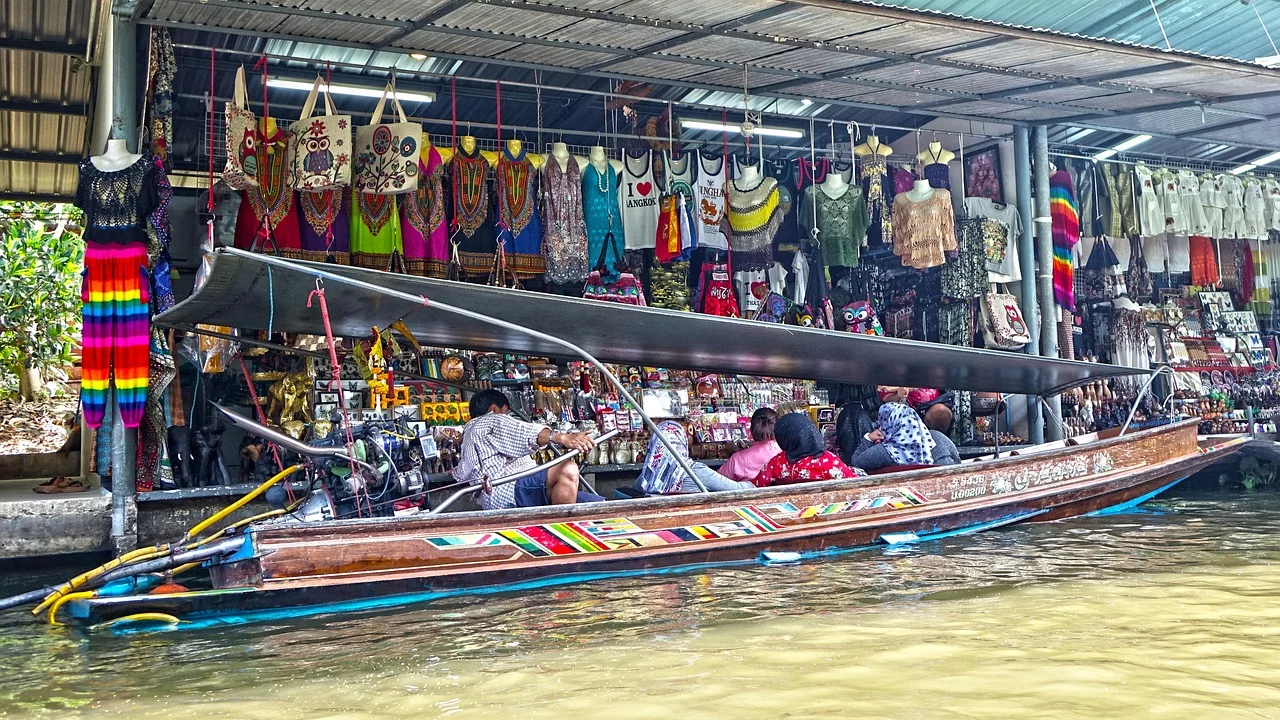
Damnoen Saduak Floating Market
On the brown water of the klongs, wooden boats sag under fruit, conical hats bob about and paddles slap the water.
The Damnoen Saduak floating market lies about 100 km south-west of Bangkok, where vendors sell fruit and dishes from their boats.
You glide by boat between the floating stalls, taste a noodle soup cooked right on the water and bring back a few exotic fruits.
It is the postcard image of Thailand's floating markets.
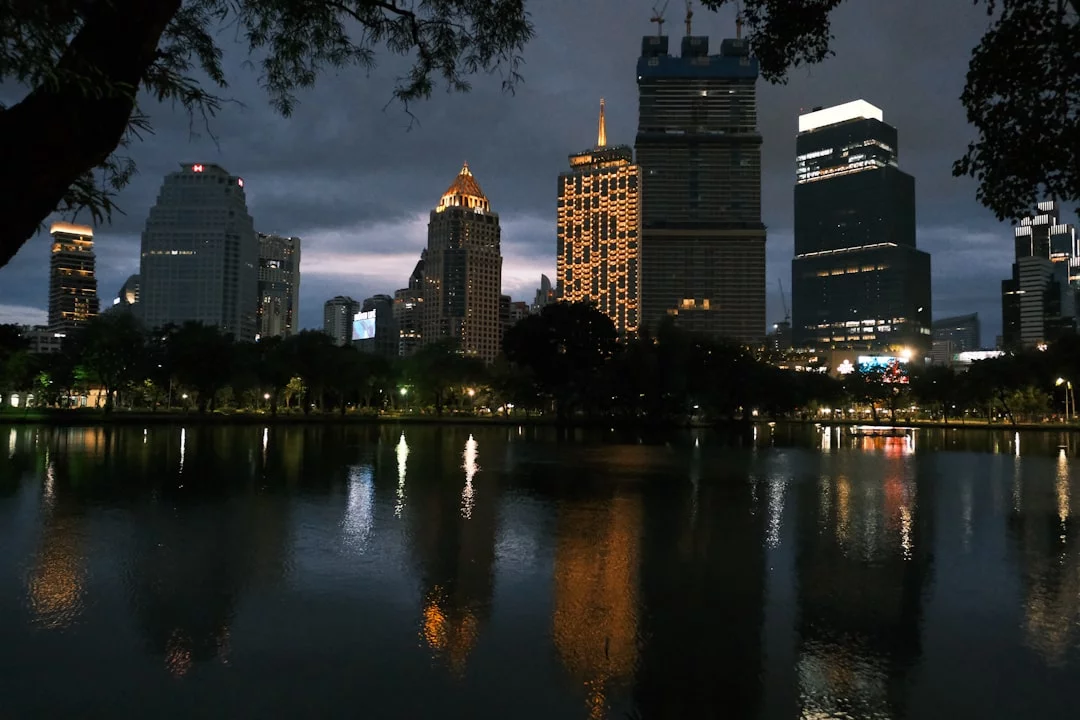
Lumphini Park
In the early hours, the park breathes: joggers, tai chi groups and water monitors share the lawns and the lake shores.
Lumphini is Bangkok's first large public park, a green lung amid the skyscrapers, with its lakes and surprising wildlife.
You come to walk, rent a pedal boat, watch the water monitors and enjoy a moment of calm away from the traffic.
It is the ideal nature escape to catch your breath between visits.
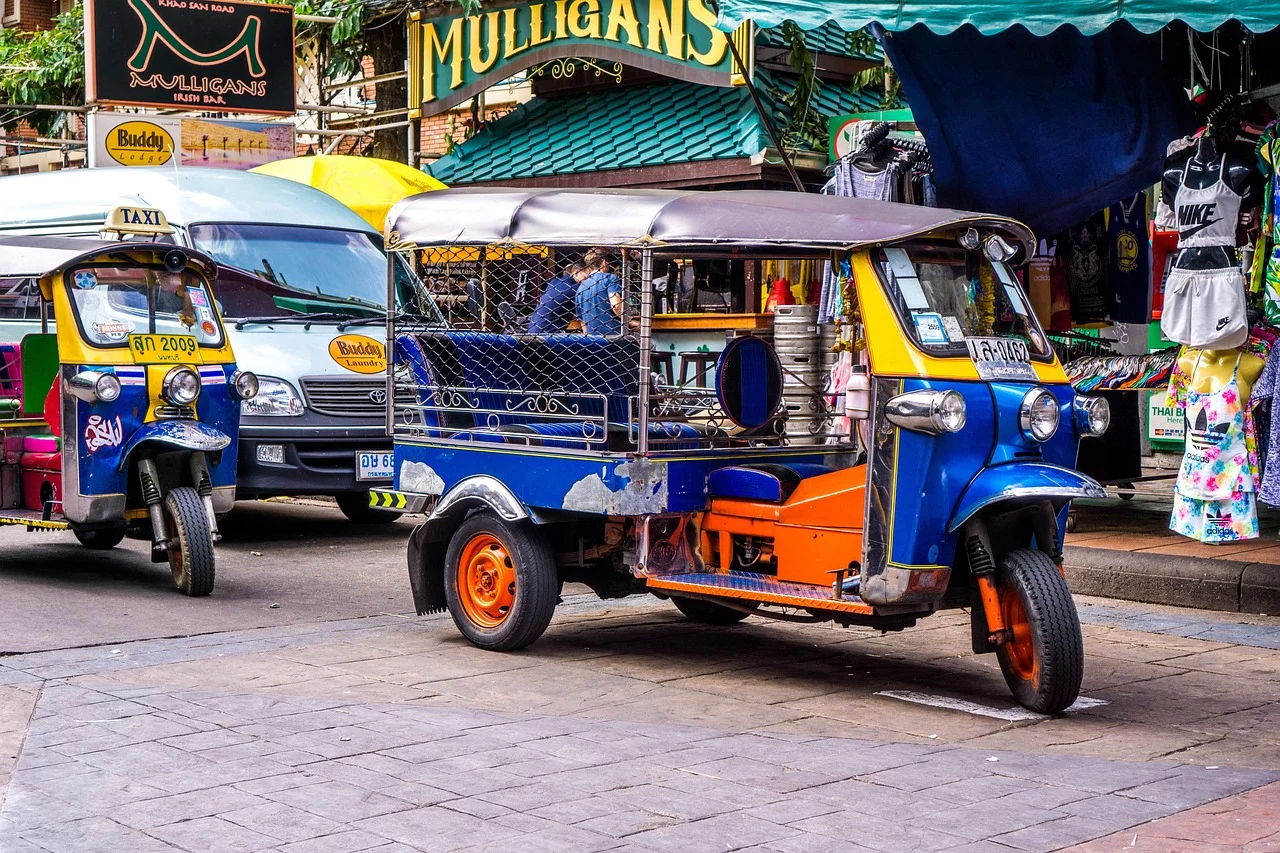
Khao San Road
Loud music, grilled skewers, tattoo stalls and multicoloured neon: Khao San Road never sleeps.
This street is the historic epicentre of Bangkok's backpackers, famous for its bars, its street food and its intense nightlife.
You come for a cheap drink, to taste street pad thai and to blend into a cosmopolitan crowd until the small hours.
It is the festive, carefree vibe par excellence.
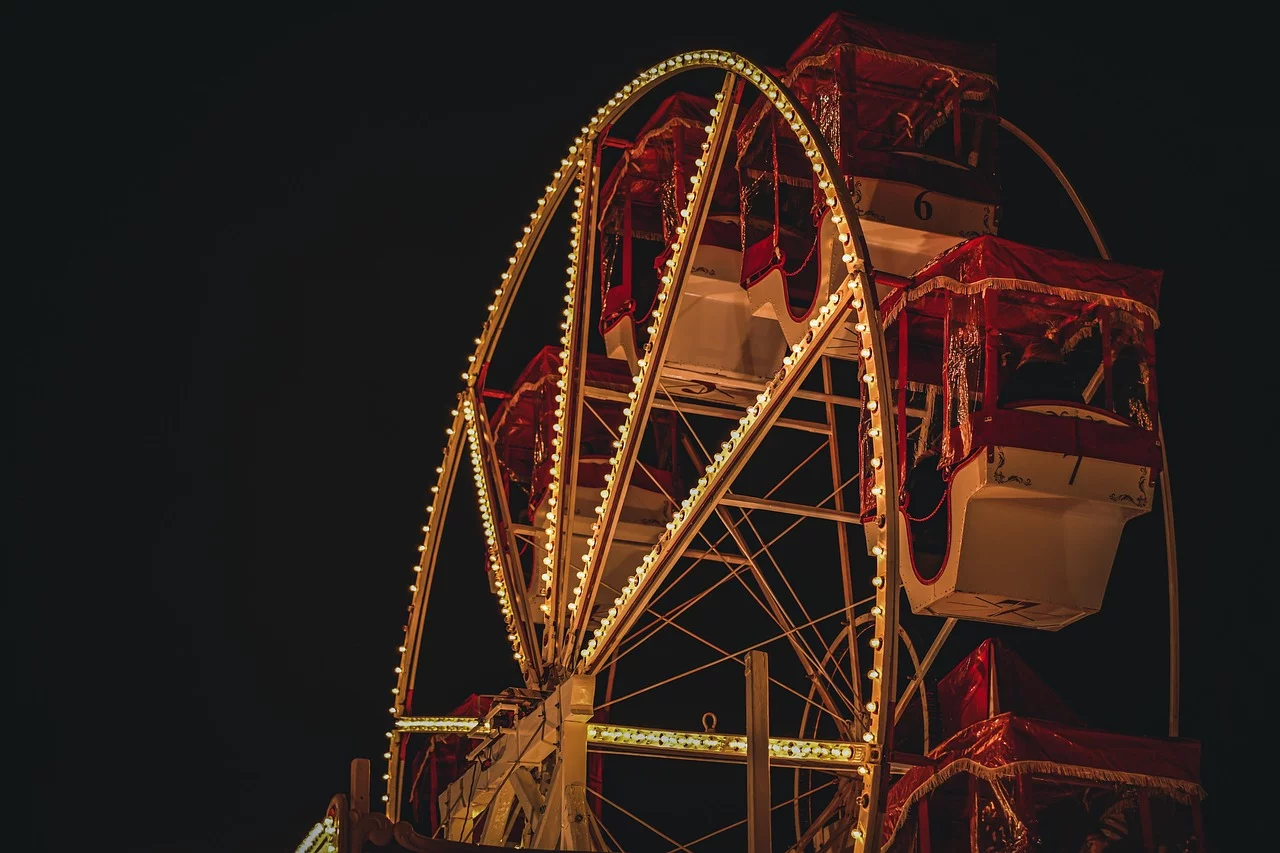
Asiatique The Riverfront
By the river, a lit-up Ferris wheel turns above the former port warehouses converted into shopping lanes.
Asiatique The Riverfront occupies a former port warehouse transformed into a night market on the banks of the Chao Phraya, with its famous Ferris wheel.
You stroll among shops, restaurants and shows, in a relaxed, family-friendly atmosphere at sunset.
It is a pleasant, easy evening, perfect for a last dinner by the water's edge.
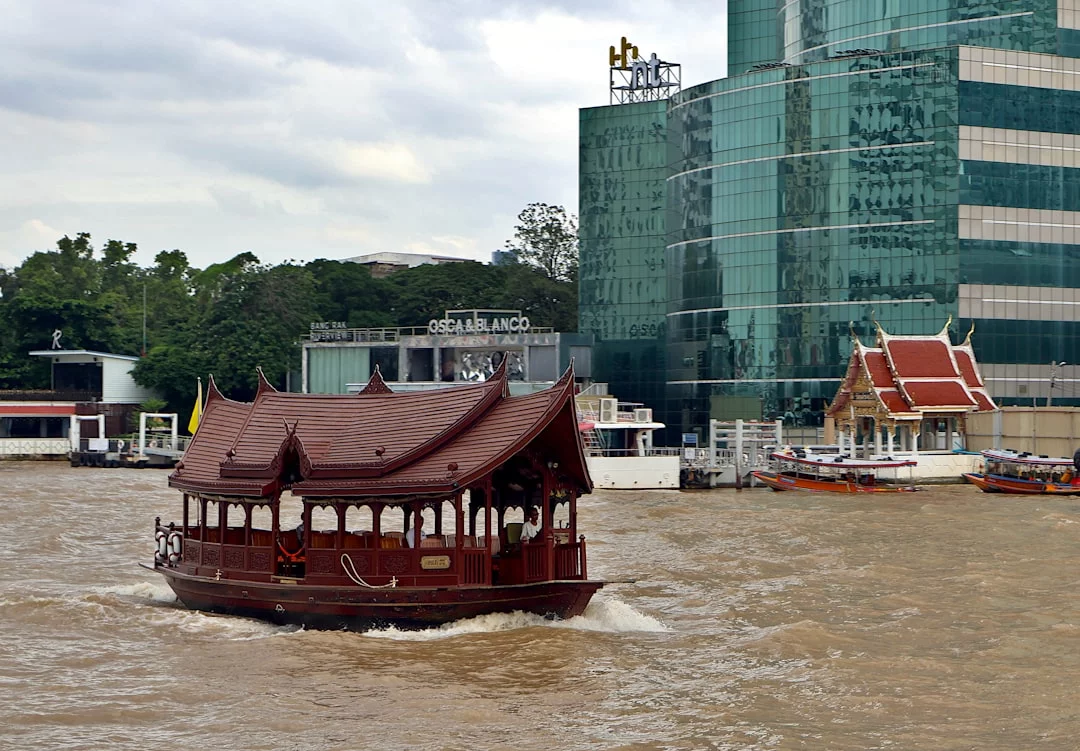
Cruise on the Chao Phraya and the klongs of Thonburi
Hop aboard a longtail boat or a dinner boat to discover Bangkok from its river. You glide past the lit-up temples, the palaces and the klongs (canals) of the old Thonburi district, far from the noise of the streets.
At sunset, Wat Arun and the skyscrapers are reflected in the water, offering an unforgettable panorama. A peaceful way to grasp the city's river soul and its history.
- 1h30 à 3h
- 10 à 40 € / personne selon le format
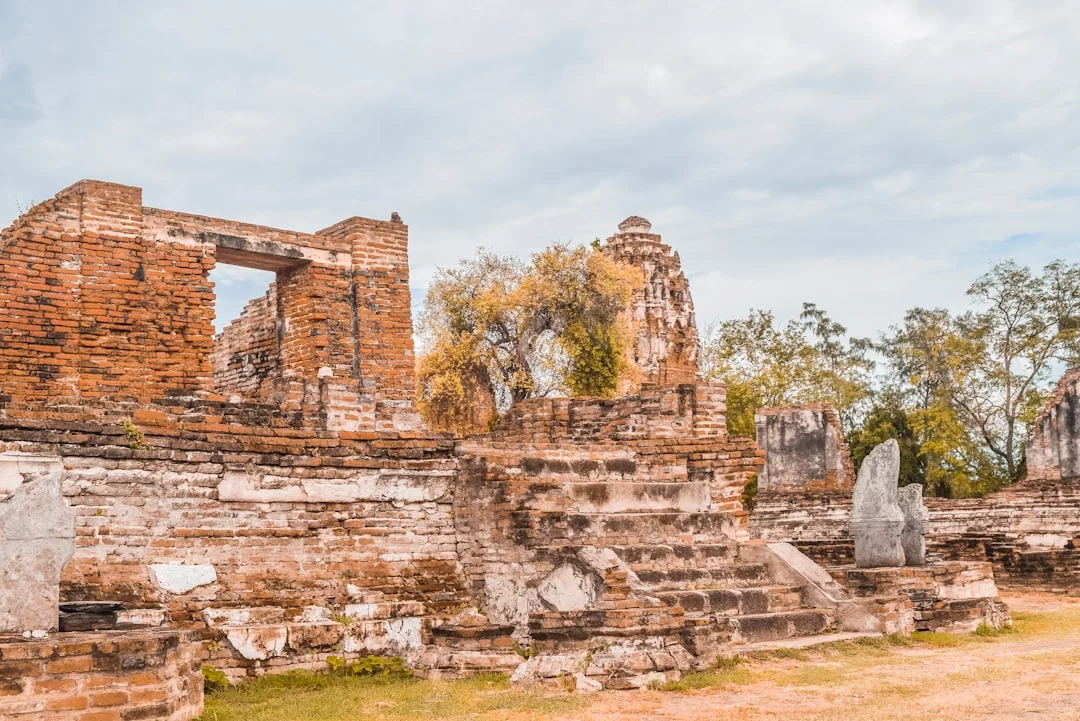
Day-trip to Ayutthaya
Set off to discover Ayutthaya, the former capital of Siam listed by UNESCO. You can take the train from Krung Thep Aphiwat station, the bus, or opt for an organised tour with a guide for more comfort.
On the spot, the bike is the best way to link the ruined temples scattered across the historic park. Allow a full day to fully enjoy the chedis, the Buddhas and the timeless atmosphere.
- Journée complète
- 15 à 50 € / personne
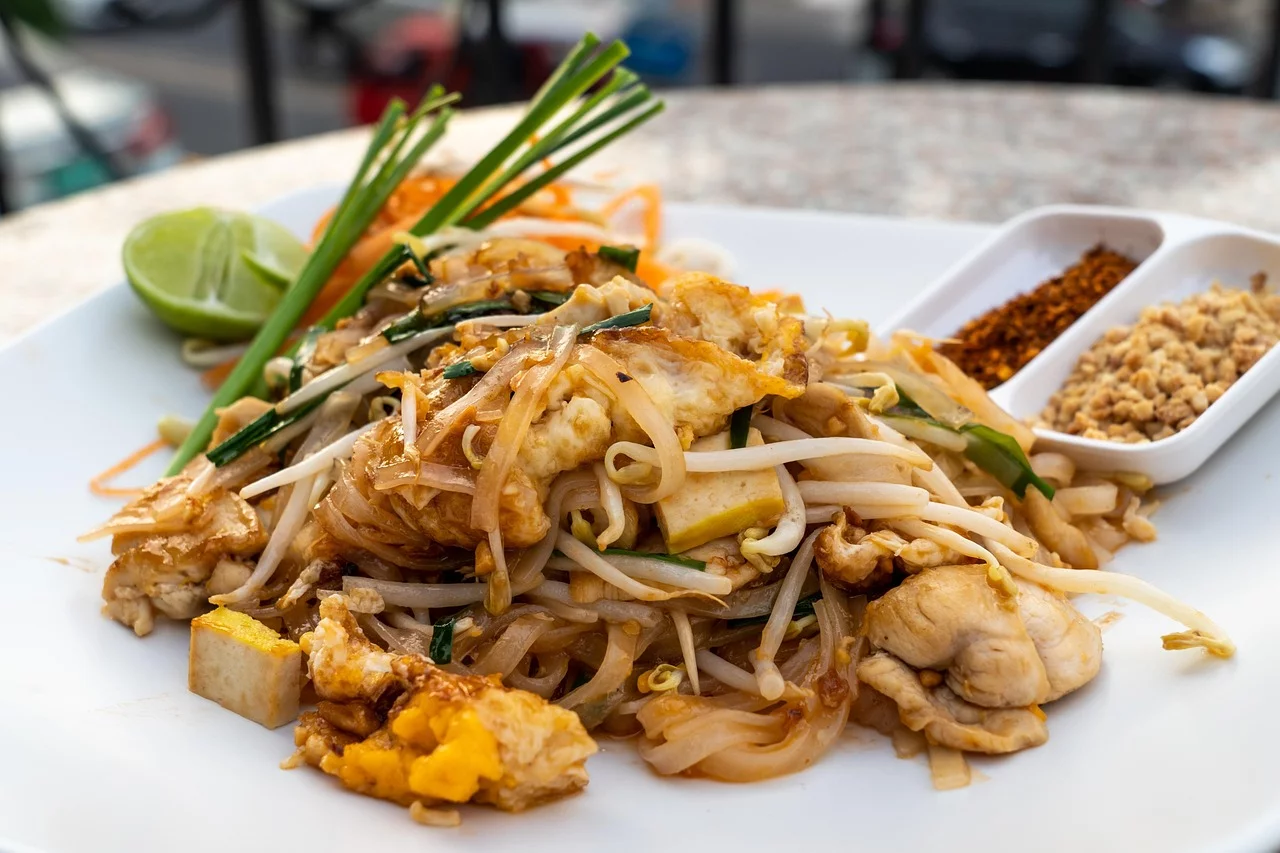
Thai cooking class
Learn to cook Thailand's iconic dishes with a local chef. Most classes start with a market visit to pick the fresh ingredients, before moving to the stoves.
On the menu: pad thai, green curry and mango sticky rice, to enjoy together afterwards. The ingredients are included, and you leave with recipes to make again at home. A warm and tasty experience.
- 3 à 4h dont passage au marché
- 25 à 45 € / personne, ingrédients inclus
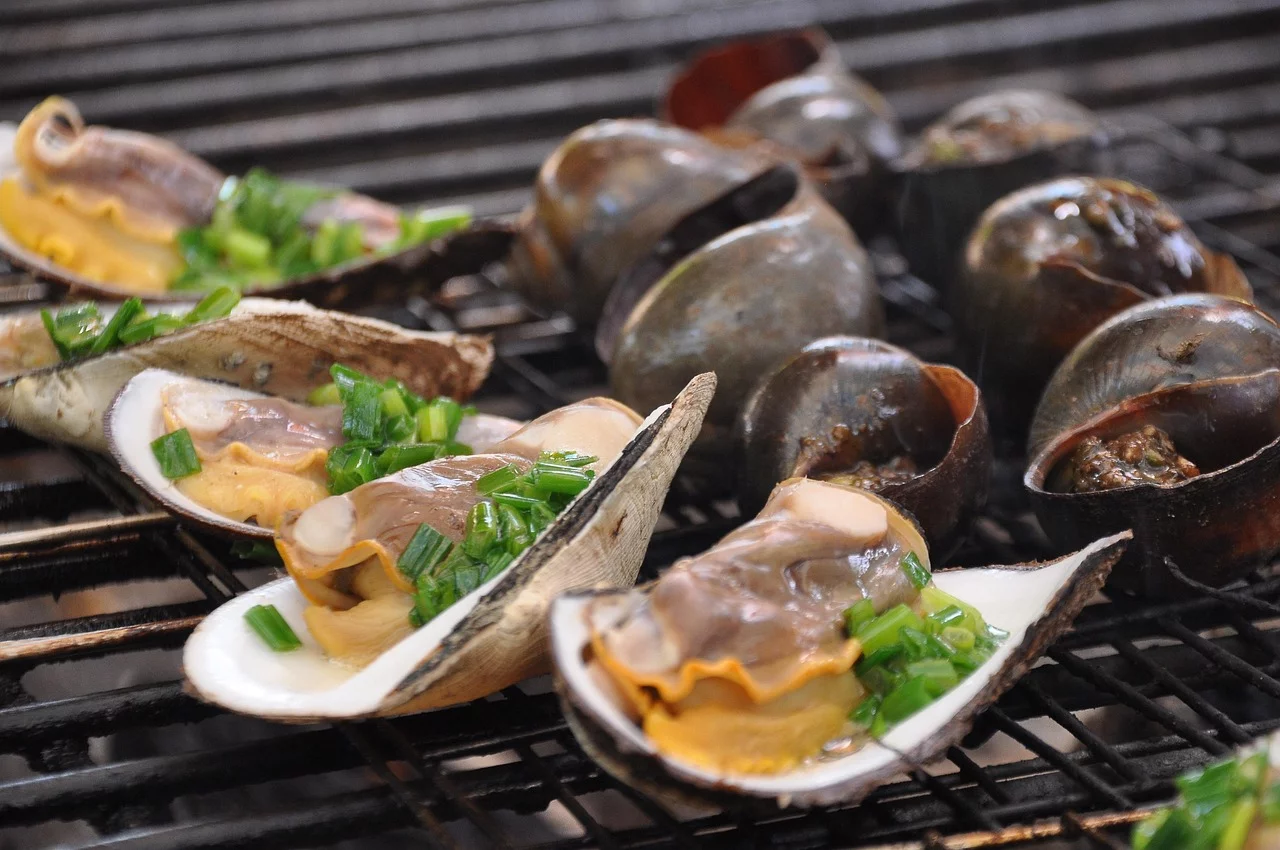
Street food tour in Chinatown
Dive into the buzz of Yaowarat in the evening, when the street food stalls take over the pavements. You taste grilled seafood, stir-fried noodles, soups and desserts, following the smells and the queues.
Guided or on your own, it's the best way to discover Bangkok's street food. Come on an empty stomach and bring cash in baht to make the most of every stall.
- 2 à 3h
- 10 à 35 € / personne
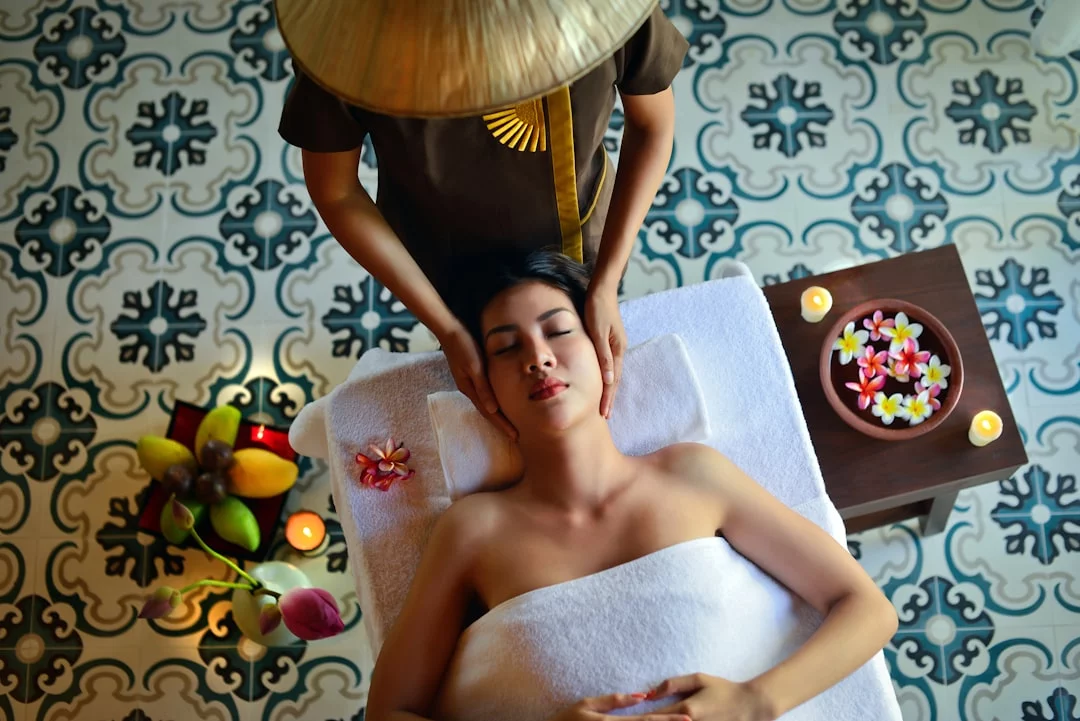
Traditional Thai massage at Wat Pho
Treat yourself to a traditional Thai massage at the Wat Pho massage school, regarded as the birthplace of this practice. Between stretches and pressure along the energy lines, the body unwinds and the mind settles.
Thai massage is listed as UNESCO intangible cultural heritage. An ideal wellness break after a day of sightseeing, at a very affordable price and in a setting steeped in history.
- 30 min à 1h
- 8 à 20 € / personne
Getting there
Bangkok has two airports, Suvarnabhumi for long-haul flights and Don Mueang for low-cost carriers, both connected to the centre.
Bangkok is served by two international airports. Suvarnabhumi (BKK) handles most long-haul flights, notably from Europe. To reach the centre, the easiest option is the Airport Rail Link, which connects the airport to Phaya Thai station in about thirty minutes, with a transfer to the BTS Skytrain.
The second airport, Don Mueang (DMK), is the hub for low-cost carriers, mainly on domestic and regional flights. You can leave it easily by shuttle, metered taxi or via the Grab app.
If you arrive by train from another region, watch out for the right station. Long-distance trains, including the Northern Line that serves Ayutthaya, now depart from Krung Thep Aphiwat (Bang Sue) Central Terminal as of January 2023, according to Wikipedia. The old Hua Lamphong station only handles ordinary and suburban trains now.
Getting around
The BTS Skytrain and MRT avoid the traffic jams, while express boats and Grab round out your getting around.
To get around Bangkok, forget the car: the traffic is heavy. Your two best allies are the BTS Skytrain, with its Sukhumvit and Silom lines, and the MRT (underground metro). The MRT serves Chinatown (Wat Mangkon station), Lumphini, Chatuchak and Krung Thep Aphiwat station.
To reach the temples of old Bangkok, nothing beats the Chao Phraya express boats. They link the main piers for a few baht and offer a lovely view of the city.
Metered taxis and the Grab app are handy and cheap. Insist on the meter or book through the app to avoid haggling. Tuk-tuks are still an experience worth having, but the price is always negotiated before you climb in.
- BTS / MRT: fast, air-conditioned, no traffic jams.
- Chao Phraya express boats: perfect for the temples.
- Grab / metered taxis: handy, clear prices.
- Tuk-tuk: agree the price before setting off.
What to do
Between royal temples, giant markets, viewpoints and day-trips, Bangkok offers more than enough to fill several days without ever getting bored.
Bangkok packs in a variety of experiences rare for a single city. On the heritage side, the Grand Palace, Wat Pho and Wat Arun form the unmissable trio of royal temples. Allow a good half-day for all three, ideally in the morning.
Market lovers will be spoilt: the Chatuchak weekend market counts more than 15,000 stalls, while floating markets like Damnoen Saduak offer another image of Thailand. For a high vantage point, the Mahanakhon SkyWalk and its glass floor tower over the city.
Don't miss a day-trip to Ayutthaya, the former capital listed by UNESCO. And in the evening, dive into the street food of Chinatown or the backpacker buzz of Khao San Road. You will find details on each site further down in this guide.
Food
Bangkok's street food is world-famous, with tasty dishes for just a few euros on every street corner.
Eating in Bangkok is an adventure in itself. Street food reigns here, and you can often enjoy a full dish for the equivalent of one to three euros. Stalls selling pad thai, grilled skewers, noodle soups and fried rice are everywhere.
The Chinatown (Yaowarat) district is the epicentre of street food, especially in the evening, when the neon lights come on and the seafood vendors fire up their grills. Desserts like mango sticky rice are a must.
To understand the cuisine from the inside, take a Thai cooking class: market, green curry, pad thai, all with a local chef. If you have a sensitive stomach, go for very busy stalls, where food turns over quickly. That is often where you eat best.
Itineraries
In three days, you can combine the royal temples, a big market, a viewpoint and a day-trip to Ayutthaya.
Here is a simple framework to enjoy Bangkok according to the time you have. Adapt it to your pace and to the weather.
Day 1 - Temples and river. Start early with the Grand Palace and Wat Phra Kaew, then Wat Pho right next door. Cross the Chao Phraya for Wat Arun. End with a sunset cruise.
Day 2 - Markets and heights. In the morning, dive into Chatuchak market (at the weekend) or explore Jim Thompson House. In the afternoon, head up the Mahanakhon SkyWalk, then dine on Chinatown's street food in the evening.
Day 3 - Escape to Ayutthaya. Take the train early from Krung Thep Aphiwat station to the former capital, listed by UNESCO. Rent a bike on the spot to tour the ruined temples, then head back at the end of the day.
- 2 days: royal temples + Chatuchak + Chinatown.
- 3 days: add the day-trip to Ayutthaya.
- 4 days and more: floating market, parks and a cooking class.
Climate & seasons
When to go : Thailand ?
Monthly averages over the past 5 years (Open-Meteo).
Best months
- janvier
- février
- mars
- avril
- décembre
Avoid
- juillet
- août
- septembre
- octobre
| jan | fév | mar | avr | mai | juin | juil | août | sept | oct | nov | déc | |
|---|---|---|---|---|---|---|---|---|---|---|---|---|
| Our take | ||||||||||||
| Weather | ||||||||||||
| High | 32° | 33° | 34° | 34° | 33° | 33° | 31° | 32° | 31° | 31° | 31° | 32° |
| Rain (mm) | 12 | 54 | 59 | 88 | 199 | 163 | 255 | 222 | 339 | 233 | 108 | 14 |
When to go
The best time to visit Bangkok runs from November to February, when the weather stays dry and the temperatures more bearable.
The best season to visit Bangkok runs from November to February. This is the cool, dry season, with sunny days and pleasant evenings. It is also the busiest tourist period, so remember to book your accommodation in advance.
If you can, avoid the months of March to May: this is the hot season, with temperatures that often top 35°C and crushing humidity. Visiting temples in full sun quickly becomes exhausting.
The rainy season runs from May to October. The downpours are heavy but short, often late in the day. Travelling at this time has its upsides: fewer crowds, gentler prices and lush greenery. Just pack a light raincoat and sandals that dry quickly.
- November to February: the ideal period, dry and cooler.
- March to May: very hot, over 35°C, best avoided.
- May to October: monsoon, short showers, low prices.
Budget
Bangkok stays affordable: budget around €30 a day (~$33) backpacker-style, €80 (~$88) mid-range and €160 (~$176) high-end.
Bangkok is an accessible destination for all budgets. In backpacker mode, with a dorm, street food and public transport, you can manage on around €30 a day (~$33). This is one of the city's great strengths.
For a mid-range trip, with a comfortable hotel, a few restaurants and taxis, plan for around €80 a day (~$88). You will enjoy a good level of comfort without going without.
For a high-end stay, with luxury hotels, rooftops and private excursions, the budget climbs towards €160 a day (~$176) and more. The local currency is the Thai baht (THB). Withdraw cash on the spot and keep some notes for markets and tuk-tuks, which rarely accept cards.
- Backpacker: around €30 / day (~$33).
- Mid-range: around €80 / day (~$88).
- High-end: around €160 / day (~$176).
Where to stay
Stay near a BTS or MRT station, or along the Chao Phraya, so you can move around the city with ease.
Your choice of district changes the Bangkok experience a lot. The most useful criterion: sleep close to a BTS or MRT station, or along the Chao Phraya. You will save precious time in such a sprawling city.
Sukhumvit appeals to travellers who like malls, restaurants and nightlife, all on the BTS line. Silom and Sathorn suit a more business-minded crowd, with great rooftops. Rattanakosin and the riverside put you close to the temples and the Grand Palace.
For tight budgets and a backpacker vibe, the Khao San Road area remains a classic, lively and cheap. Whatever the district, check the real walking distance to the nearest transport station before you book.
Safety
Bangkok is a safe city for tourists: stay alert mainly to the classic scams and to the traffic.
Bangkok is, overall, a safe destination for travellers. Violent crime against tourists is rare. The main risks are scams and petty theft, especially in very touristy areas.
Be wary of overly helpful strangers who tell you a temple is "closed" and offer an alternative tour by tuk-tuk: this is a classic scam that leads you to shops. Always negotiate the price of a tuk-tuk before getting in, or use Grab to avoid surprises.
Keep your belongings close to you in crowded places like Khao San Road or the markets. The traffic is dense and chaotic: take extra care when crossing the road and if you rent a two-wheeler. Check your government's travel advice before you leave.
Formalities
French and most EU citizens are visa-exempt for 60 days, but everyone must complete the free TDAC online before arrival.
Good news for travellers: French and many European Union citizens enjoy a 60-day visa exemption for a tourist stay, according to the French Ministry of Foreign Affairs. Other nationalities should check the requirements that apply to them. A 30-day extension is possible on the spot, with the immigration services. Thailand's official tourism portal confirms that 93 countries benefit from this visa-free entry.
Your passport must be valid for at least 6 months beyond the date of entry. Authorities may also ask for proof of funds of around 20,000 THB per person, even if this check is rare in practice.
The big change concerns the TDAC (Thailand Digital Arrival Card). Since 1 May 2025, it has been mandatory for all foreigners and replaces the old paper TM6 card, as noted by the US Embassy and Wikipedia. You fill it in online, free of charge, within the 72 hours before your arrival, on the official site tdac.immigration.go.th.
Beware of fraudulent sites that mimic the official portal and charge for the process. The TDAC is always free: never pay to obtain it.
Tips
Cover your shoulders and knees in temples, visit early in the morning and always keep some water on you.
A few habits make visiting Bangkok much easier. In temples, proper dress is mandatory: shoulders and knees covered, for men and women alike. Pack a scarf or light trousers in your bag.
Visit the major sites early in the morning, right at opening, to avoid the crowds and the heat. The Grand Palace, for example, is far more pleasant around 8:30 a.m. than in the middle of the day.
Stay hydrated at all times: the heat and humidity tire you out fast. Download the Grab app before you arrive, and get a local SIM card or an eSIM to stay connected. Finally, always keep a little baht in cash: markets, boats and tuk-tuks mostly run on cash.
- Covering clothing is mandatory in temples.
- Early-morning visits to escape crowds and heat.
- Grab app and SIM/eSIM card from arrival.
- Always a little baht cash on you.
FAQ
French and most EU citizens need no visa for 60 days, but everyone must complete the free TDAC online within 72 hours before arrival.
Do French and EU citizens need a visa to visit Bangkok?
No. French and most EU citizens enjoy a 60-day visa exemption for tourism, extendable by 30 days on the spot. Other nationalities should check their requirements. The online TDAC, however, is mandatory and free, to be completed within 72 hours before arrival at tdac.immigration.go.th.
What is the TDAC and how do you fill it in?
The TDAC (Thailand Digital Arrival Card) is a digital arrival card mandatory since 1 May 2025. It replaces the paper TM6 card and is completed free of charge on the official site tdac.immigration.go.th, within the 72 hours before arrival. Beware of fraudulent sites that charge a fee.
What is the best time to visit Bangkok?
The ideal period runs from November to February, with dry weather and milder temperatures. Avoid March to May, when the heat often tops 35°C, as well as the monsoon from May to October, marked by short but intense downpours.
How many days do you need to visit Bangkok?
Allow at least two to three days to see the essentials: the royal temples, a big market and the street food. With an extra day, add a trip to Ayutthaya, the former capital listed by UNESCO, easily reached by train.
How do you get around Bangkok?
The BTS Skytrain and MRT are the fastest options, because they avoid the traffic jams. Round things out with the Chao Phraya express boats for the temples, and the Grab app or metered taxis for the rest.
Where do the trains to Ayutthaya leave from?
Since January 2023, long-distance trains, including the Northern Line to Ayutthaya, leave from Krung Thep Aphiwat (Bang Sue) Central Terminal, connected to the MRT. The old Hua Lamphong station only handles ordinary and suburban trains.
What daily budget should you plan for in Bangkok?
Bangkok is affordable. Budget around €30 a day (~$33) backpacker-style, €80 (~$88) mid-range and €160 (~$176) high-end. Street food and public transport let you cut daily spending sharply.
How should you dress to visit the temples?
Clothing that covers shoulders and knees is mandatory to enter the temples, men and women alike. At the Grand Palace, the check is strict. Bring a scarf or light trousers, and favour a visit early in the morning.
Leave a comment
Share your thoughts or travel experience. Your email will not be published.
